Panjin Liaoyou Gem Flower Hospital: QR Code Management Applied to Instruments Saves Storage Space for Documents
The Intensive Care Unit (ICU) is an important place for rescuing critically ill patients, with a large number and variety of instruments and equipment, which makes supervising, using, maintaining, and counting equipment difficult for nursing staff in real work and costs a lot of effort.
Since February, the Intensive Care Unit (ICU) of Panjin Liaoyou Gem Flower Hospital has applied QR codes to modernize the management of its instruments and equipment, storeroom supplies, disease education, nurse clinical teaching, and sensitive data collection, which not only saves management costs and document storage space but also raises nurses' work efficiency.
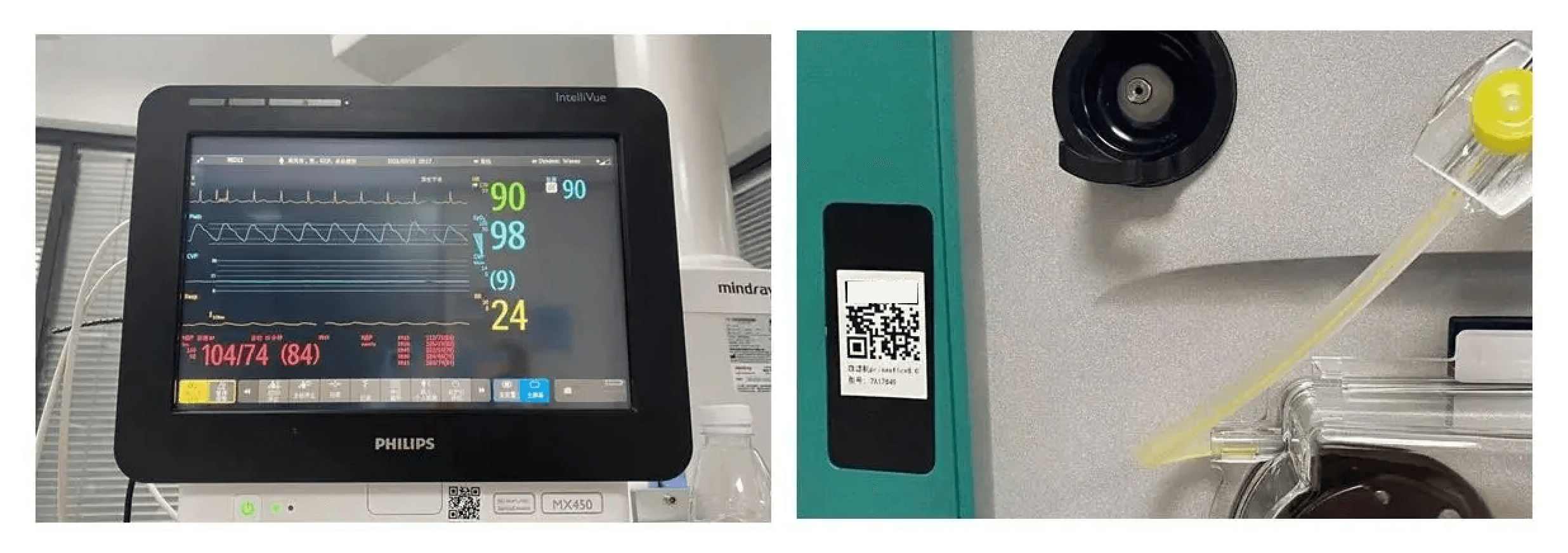
The ICU has many high-end devices. To keep equipment in good working order and on standby, the department usually assigns someone to manage it, recording the instruments' operating standards, maintenance instructions, procedures, and testing methods in booklets hung on the equipment. This method spoils the equipment's tidy appearance, and the booklets carry limited information and are inconvenient to look up. The ICU uses QR codes to manage instruments and equipment: a QR code is stuck at a prominent spot on the device, and nurses simply scan with a phone to see the device's operating procedures, daily use, cleaning and disinfection, faults and repairs, which not only raises efficiency but also greatly cuts nurses' management time, truly going paperless.
The ICU applies QR code management not only to instruments but also to storeroom supply management and nurse clinical teaching. Every month all the storeroom supplies need to be counted, and then next month's requisition plan is made from the stock situation, which is time-consuming and laborious by hand. Using QR codes for the department's storeroom supply in and out management costs nothing and is easy to maintain, since scanning a QR code is all it takes to manage supplies in and out, which raises supply management efficiency and avoids wasting resources.

There are many new nurses, who have a lot of specialty theory and operating skills to master, and young nurses can hardly master it all in a short time. The department uses QR codes for clinical teaching: short videos are recorded, turned into QR codes, and stuck on instruments or the ceiling pendant, so nurses can learn anywhere, any time they need to, which improves nursing quality and ensures nursing safety.