Zhongtai Petrochemical Polymerization Workshop: QR Code Spot Checks End "Office Inspections"
To really put the "four fixes, five characters" graded inspection system into practice on site and end "office inspections", Zhongtai Petrochemical's polymerization workshop built an equipment spot check system with CaoLiao QR codes: each key piece of equipment has a dedicated QR code, inspectors scan to fill in, data is uploaded in real time, and hazard information is synced at once. Once the system was running, every check is traceable and every problem has a closed loop, and inspection moved from "going through the motions" to "being effective".
First Set the System: Four Fixes and Five Characters
The polymerization workshop runs a graded inspection system whose core is "four fixes" and "five characters".
The "four fixes" are fixed points, fixed times, fixed routes, and fixed content: inspection is no longer a general walk-around but focuses on key equipment, follows the set route, reaches the designated points within the set time, and puts the check content into every detail.
The "five characters" are the method of listening, looking, touching, smelling, and wiping: listen for abnormal noises in equipment running, look at fluctuations in gauge data, touch for abnormal body temperature, smell for the odor of material leaks, and wipe away dust and dirt on equipment surfaces.
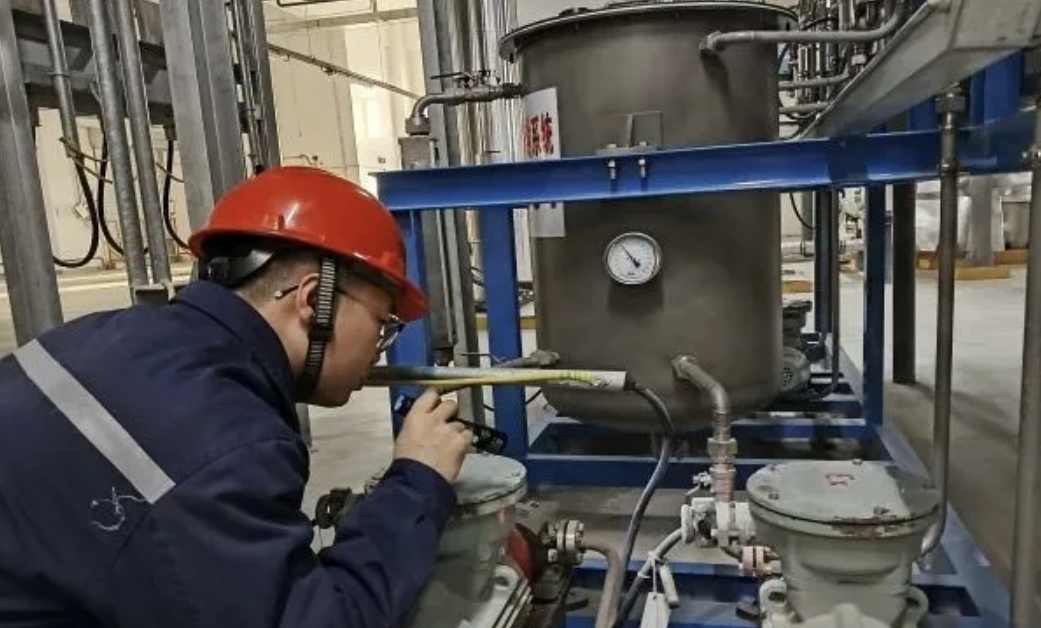
Problems found in checks are summarized and classified, reported in a unified plan, and given special rectification, with big problems checked and fixed on the spot.
Then Use QR Codes to Put Inspection into Practice on Site
With the system set, how do you keep its execution genuine? The biggest problem with paper records is that they can't prove a check really took place. What the workshop wants to end is exactly "office inspections": people aren't on site, but the inspection form is filled in at the office.
The workshop's safety management staff introduced QR code spot checks: a dedicated QR code is generated on CaoLiao QR Code for each key piece of equipment and stuck on it as its "identity mark".
During inspection, people scan to fill in, data is uploaded in real time, and hazard information is synced at once; every check is traceable and every problem has a closed loop. Compared with paper inspection, records no longer depend on sorting out afterward, and whether a check was done, when, and what was found are all documented in the workbench.
From "Going Through the Motions" to "Effective Inspection"
In the workshop's own words, the true meaning of inspection lies in "substance" rather than "form". The four fixes and five characters govern how to check, and QR codes govern whether checks were really done. With the system and the tool each doing half, inspection moves from "going through the motions" to "effective".
For companies that are also pushing an inspection system, this combination can be used as a direct reference: no need to tear down the system and start over, just put codes on key equipment and move your existing checklists into scanning, and the paper system gets a grip on site.
Case content compiled from the WeChat Official Account of Zhongtai Petrochemical, "From 'Four Fixes and Five Characters' to CaoLiao QR Codes | The Polymerization Workshop Opens a New Mode of Smart Safety Inspection"