CECEP Shandong: Using QR Codes for Team Management, Winning the First National Grade-A Team in the Heating Service Industry
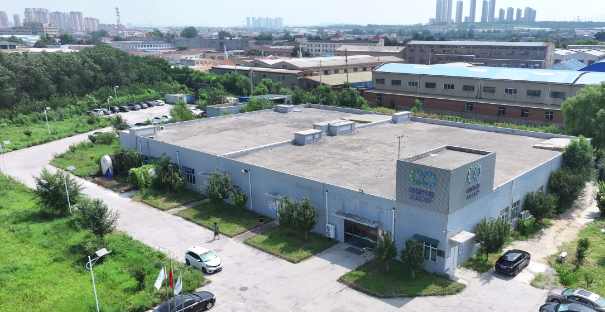
CECEP (Shandong) Energy Development Co., Ltd. ("CECEP Shandong" for short) is a wholly owned subsidiary of CECEP Energy Conservation Technology Co., Ltd. under China Energy Conservation and Environmental Protection Group and oversees its business in Shandong. Its Huanxiu team is rooted in Jimo, Qingdao, and takes on winter heating for 2,247 households across 220,000 square meters.
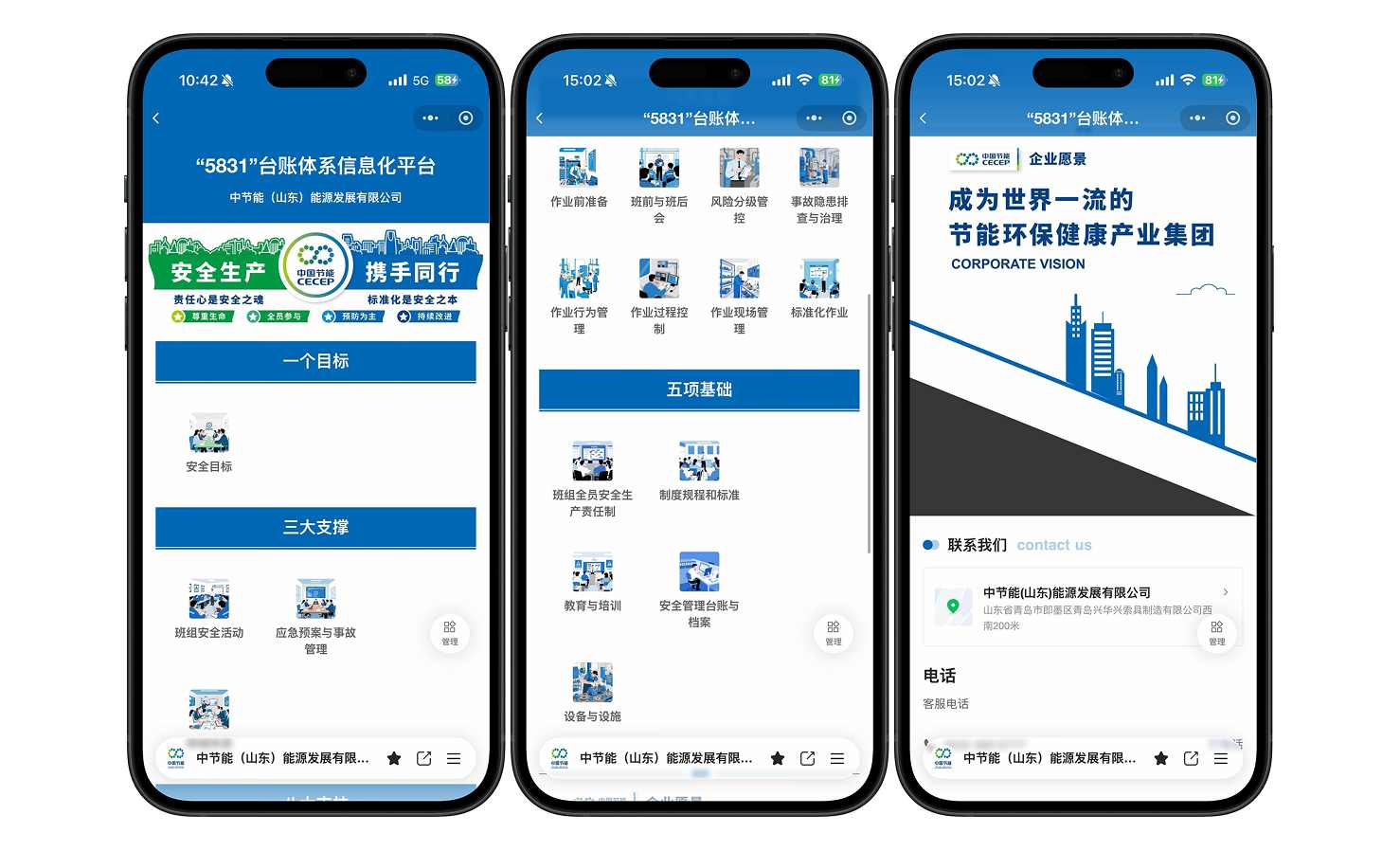
In 2025, CECEP Shandong made the Huanxiu team its first informatization pilot and used the CaoLiao QR Code platform to build the "5831 Team Safety House" information system, moving safety management from "offline paper" to "online smart". In December 2025, the Huanxiu team was rated a national Grade-A safety management standardization team, becoming the first frontline team in China's heating service industry to reach this grade.
I. The Challenge Under the Standard
As a backbone of local clean energy supply, the company has always kept high standards in safety production management and fully implements the "5831 Team Safety House" system advocated by the China Association of Work Safety and included in group standards. The system consists of 5 basic tasks, 8 management pillars, 3 supports, and 1 safety goal, 17 elements in all, scientific and rigorous. But broken down layer by layer, the 17 elements correspond to over 100 management ledgers.
These ledgers were mainly kept by printing and handwriting. But as management became finer, the limits of the "paper mode" became clearer:
- Frontline employees spend much of each day on "trace-keeping" work like filling in forms and signing, squeezing the energy that should go into inspection and hazard checks;
- Paper records fear water and damp and are easily damaged or lost, and before year-end inspections every team has to spend a lot of time collecting, filling in, and binding them in advance;
- Backfilled inspections, signing for others, and similar problems are hard to prevent technically, the authenticity of data can't be controlled, and safety management easily becomes a formality.
Implementing a safety standard must not come at the cost of frontline efficiency. Managers began looking for a solution: could the front line be freed from heavy paper ledgers so that safety standards truly land on site?
The company then chose the Huanxiu team as its first informatization pilot and formally began exploring digital team safety management.
II. Solving the Real Problem at the Lowest Cost
In selection, the project team set two criteria: money has to go where it counts, and the tool has to be one frontline staff can actually use.
The project's budget for the whole year was 100,000 yuan, which had to put on-site hardware renovation and outside expert guidance first, leaving little for system building, so customized development plans costing a hundred thousand or more were ruled out first.
Another hurdle was usage habits. The team's daily communication and office work are all in WeChat, and employees are mostly in their forties and fifties, so a new system that has to be downloaded and installed separately and learned from scratch would be costly to roll out.
After several rounds of comparison, the project team finally chose CaoLiao QR Code as the building platform: on one hand, it can be used by scanning directly in WeChat with no extra software to install, and frontline staff got the hang of it quickly after trying it; on the other, the Flagship Edition fee of 2,680 yuan a year is a small share of the whole project budget.
III. System Building Logic: Sort Out the Business First, Then Convert to Codes
Faced with over 100 ledgers, the task force of four, Yan Weili, Xu Long, Xu Jingsheng, and Li Xingchao, didn't create codes in bulk right away but followed the idea of "settle the form first, convert to codes later": first sort the business logic out clearly, then map it to online features, to avoid repeated adjustments later.
Step 1: Break Down the System Elements and Build a Unified Directory Framework
To keep the online system fully aligned with the original standard, the task force first broke down the 5831 system's core logic completely and drew a mind map of the ledger system: the 17 core elements serve as the first-level category directories, and then CaoLiao QR codes were created one by one, mapping the 100-plus ledgers under each element node, so the whole system basically took shape in one go.
Step 2: Distinguish the "Static and Dynamic" Nature of Ledgers and Configure by Category
In sorting, the task force divided all ledgers by content nature into static materials and dynamic records, configured differently, each solving its core problem:
- Static materials (policies, procedures, emergency plans, training materials, and so on): content changes little, and the core pain point is "can't find it when needed". These are organized into an online directory and gathered into one directory code, so employees can search and read them on their phones; after content is updated, scanning always shows the latest version.
- Dynamic records (inspection spot checks, hazard checks, meeting sign-in, and so on): produced every day, and the core pain points are inconvenient record keeping and easily missed checks and records. QR codes are generated for these and printed to stick directly on site equipment and work points, with scan-and-fill reporting replacing paper records.
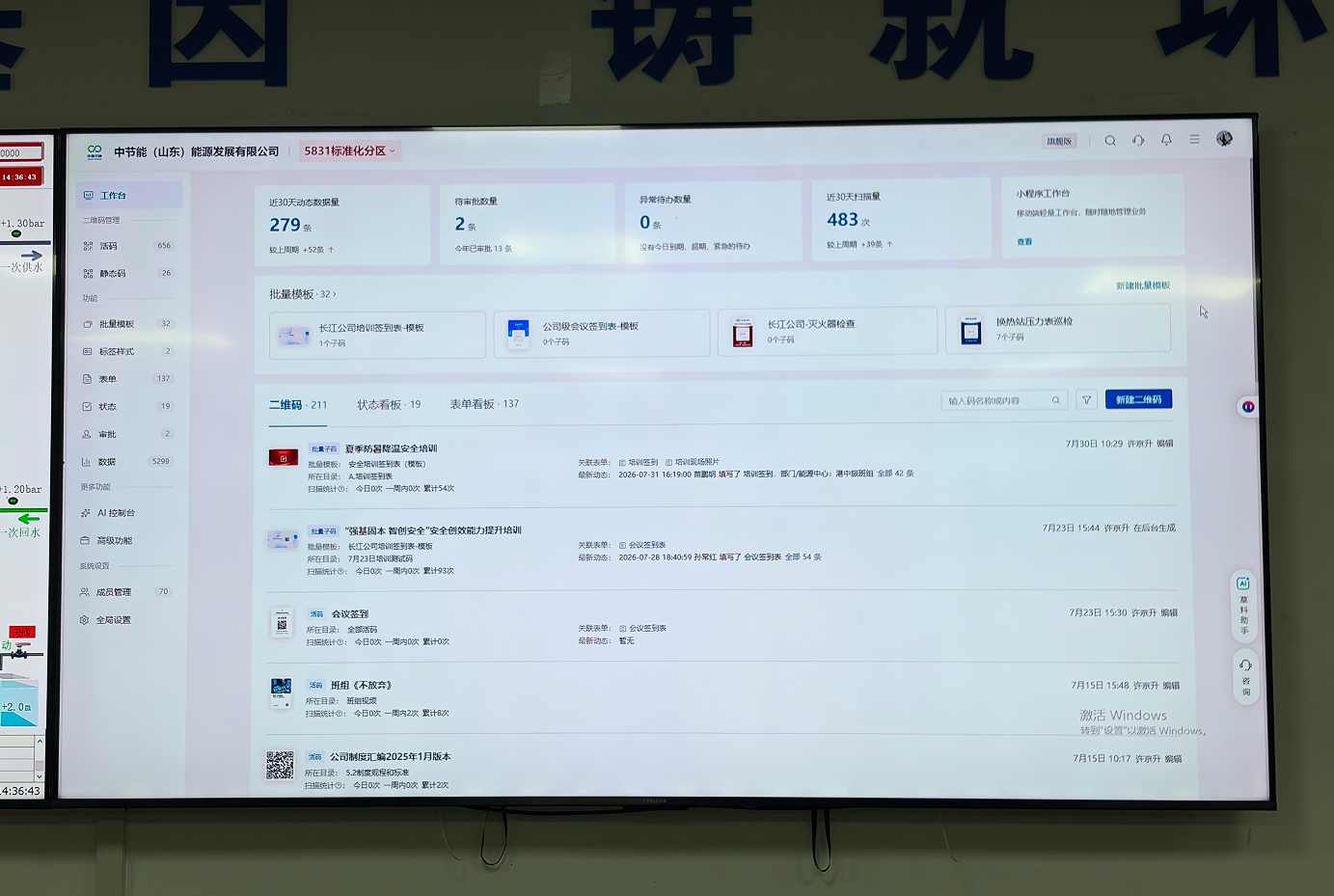
Following this idea, the task force took just over 2 months to build the whole "5831 Team Safety House" information system, generating 656 QR codes covering all 18 kinds of static and dynamic ledgers for the 17 elements, without writing a single line of code.
IV. Core Scenarios in Practice: Writing Control Rules into the System
Around the requirements of every element of the 5831 system, the task force embedded management rules into QR code features, covering several core scenarios of team safety management.
1. Pre-Shift Meetings: From "Paper Circulation" to "Scan and Done"
The pre-shift meeting is where a team's daily safety work starts and also one of the scenes with the most paper ledgers. In the past the team leader had to print the day's meeting materials 15 minutes ahead, circulate one per person on site and have them signed, which used a lot of paper and made records tedious to sort and file.
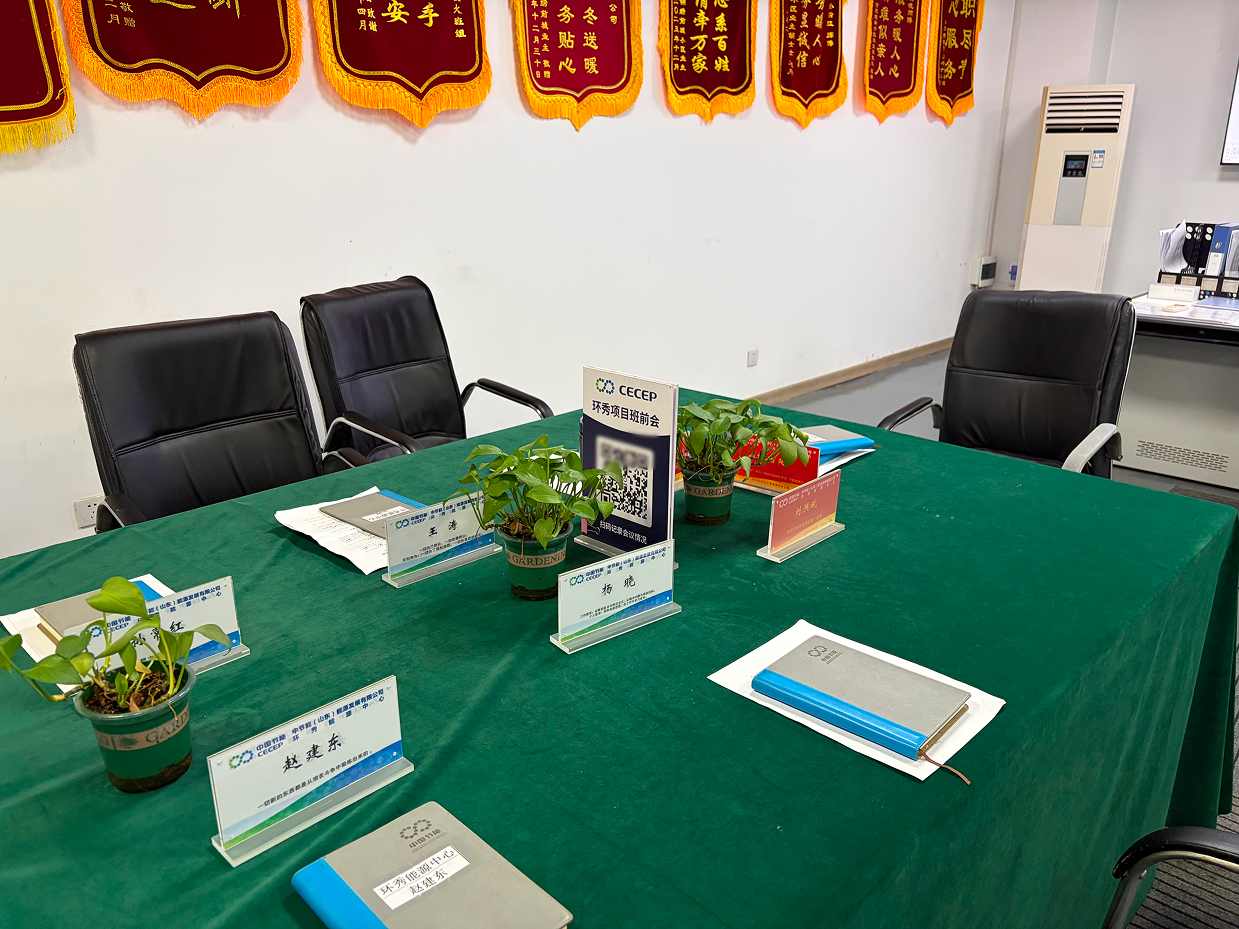
After the change, the pre-shift meeting QR code is made into a table card placed on the meeting table, with the day's meeting materials and sign-in sheet all integrated in the code:
- Employees scan to read the day's safety procedures and work tasks, with no paper circulation;
- They scan with WeChat and confirm with a handwritten signature to complete sign-in, and the workbench keeps attendee and time information automatically;
- Meeting materials can be updated at any time with the QR code unchanged, so employees scanning always see the latest content.
This change cut pre-shift meeting preparation from 15 minutes to 6 minutes and also saved much of the work of sorting and filing paper records. Before inspections in the past, each team had to collect and organize all kinds of training and meeting records in advance, and now you simply filter and export for printing by condition in the CaoLiao QR Code workbench, fully traced and verifiable.
2. Equipment Inspection: Multiple Anti-Faking Layers to Make Sure Checks Are Done On Time and On Site
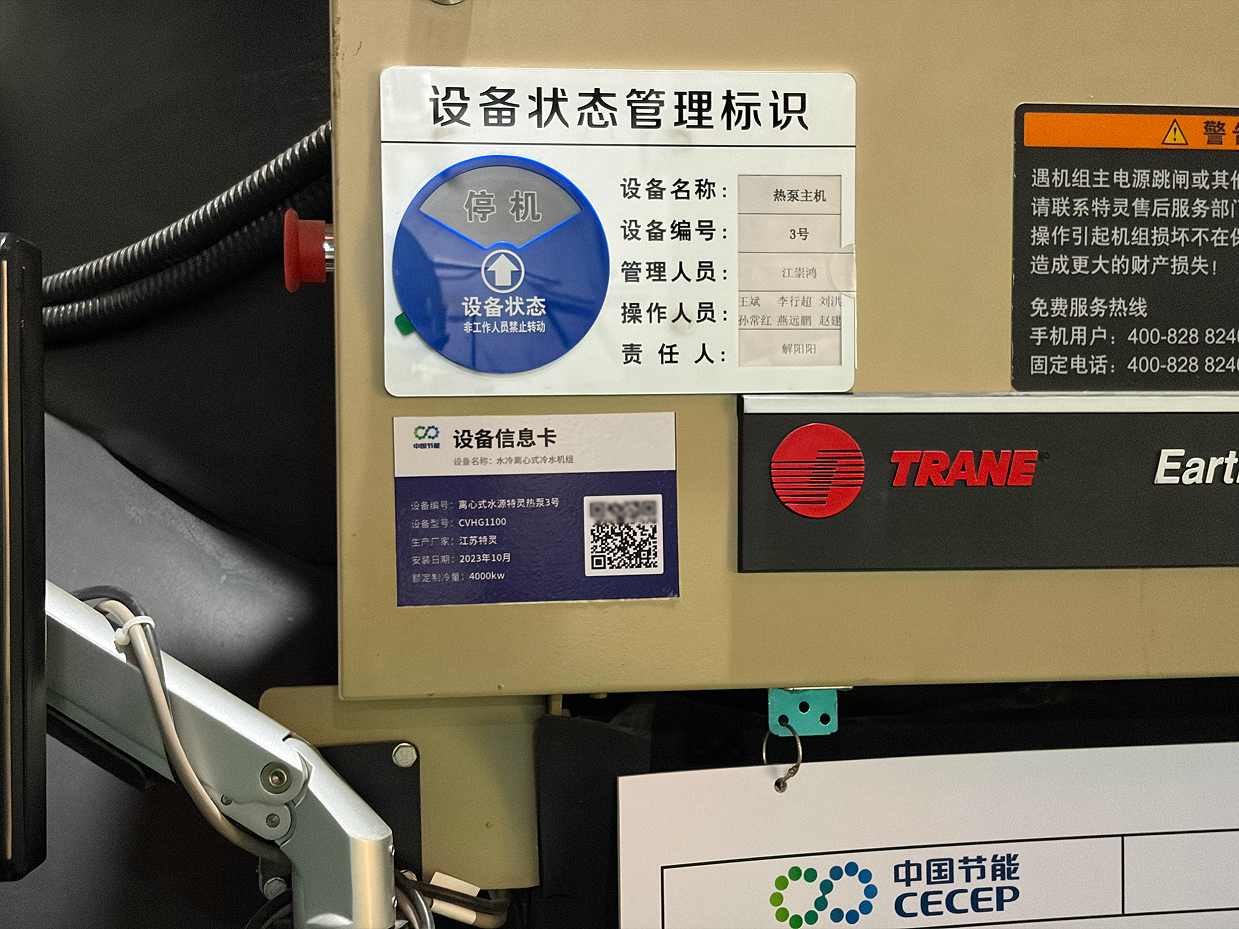
In the past, fire equipment such as extinguishers and production equipment used paper inspection cards, with problems of backfilling all at once afterward and cards getting lost. Now each piece of equipment has a dedicated QR code, managed the equipment inspection way, combined with anti-faking features to ensure inspections are genuine:
- Location restriction: employees must be within the set range of the equipment to scan and open the inspection form;
- On-site photos: the phone album is disabled, so photos must be taken with the camera on site, and they are automatically stamped with time and location watermarks;
- Handwritten electronic signature: before submitting an inspection record, people must sign by hand on the screen, making inspection responsibility clear.
Combining these restrictions greatly reduces the chance of fake inspections done away from the site and puts equipment inspection requirements into practice.
3. Hazard Inspection: Automatic Flow, with Rectification Time Cut to 0.9 Days
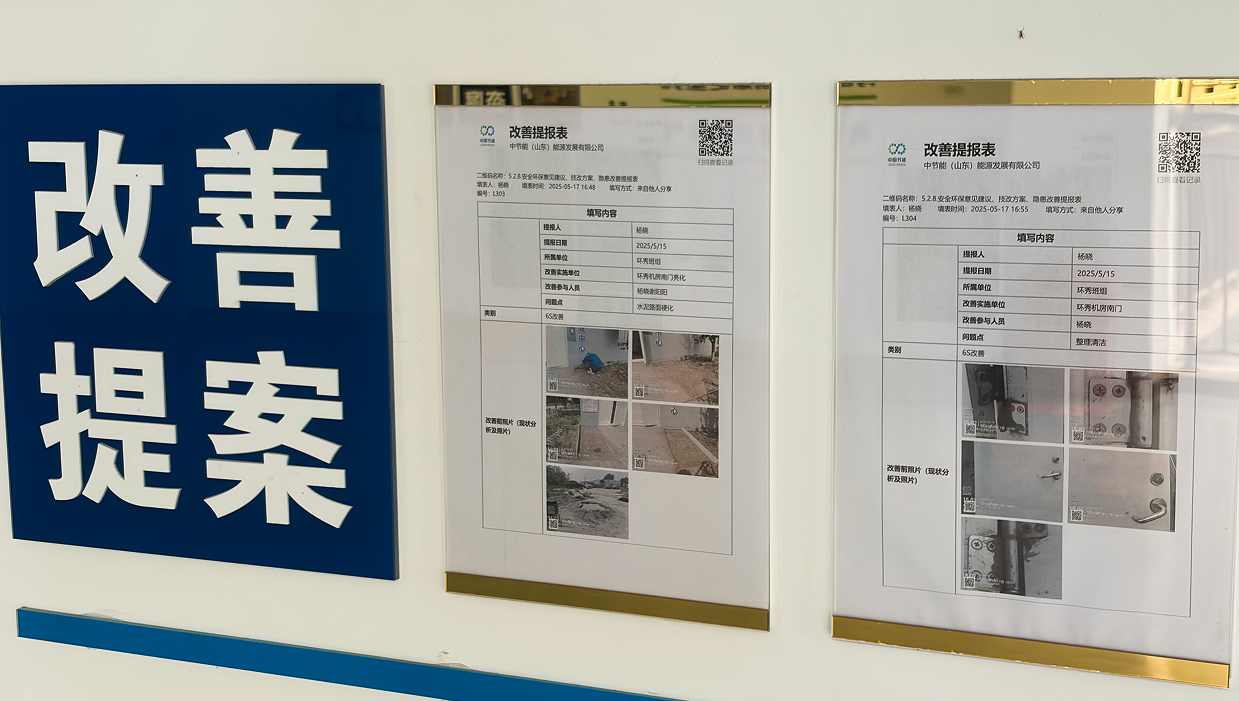
Traditional hazard inspection relies on paper registration and WeChat forwarding, with many handoff steps, unclear responsibility, and rectification progress hard to track.
Now, employees who spot a hazard scan on site and take and submit a photo, and the workbench pushes a notification to the person responsible automatically; after rectifying, the person uploads a photo of the fix, and a dedicated person rechecks and closes it, with the whole process traced online and progress clear. After the change, the average hazard rectification time fell from 3 days to 0.9 days, achieving a complete loop from finding a hazard to recheck and closing.
4. AI Assistance: More Data Travel, Fewer Employee Trips
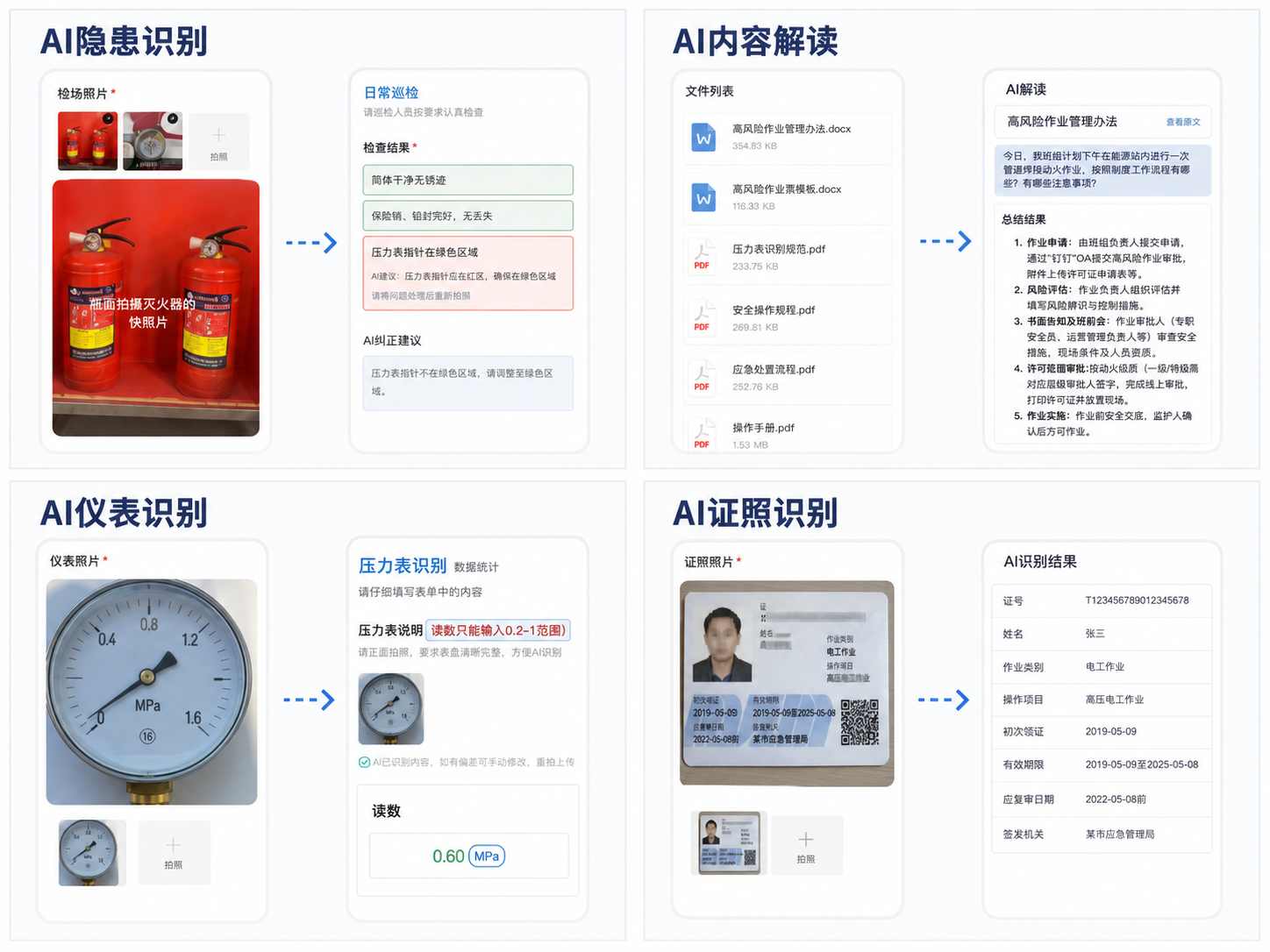
After the platform connected AI capabilities, the bar for frontline operations dropped further:
- AI hazard recognition: with AI image understanding connected, the system can interpret hazard images and fill in hazard information automatically, which both lowers the difficulty of frontline reporting and cuts omissions in manual judgment, forming a full-process loop of "photo, recognition, analysis, suggestion, rectification, recheck";
- AI content interpretation: when employees need to look up content related to the "5831 Team Safety House" system, they can just ask in plain language and get it quickly;
- AI scene reading: it can recognize ID card, passport, driver's license, and other document information for visitor registration and similar scenarios; it can also read all kinds of gauge readings such as temperature and pressure, cutting manual input work and the chance of errors.
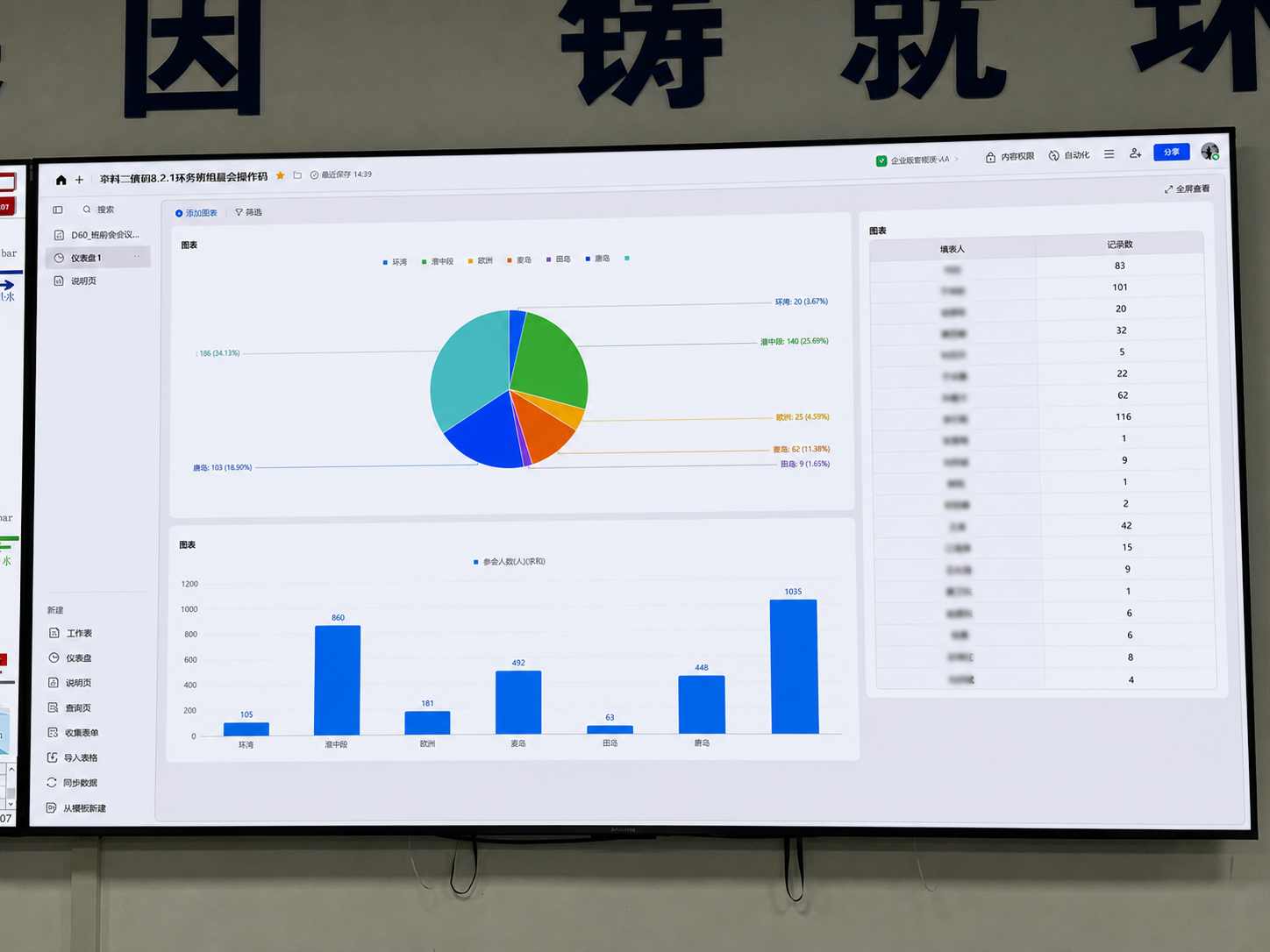
Inspections also become easier: managers filter precisely by person, time, and project in the workbench, and experts can scan on site to see dynamic records; when paper archiving is needed, they can export and print directly, keeping digital efficiency while meeting compliance archiving requirements.
V. Business Results: Less Burden on the Front Line, Peers Come to Learn
After the "5831 Team Safety House" information system went into operation, the most direct change was on the front line: time spent printing, filling in forms, and organizing ledgers was saved, and "more data travel, fewer employee trips" went from slogan to daily reality. Pre-shift meeting preparation time fell 60%, the hazard rectification cycle shrank by 70%, paper consumables cost dropped 85%, and after training materials settled online, their reuse rate rose to 90%. Converted, these savings are expected to save 47,000 yuan in direct costs and free up about 540 working hours a year.
In December 2025, the Huanxiu team was officially rated a national Grade-A safety management standardization team, a grade no frontline team in China's heating service industry had reached before.
After it passed the assessment, CECEP Shandong began replicating the approach in other teams. The Huanxiu team's building template has so far been promoted to 5 sister teams, and it was invited to give special training to more than 50 units in the China Energy Conservation system, demonstrating how to sort out directories, build QR codes, and apply them on site. Compared with developing a management system from scratch, this method of digitizing an existing management system with QR codes is low-cost and quick to pick up, and has therefore become something many units focus on exchanging and borrowing.