Reflections on Digital Transformation: A Case Study of CaoLiao + Tencent Hiflow
Original: https://cli.im/article/detail/2037
When someone mentions digital transformation, what comes to your mind? Flashy software, high costs, or something exclusive to technical staff?
--- My answer is: "Everyone can be a digital capability designer."
In the corporate world, conversations like this are common:
"Isn't this repetitive process troublesome?"
"Never mind, the data volume isn't large. We'll handle it manually."
In the workplace, few excellent managers would praise such "diligent" employees. I silently respond: "Who pays for your hard work?"
For a company's economic activities, there might be multiple partners like subsidiaries, functional management, financial management, risk control decision-making, etc. Different users also need to utilize various internal systems with different focuses. Before these systems are fully synchronized, due to numerous inherent processes, high re-engineering costs, and many participants, people often resort to the "create new Excel" solution.
Could there be a better approach?
Below, using the establishment of the CaoLiao + Hiflow financial service system as an example, I'll share some insights about building digital capabilities.
Since last year, to facilitate maintenance needs for our internal multiple business and financial systems, I considered whether it's possible to build a standardized ticketing system, making all user-raised issues more complete and standardized. After researching various software systems and communicating with multiple technical teams, the feedback was: "The logic isn't complex, but it takes months, and data synchronization is difficult." Thus, I took the lead in building a one-stop service platform.
This system primarily relies on CaoLiao QR Code's powerful data collection capabilities + Hiflow platform's versatile connectivity. I won't elaborate further on previous posts.
As someone who tests over 100 applications annually—a "tool person"—I mainly want to review the main competitive advantages of CaoLiao and Hiflow apps compared to market competitors:
(1) CaoLiao QR Code
Initially, when aiming to solve ticketing management, the basic requirement was a form filling and submission system, adopting a 1-code-1-form approach where all issues shared one form type.
As demands increased, a single ticket type couldn't meet diverse needs. Testing other products might require a nine-square grid of QR codes to achieve functionality (highly impractical in practice). It wasn't until I saw CaoLiao's feature-rich summary pages that I realized my envisioned integrated platform had found a carrier.

Advantage 1: Summary page functionality, which many competitors lack
Most competitors build product chains as "form -> code -> data statistics." Almost none achieve the integration like CaoLiao: "form -> code -> summary page -> data statistics -> MySQL/webhook API." The summary page functions much like editing a WeChat Public Account article.
Advantage 2: Integratable with WeCom, automatically syncing contacts
For partners within the organization, another major issue is data security and user privacy. WeCom support allows seamless integration for company scenarios. Often, I see other companies using personal versions of various software to collect business information, which is legally problematic. CaoLiao handles this very well.
Advantage 3: Trying out most scenarios is almost free
Personally tested, this is much more sincere than many other QR code tools on the market. Some vendors even charge for a short link 😃
For this product, I believe anyone with data collection needs shouldn't miss it.
If I were to suggest improvements, I'd recommend enabling write functionality for certain indicators in specific scenarios.
For example, temperature and humidity data in inspection scenarios: if a company has IoT sensors, data could be synchronized automatically. Personnel would only need to perform a "secondary check," not "copy."
Or, environmental photos could be automatically uploaded from cameras to generate tickets, which are then reviewed and processed via WeCom.
(2) Hiflow Platform
Around October 2019, Tencent first announced the SAAS "Qianfan" plan. One of its original intents was to address the pain point of many enterprises needing extensive secondary development to interconnect numerous systems. It's an important implementation tool. My summary for them is "Versatile, Fast, Good, Economical"—leveraging connectors, "everything can be zero-code."

Additional scenarios achievable with CaoLiao QR Code + HiFlow
Extended application of the integrated service platform: Sending work weekly reports and periodic summaries Our integrated platform already handles timely ticket reporting, reminders, routing, and knowledge base accumulation. However, it lacked features like "weekly, monthly, yearly summaries." Towards year-end, I added a bot to generate work summaries.
Scenario example:
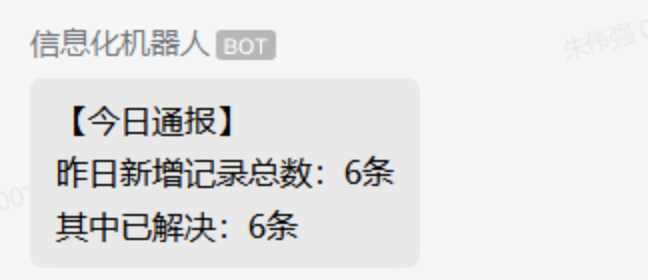
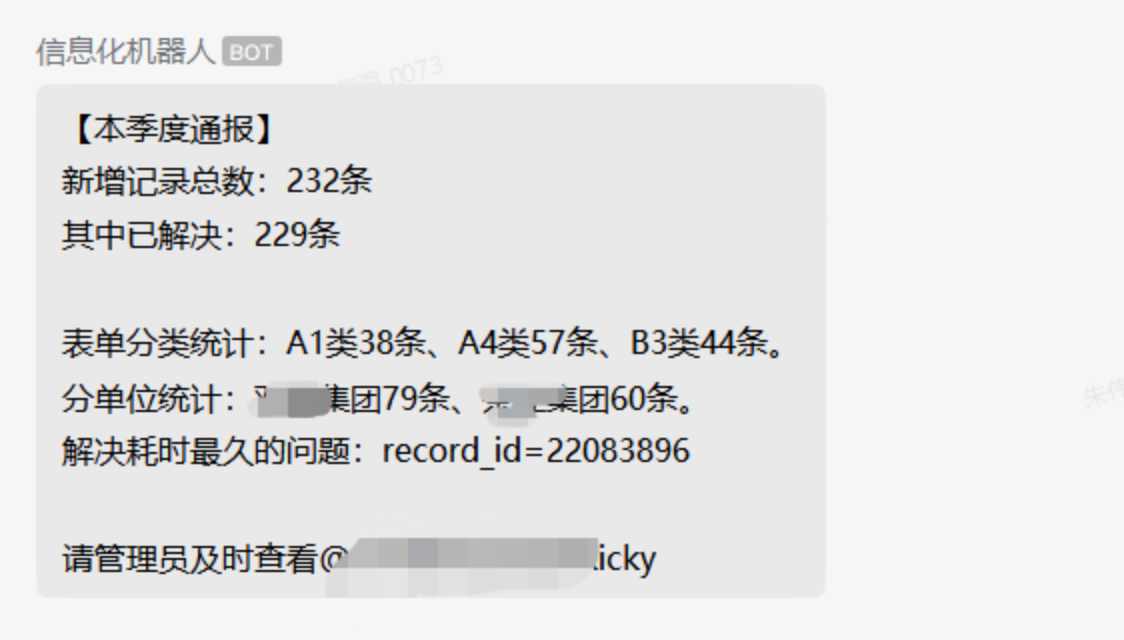
This way, when writing weekly reports, administrators can simply copy and paste.
It's worth noting: I initially thought this functionality would be simple. However, conditionally filtering data line-by-line from a MySQL database and pushing results required a shift in thinking. The process I used was: CaoLiao QR Code MySQL -> Tencent Docs (query smart sheet) -> Field calculation (add 1 after matching conditions) -> Tencent Docs (update data).
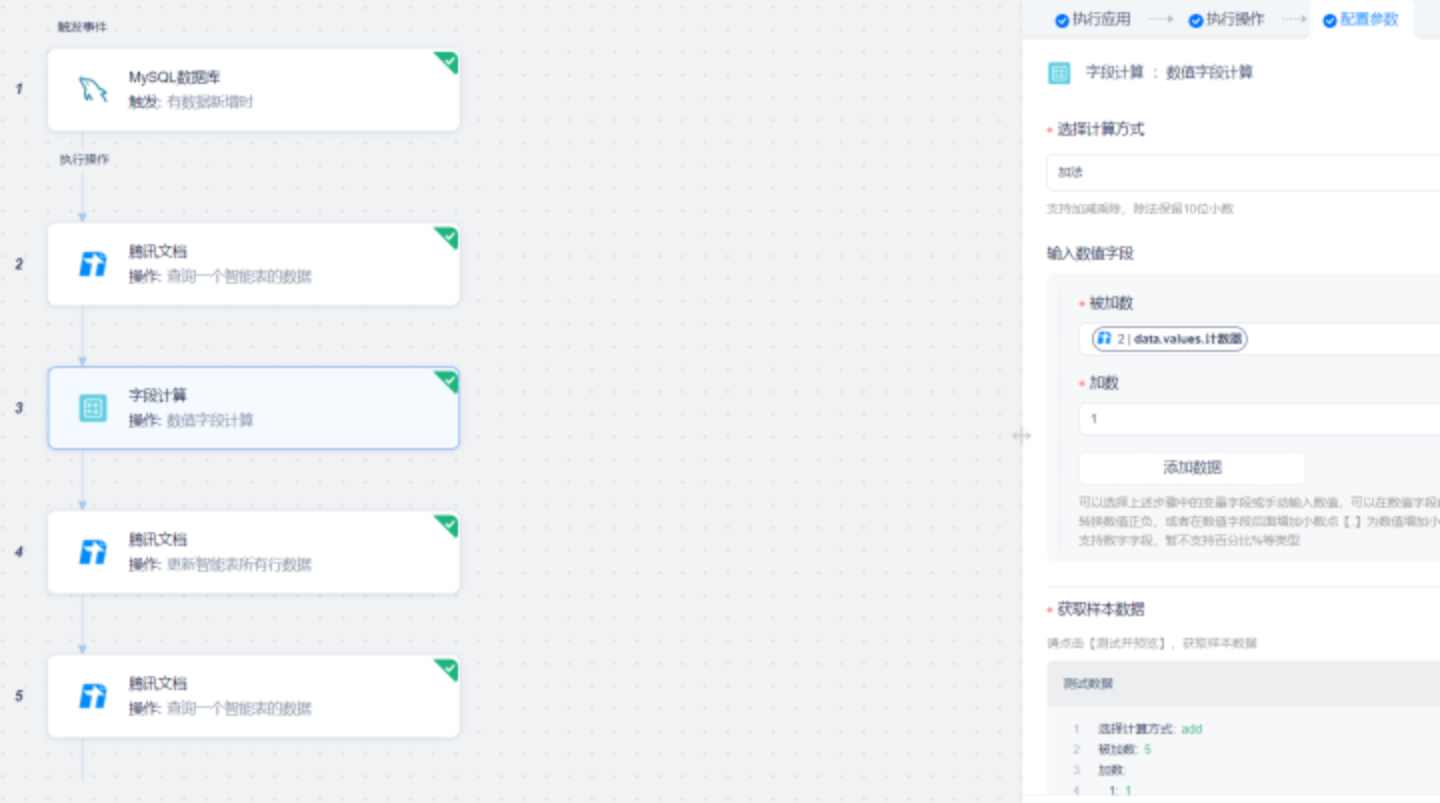
Using the above process, you can get a synchronously updated "pivot table" based on the MySQL database.
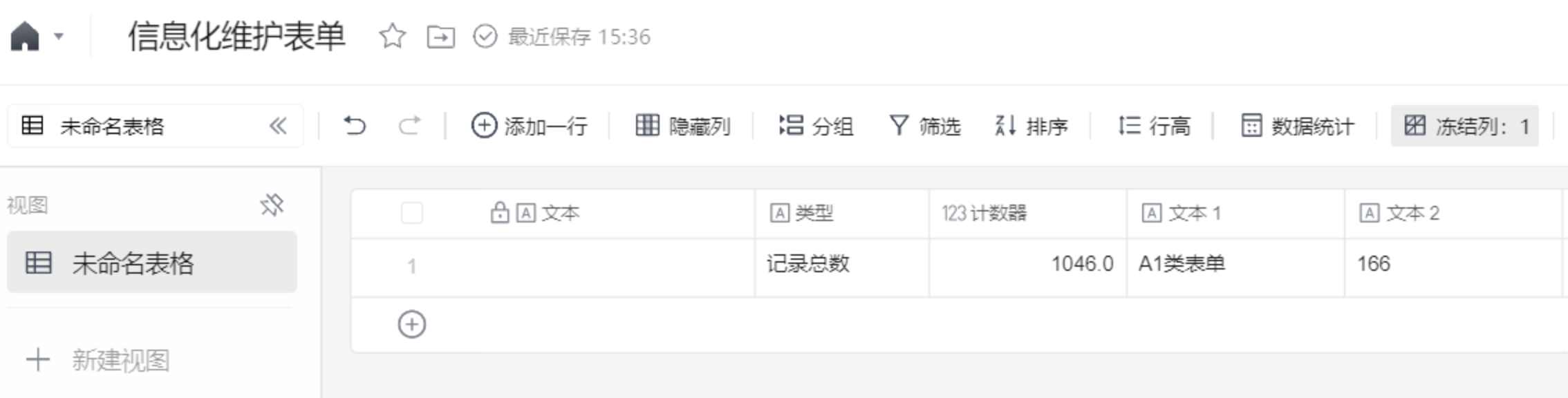
The next step is pushing to a webhook bot to draft monthly/weekly reports.
Summary of this year's digital construction efforts
- What are the key success factors for digital transformation? Leadership determination > Clear strategic planning > Organizational structure change > Suitable talent > Employee learning ability > Sufficient budget > Hardware
- Digital transformation is never just about spending money on services. From my implementation experience, it's fundamentally a mindset.
- Maintain curiosity about excellent software tools and uncover more efficient productivity methods.
- Stay diligent in consuming high-quality, firsthand information sources.
As 2023 approaches, I hope to gain another capability next year: providing every user of our integrated platform with a "personalized annual report."