2025 Review of 5 No-Code Platforms in China
Original: https://cli.im/article/detail/2273
I. What is a "No-Code Platform"?
Simply put, it allows ordinary people without programming knowledge to create websites, applications, or management systems using pre-built modules and components, much like building with blocks. By dragging and dropping different components—such as buttons, images, and text—users can design the desired interface and define how these components function.
The advantage of no-code platforms lies in their ability to simplify system development and lower the technical barrier. Without requiring specialized programming skills, anyone can easily get started, bring their ideas to life, and save both time and costs.
II. Overview of 5 Mainstream No-Code Platforms in China
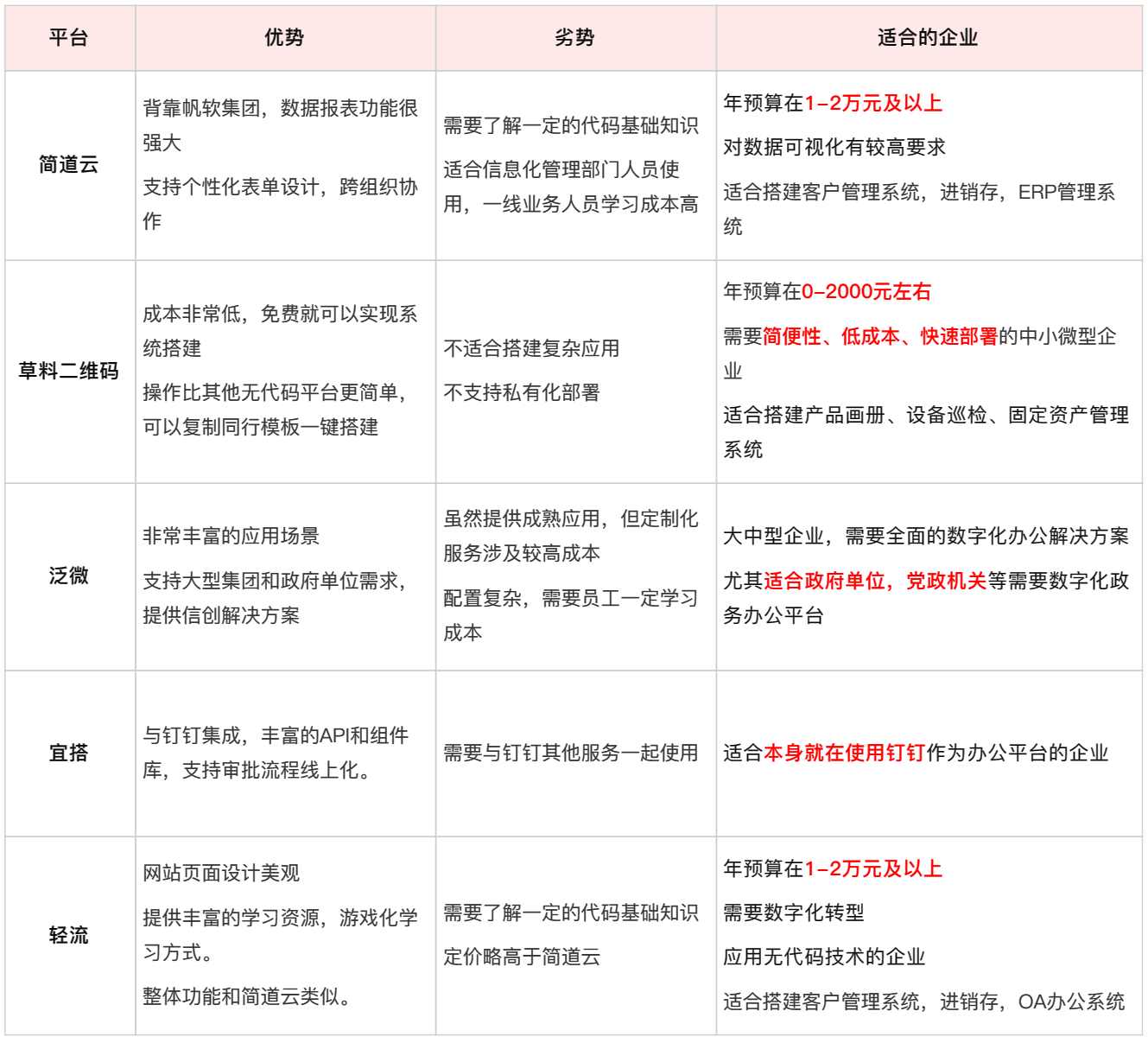
III. Detailed Comparison
01 Jiandaoyun
Official Website: https://www.jiandaoyun.com/
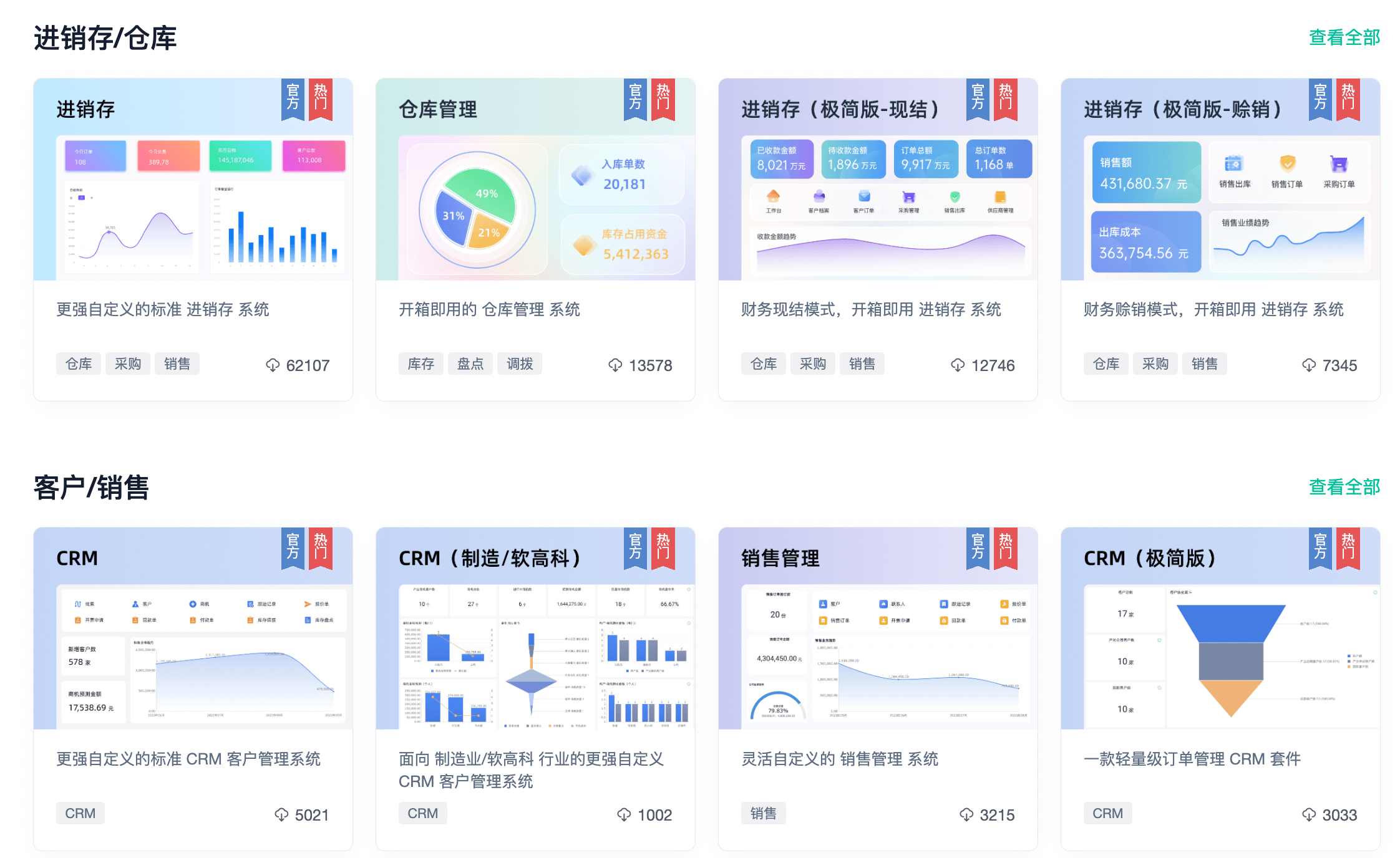
One-Sentence Review: A no-code platform backed by FanRuan, primarily capable of building inventory management systems, CRM customer management, and ERP production systems. Supports cross-organizational collaboration, making it suitable for complex projects requiring multi-department or multi-team coordination. Users new to zero-code platforms may need some time to familiarize themselves with the platform's operations and features. The platform's data visualization capabilities are very robust, which is expected given FanRuan's strong background in BI tools.
Pricing: Based on the recommended Enterprise edition, priced at 365 RMB per person per year, with a minimum purchase of 30 users, the annual cost would be approximately 10,950 RMB.
Main Features:
1. Forms Tool: Online forms for data collection, offering a rich set of form fields and properties. Users can flexibly define business rules based on business scenarios and logic, creating application scenarios that meet enterprise needs, such as employee records, check-in/check-out, registration forms, etc.
2. Process Tool: Allows users to customize process nodes and assign responsible persons for each step. Combined with to-do lists and notifications, it can easily implement complex business scenarios like reimbursement requests, weekly report approvals, task assignments, etc.
3. Dashboard: Provides rich charts and components to analyze and display collected data in real-time. Offers 10 practical dashboard styles to aid decision-making and management.
02 CaoLiao QR Code
Official Website: https://cli.im/
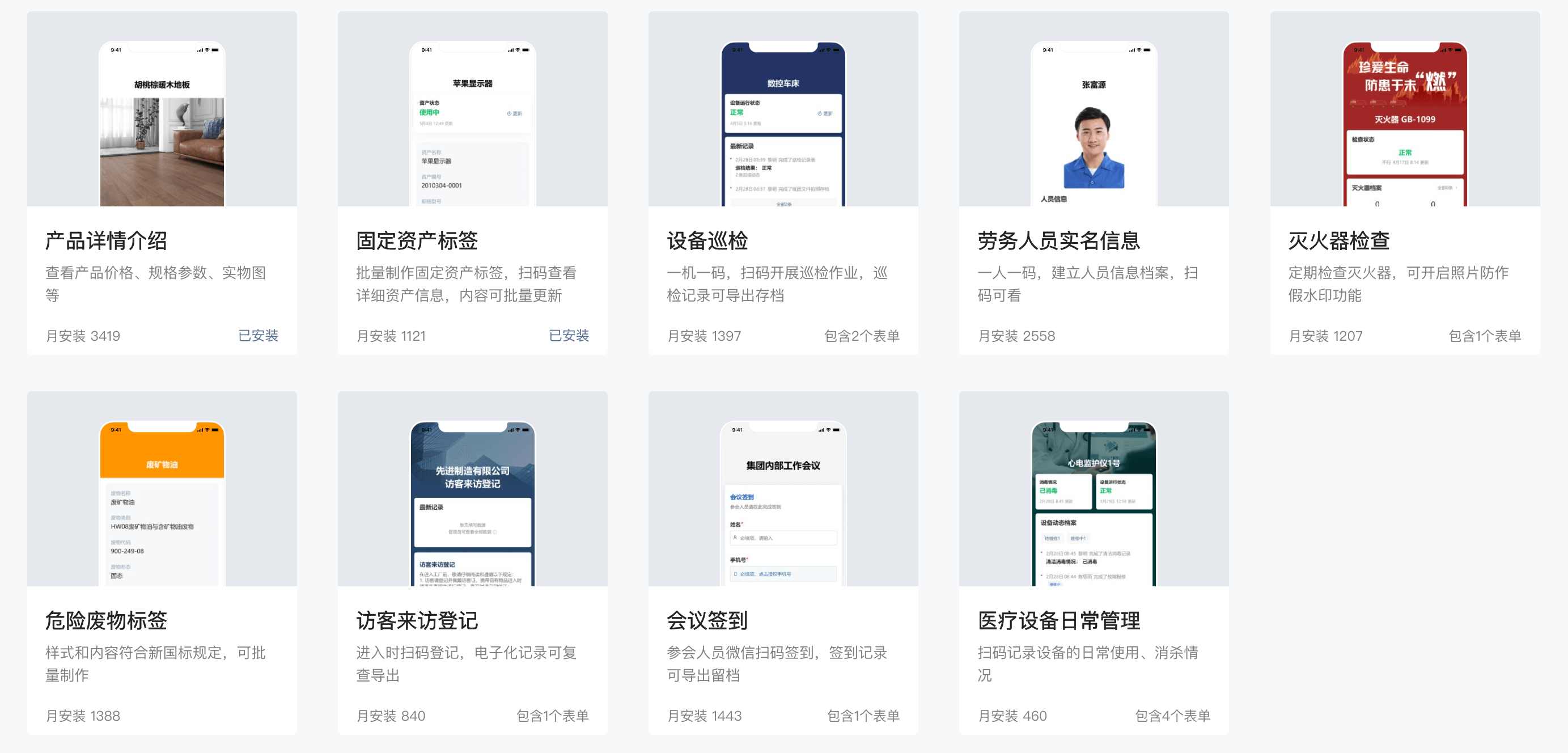
One-Sentence Review: CaoLiao has distinct characteristics; its advantage lies in its ease of use. Users can directly copy templates from peers to complete system setup, making it easier to get started than most no-code platforms. Additionally, it has low barriers; users can build multiple systems for free, such as product catalogs, equipment inspections, fixed asset management, and personnel management. However, it does not support private deployment or custom feature development. It is suitable for small and medium-sized enterprises that are cost-sensitive and require simplicity, low cost, and rapid deployment.
Pricing: Starting from 0 RMB. Based on the recommended Flagship edition, the annual cost is approximately 2,680 RMB.
Main Features:
1. Dynamic QR code functionality: Allows users to upload files such as PDFs, videos, etc., and generate QR codes. The content of these QR codes can be modified at any time, and view counts can be tracked.
2. Forms functionality: CaoLiao's forms functionality allows users to create forms and link them to QR codes for information collection. Forms can include various components like radio buttons, checkboxes, text boxes, etc., to accommodate different data collection needs.
3. Notifications: The system can automatically push notifications to administrators, maintenance personnel, etc., supporting custom notification rules to ensure timely information delivery.
4. Member management: The member function is used for internal personnel management. Members can be grouped by department or identity group, and different QR code permissions can be set for different members to facilitate division of labor and ensure data security.
03 Weaver e-builder
Official Website: https://www.e-builder.cn/
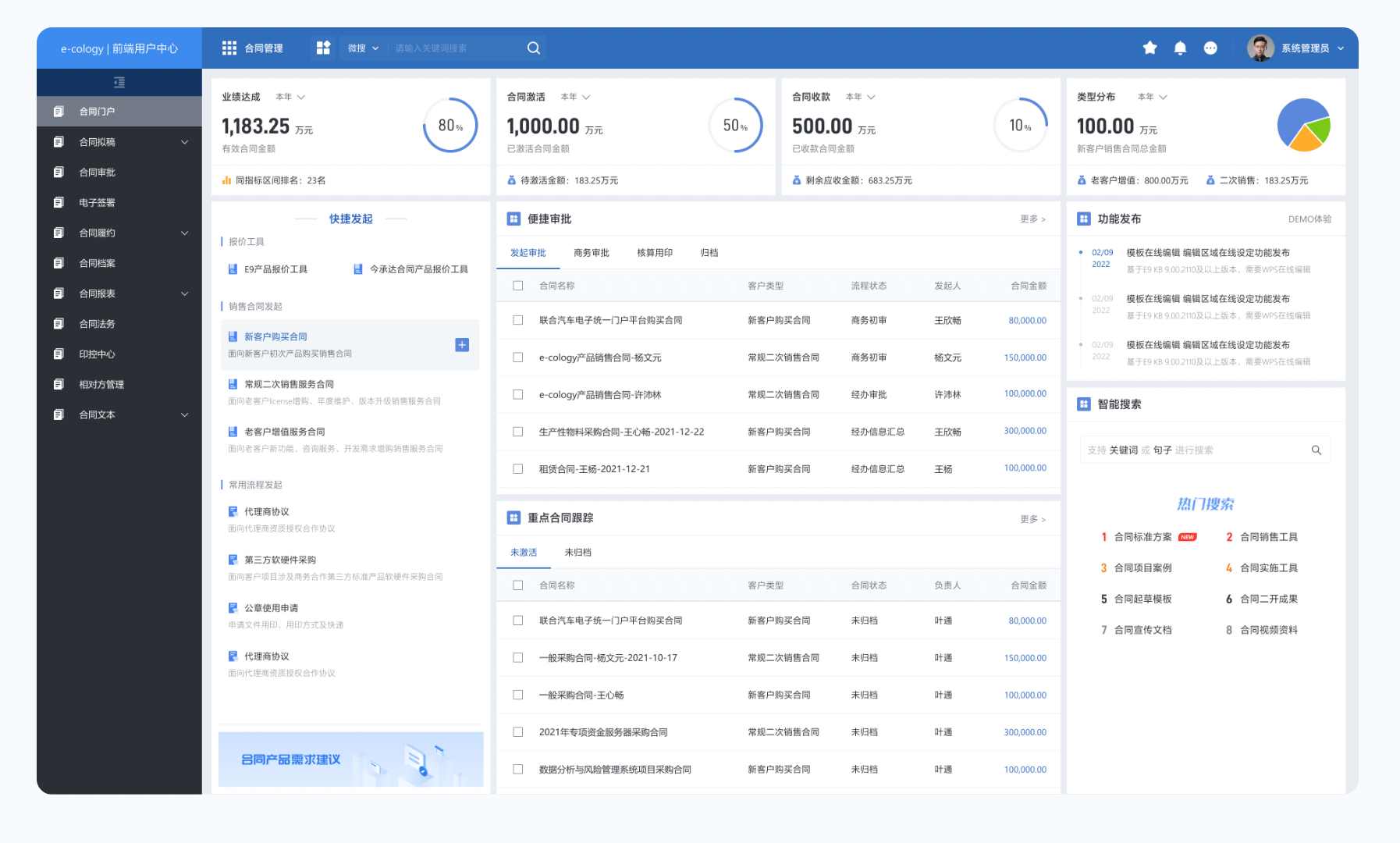
One-Sentence Review: A company offering comprehensive solutions with broad and robust functionality. Suitable for building complex systems like OA systems, human resource management, marketing management, and knowledge management. In addition to no-code, it also supports low-code and full-code development methods, allowing enterprises with development capabilities to build complex business applications themselves. Furthermore, Weaver supports XinChuang (IT application innovation) solutions, making it well-suited for government agencies, party and government organs, and other units requiring technological self-reliance and controllability.
Pricing: Suitable for medium and large enterprises. However, Weaver's complex features and support for XinChuang result in a steeper learning curve. Pricing requires contacting Weaver's sales representatives for a custom quote, leading to higher procurement costs.
Main Features:
1. Visual Form Design: Provides over 300+ form controls and thousands of form templates, enabling the construction of even complex business forms through simple drag-and-drop.
2. Multiple Development Methods: Supports no-code, low-code, and full-code development approaches to meet the needs of different users. Even complex requirements can be implemented.
3. Intelligent Building (Auto-Code): Simplifies the application building process into three steps through intelligent parsing of imported forms, application adjustment, and publishing.
04 Yida
Official Website: https://www.aliwork.com/
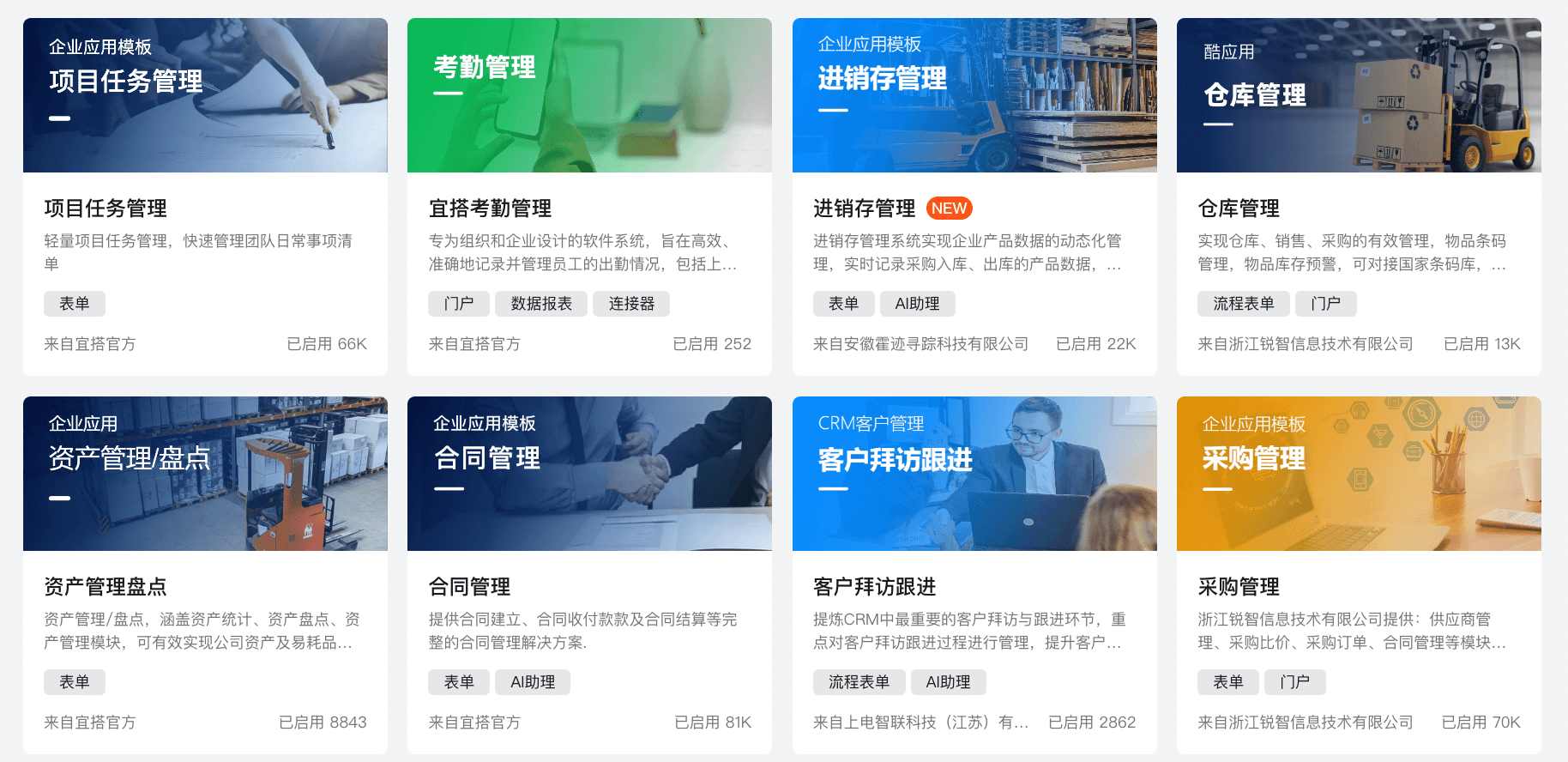
One-Sentence Review: A low-code development platform under Alibaba, part of the DingTalk product suite. Specifically designed to provide convenient and efficient capabilities for enterprise digital transformation. It is well-suited for building CRM customer management systems, supplier and procurement management systems, and inventory management systems.
However, being integrated with DingTalk also imposes certain limitations. Therefore, if your company already uses DingTalk for daily operations, and routine approvals and workflows are tied to it, then building other applications that meet business needs through Yida becomes more convenient.
Pricing: Yida is paid annually. Based on the recommended Professional edition, the annual cost is approximately 5,988 RMB.
Main Features:
1. Form Filling: Simplifies the process of data collection and entry.
2. Process Collaboration: Supports workflow automation and collaboration.
3. Reports: Offers relatively rich data charts and data processing capabilities. Efficient visualization solutions enable data visualization and value insights.
4. Cool Message Cards: An innovative way to display messages, improving the efficiency of information delivery.
05 Qingflow
Official Website: https://qingflow.com/
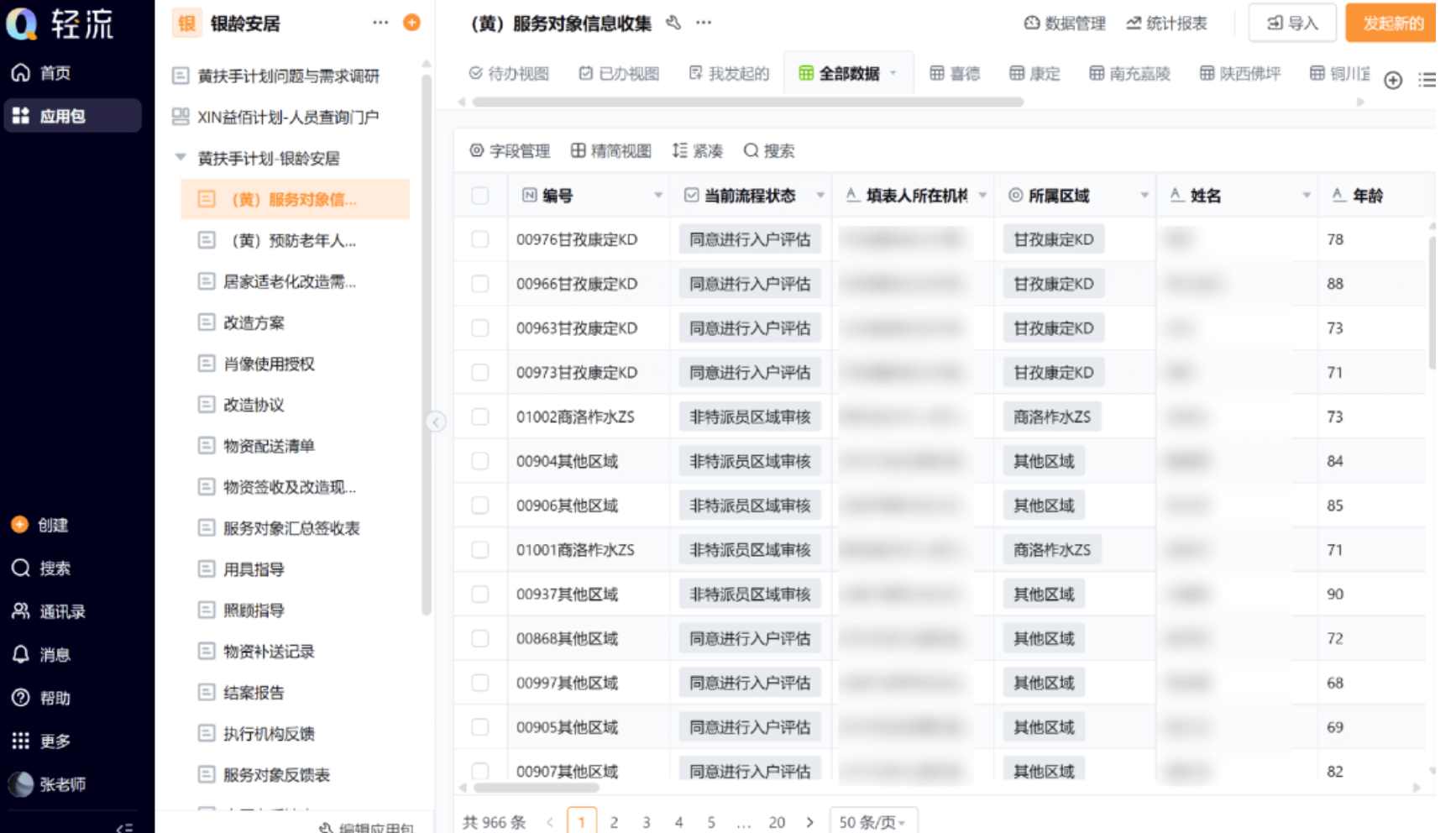
One-Sentence Review: Qingflow's applicable scenarios are quite similar to Jiandaoyun. Its main functional modules also focus on forms, processes, and data analysis charts. Qingflow's website design is more refined and aesthetically pleasing, offering a comfortable browsing experience. Both platforms are very suitable for building inventory management systems, OA systems, and CRM customer management systems. Regarding data visualization features, Jiandaoyun's free version supports basic components like pie charts and line charts, whereas Qingflow's free version does not; users must purchase the cheapest Team edition (starting at 9,600 RMB) to access these features.
Pricing: If your team has 50 people:
For Qingflow, you would need to purchase the Enterprise edition, priced at a flat rate of 19,600 RMB per year, which includes 2 million total data records.
For Jiandaoyun, also the Enterprise edition, the cost would be 365 RMB/person/year * 50 people = 18,250 RMB per year, which includes 3 million total data records.
Main Features:
1. Form Engine: Creates business forms as the entry point for enterprise data. Can be used for data collection.
2. Process Engine: Allows users to customize business processes, improving the efficiency and convenience of business process management through online form records and automated workflows.
3. Report Engine: Provides custom reporting functions to help users monitor project status and improve decision-making efficiency.
IV. No-Code Platforms Lower the Barrier to Enterprise Digitalization
Whether for startups or industry giants, no-code platforms provide a low-barrier solution. As technology continues to advance, no-code development platforms are becoming increasingly intelligent and powerful.
The author believes that with the continuous development of no-code platforms and the increasing maturity of AI technology, the technical threshold required for building systems is gradually decreasing. This provides an opportunity for frontline employees who have a deep understanding of business processes to participate in the development of business systems, allowing them to fully leverage their professional experience and innovative capabilities.
Only when the end-users of a system are personally involved in its construction can we ensure that the system design is more closely aligned with actual business needs and can be flexibly adjusted and optimized according to business development, adapting to the constantly changing market environment.