Tower Crane Inspection
Establish electronic equipment files and inspection records for engineering machinery and special equipment. Scan the QR code to add daily inspection records. Abnormal conditions can be accurately reported with text, images, or videos, automatically triggering notifications to responsible personnel to ensure safety.
Basic Information
- Monthly Installations: 1008
- Monthly Visits: 688
- Original Text: https://cli.im/template/detail/121463629
Case Tag Image

Usage Instructions
I. Problems Solved
Traditional special equipment inspection methods face the following issues:
- Manual entry is prone to errors and potential data falsification.
- Abnormal conditions cannot be handled promptly.
- Paper-based data is difficult to aggregate and analyze.
To address these problems, we use QR codes to replace paper checklists, generating a unique QR code for each piece of equipment, achieving "one code per device."
- Inspectors use WeChat to scan the code, view equipment information, perform checks item by item, and take on-site photos to prevent missed or falsified inspections.
- When inspection results are abnormal, the system automatically notifies the maintenance supervisor for timely response and resolution.
- Inspection data is stored under the account, allowing managers to view, trace, and export data for analysis anytime via the workbench.
This template is suitable for all special equipment like tower cranes, lifting forklifts, and air compressors. Each piece of special equipment corresponds to one QR code, made into a label attached to the equipment. Scanning the code initiates the inspection.
II. Equipment File Information, Viewable via Scan
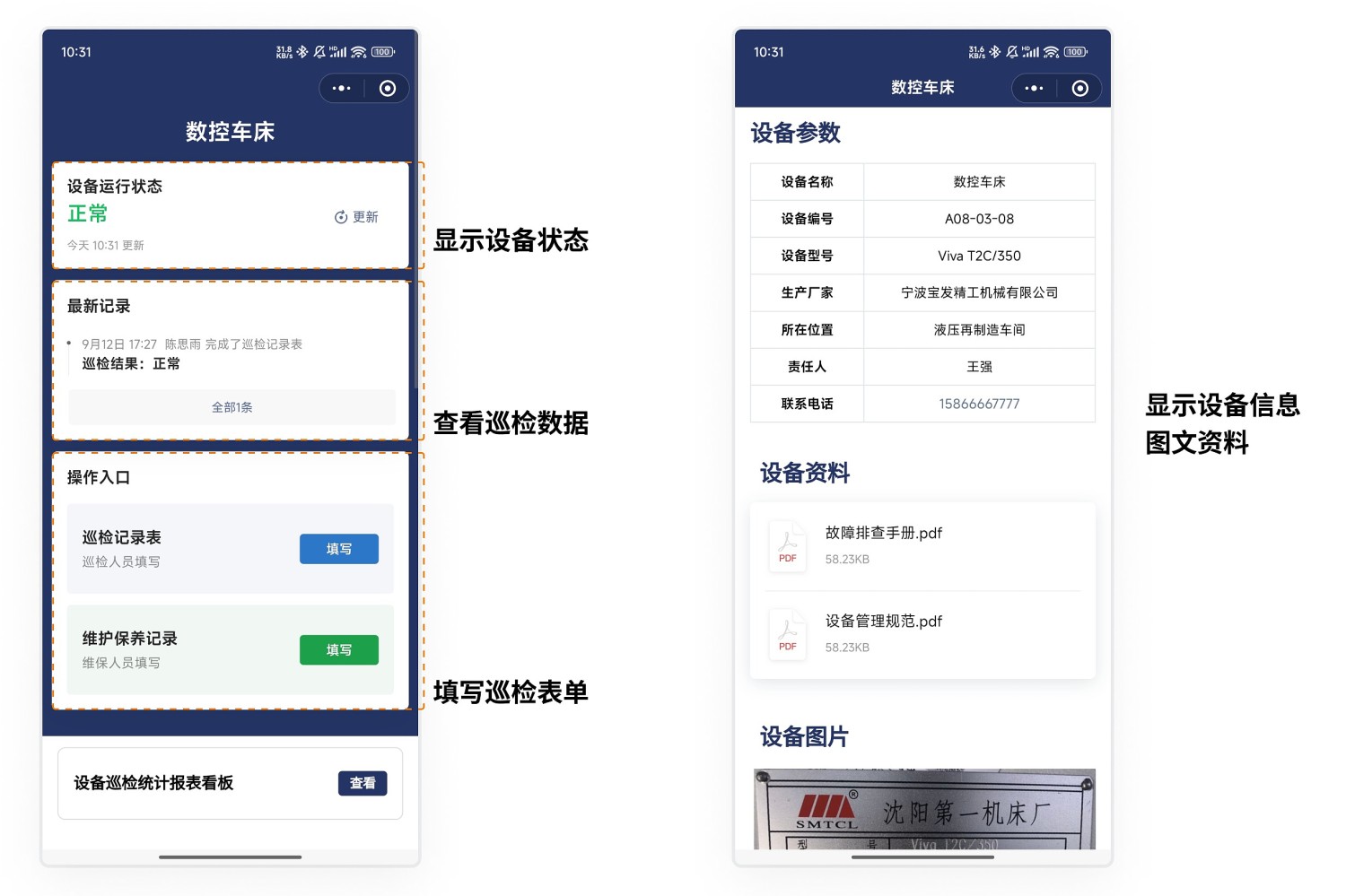
One code per device; scan to view equipment information.
- View equipment parameters and documentation: After scanning, inspectors can see the device's basic information.
- Update equipment operational status: Update the operational status promptly based on the equipment's condition.
- Fill out the inspection form: Record the inspection status item by item.
- View inspection data for this device: Understand historical inspection records and issues.
Note: If there are other items requiring recording for the equipment, more forms can be added. One QR code can be associated with multiple business forms, such as: checklist, fault repair form, equipment startup/shutdown record form, etc.
III. Scan with WeChat to Record Inspection Status
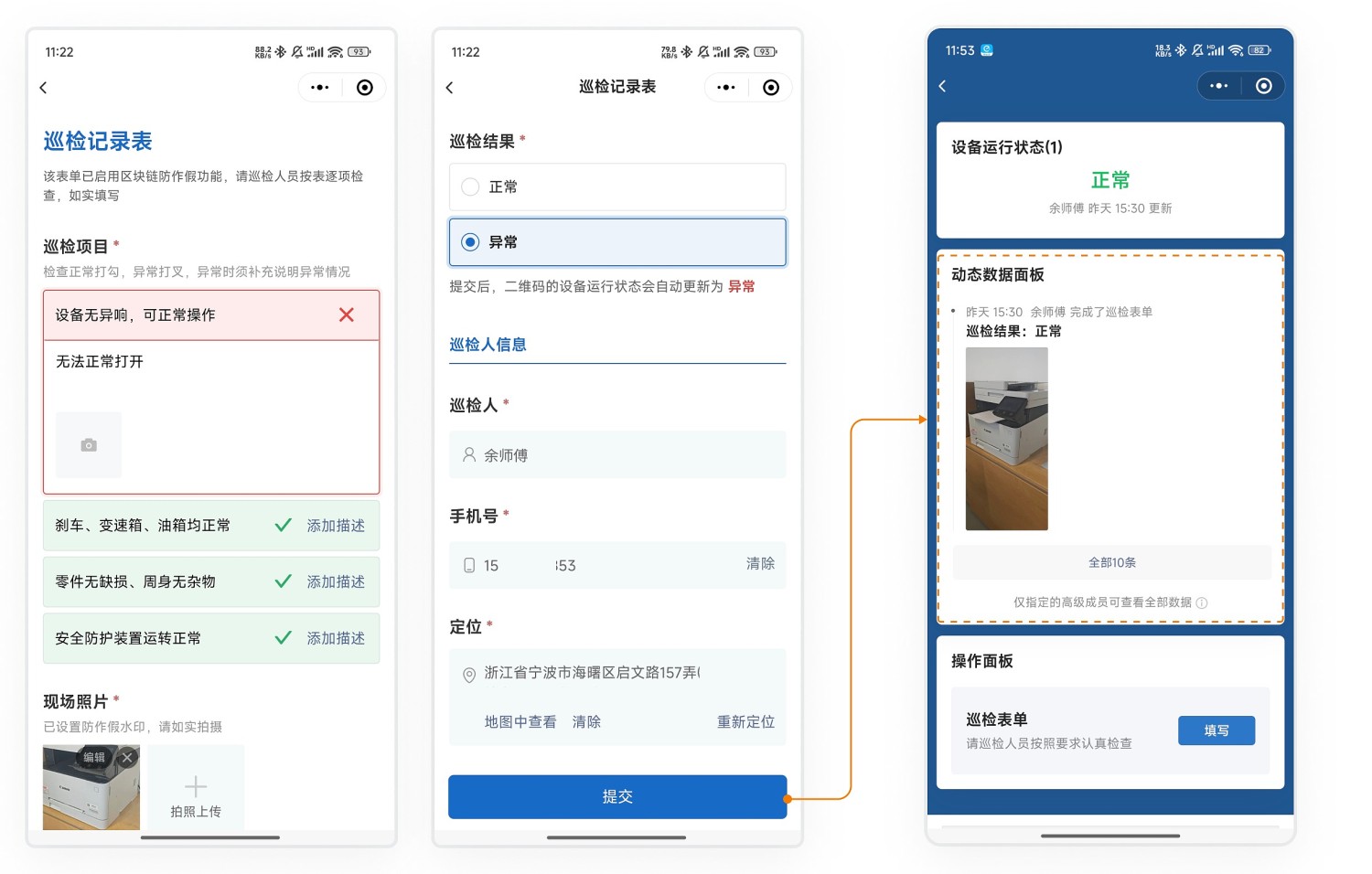
Inspectors use WeChat to scan the code and record the inspection status according to the predefined inspection form specifications, checking item by item. To prevent falsified inspections, we offer the following features:
- Only allow on-site photo capture: Ensures photo authenticity.
- Photo watermarking: Automatically adds time, location, and other information to photos.
- Location function: Records the inspection location.
- Blockchain notarization: Protects data authenticity and prevents tampering.
Collected inspection data is displayed on the dynamic data panel, viewable by scanning the code. View Forms Features
IV. Handling Abnormal Conditions, Recording Rectification Details
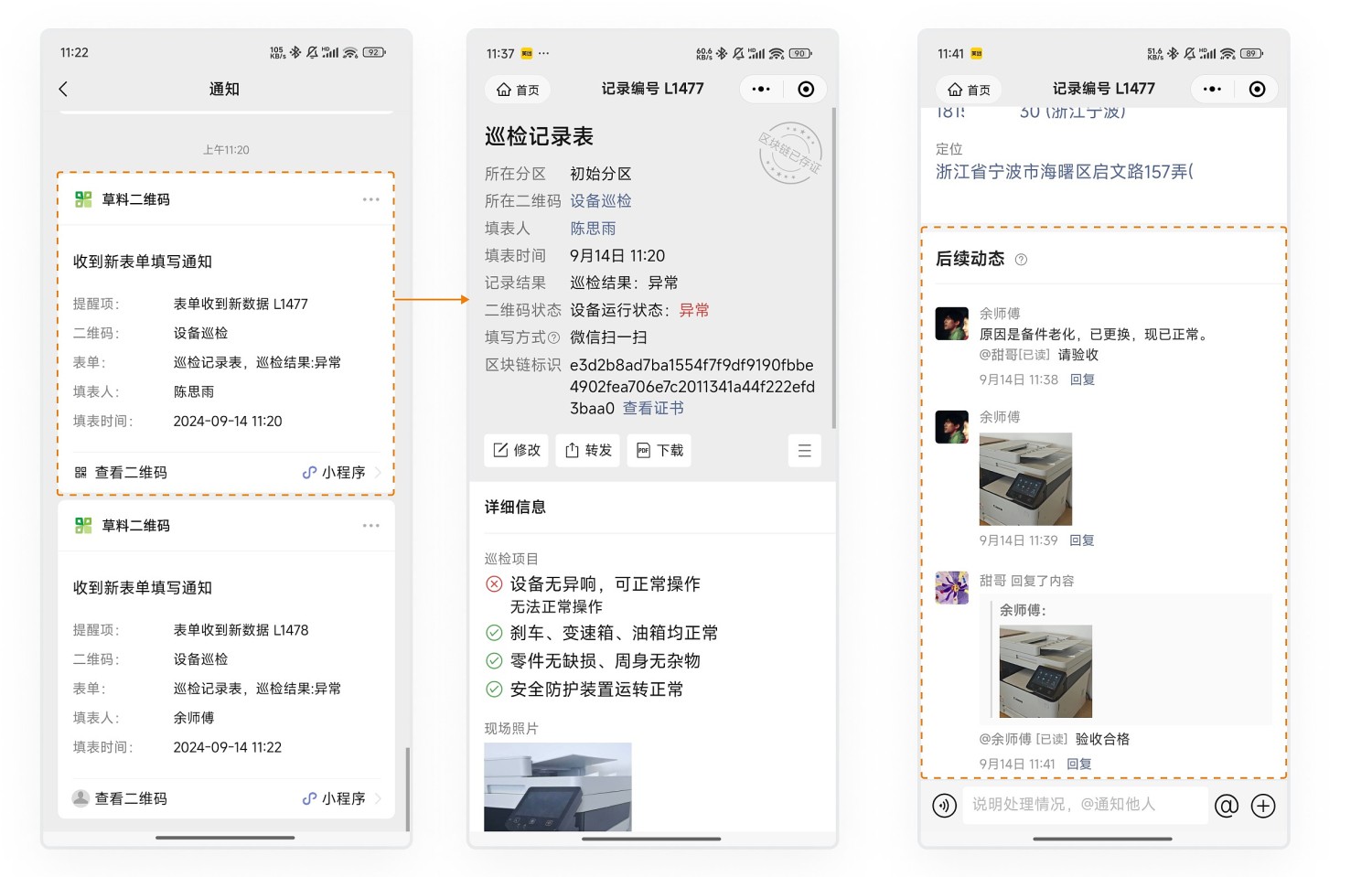
When inspection results are abnormal, the system automatically notifies maintenance personnel via WeChat.
- Maintenance personnel, upon receiving the abnormal record, follow up promptly, completely recording the entire maintenance and rectification process.
- Acceptance personnel perform acceptance confirmation to ensure the issue is resolved.
The entire process is recorded, facilitating later analysis and improvement. Learn about the scenario description
V. Regular Inspections, Pre-Expiry Reminders
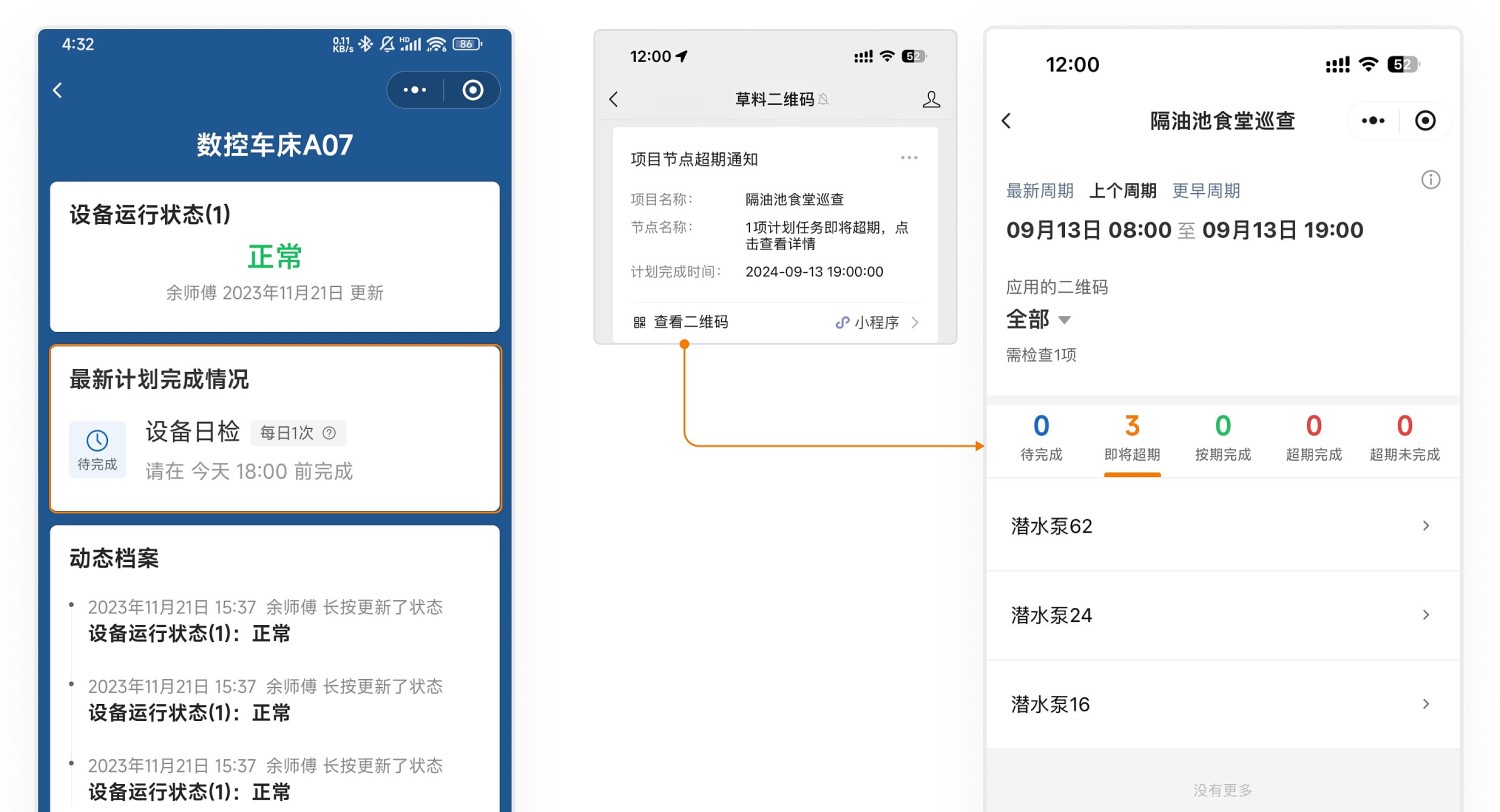
As needed, create inspection and maintenance plans, such as monthly maintenance.
- Inspectors can view inspection history and the next scheduled inspection time after scanning the code.
- Administrators can view plan reports on their mobile devices to understand completion status.
- Pre-expiry reminders: Before an inspection is due, the system reminds administrators via WeChat, listing equipment nearing expiry for timely maintenance scheduling.
VI. Data Management
1. Data Viewing
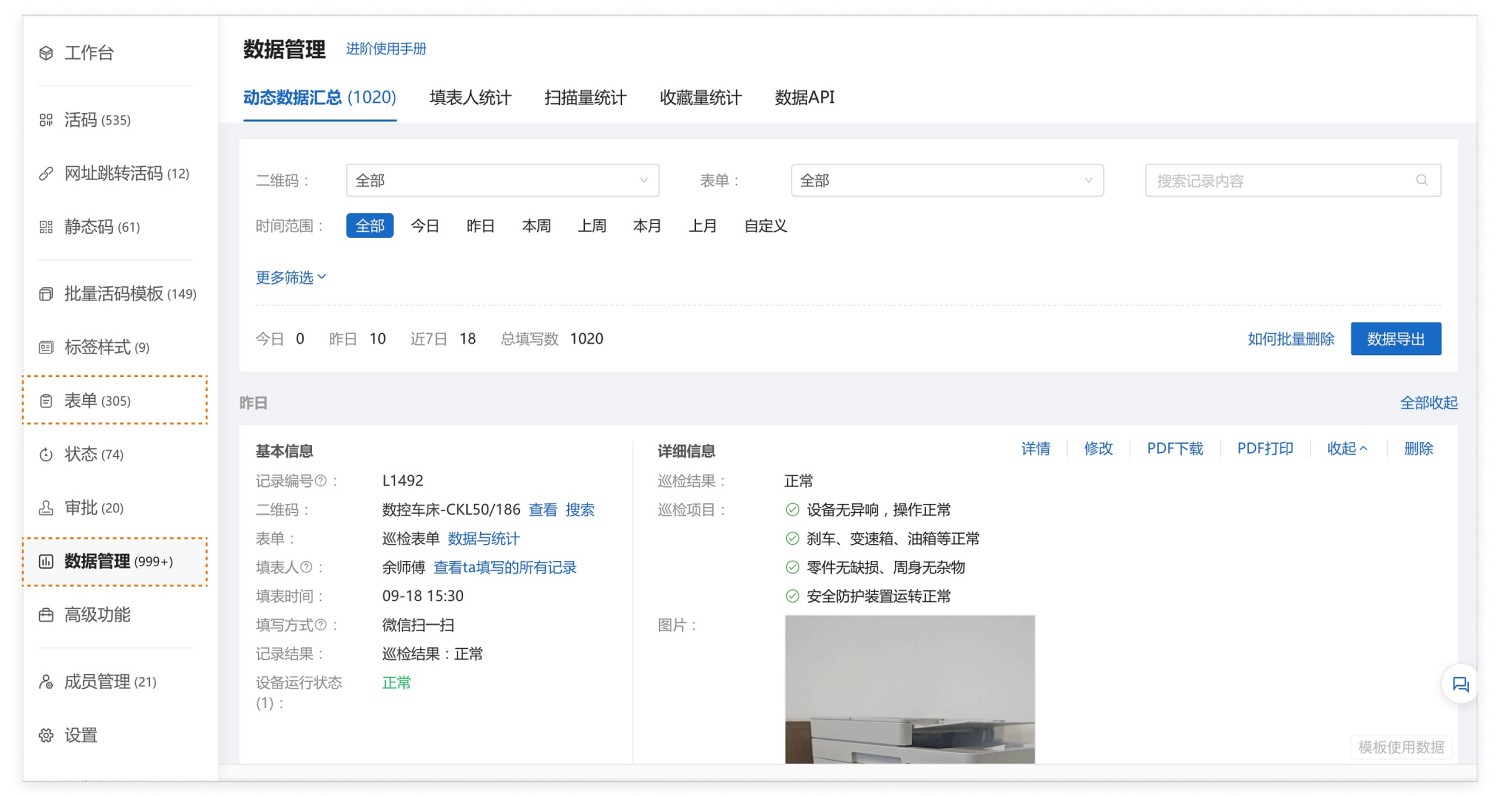
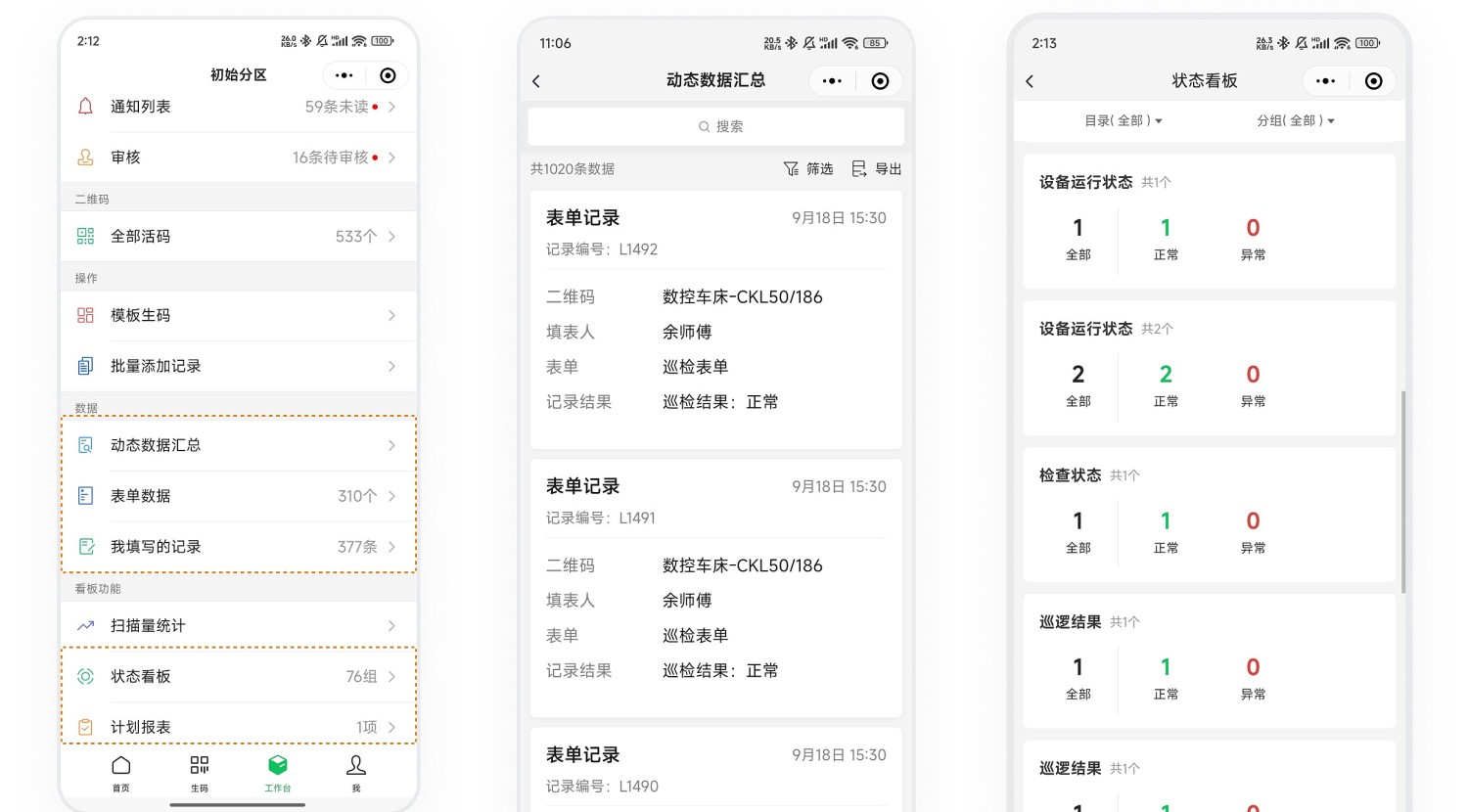
All submitted form data is saved under your account. Administrators can view inspection status anytime via:
Desktop Workbench
Mobile WeChat Mini Program Workbench
2. Data Statistics and Export
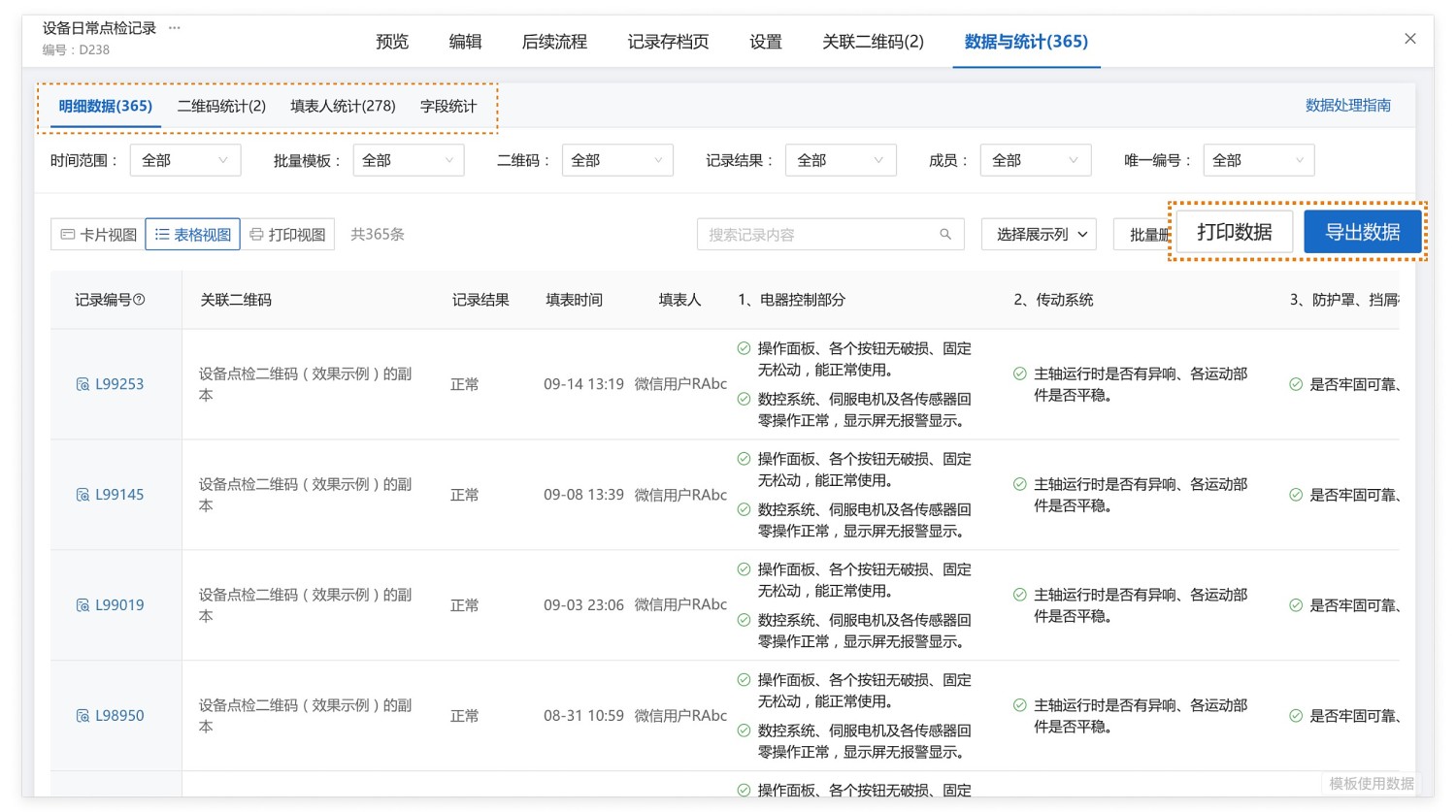
On the form's "Data & Statistics" page, you can view all collected detailed data and see statistics based on associated QR codes, submitters, fields, etc. View Details
You can:
- Export data to Excel files for secondary processing, statistical analysis, and reporting locally.
- Download data as PDF files, detailing single records or summarizing multiple records for printing and sharing.
3. Data API
We provide Data API functionality, supporting:
- Automatically push inspection data to WeCom, DingTalk, Feishu group chats, etc., for real-time sharing and communication, improving efficiency.
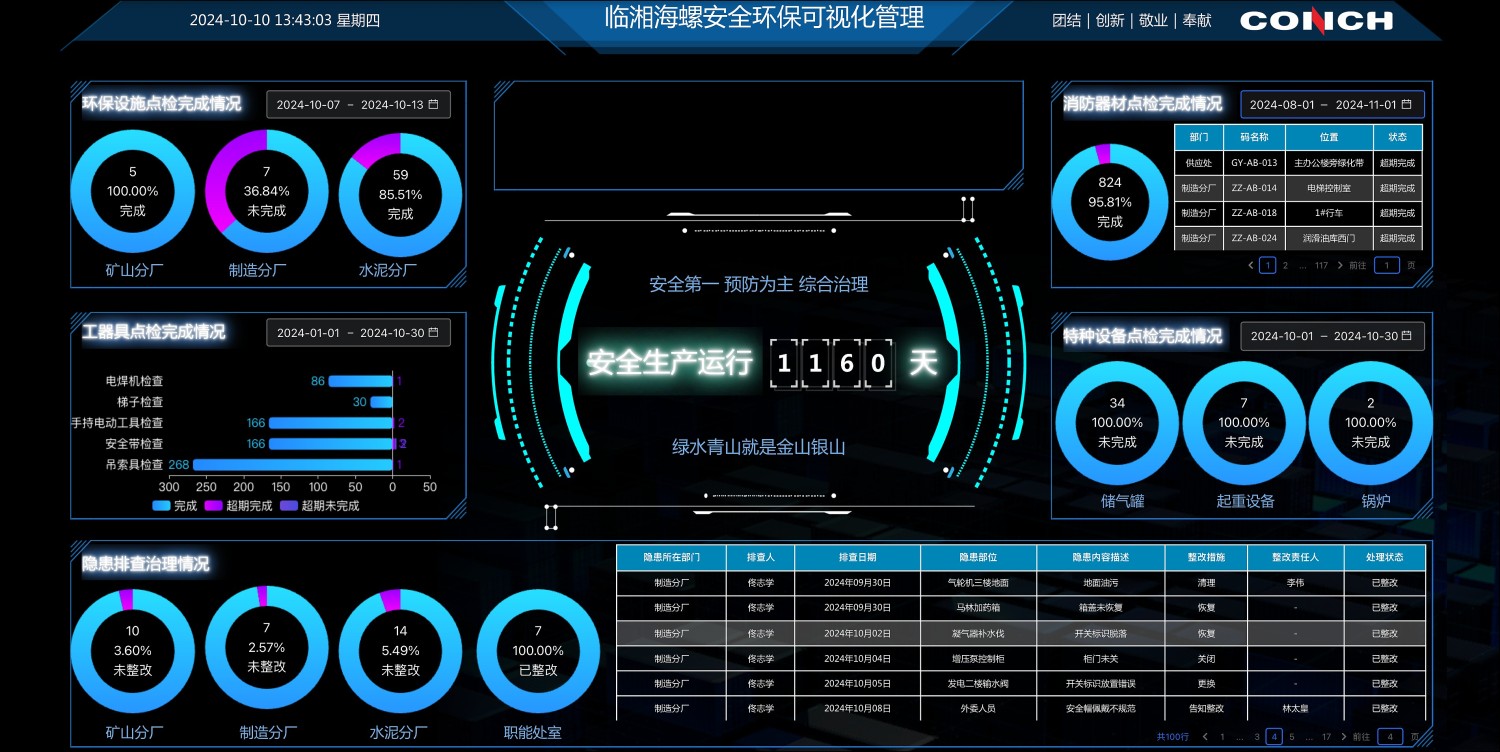
- Create data statistics dashboards: Use with visualization tools to intuitively understand inspection status.
VII. Frequently Asked Questions
1. Which operations can have permissions set?
A: You can set permissions for specific personnel for the following operations:
- Viewing the QR code
- Changing equipment status
- Filling out the inspection form
- Viewing data on the QR code page
2. How to manage numerous equipment types and quantities?
A:
- Advanced Members: Versions above the Advanced edition provide advanced member slots. You can assign other managers as advanced members, granting them administrator permissions. They can log into the workbench to assist with QR code generation, data viewing, and export. Learn about Advanced Members
- Partition Management: Create multiple partitions to manage different types of equipment and data separately. Advanced members can be assigned as partition managers for independent management and control. View Setup Tutorial
3. How can administrators see inspection results for all equipment?
A: Equipment status is displayed on the QR code page and automatically updates based on inspection records (e.g., changing from "Normal" to "Abnormal").
Administrators can view the distribution of equipment statuses (Normal/Abnormal) in the status list on their mobile or desktop workbench to understand inspection results. View Details
4. Is there a complete manual for setting up the equipment inspection scenario?
A: Yes, please click to view the detailed illustrated tutorial