How to Conduct Effective Hazard Investigation? A Comprehensive Guide to Core Knowledge and Common Practices
Original: https://cli.im/article/detail/2413
"The accident will come if the hazard is not eliminated"—this saying is familiar in the safety management circle. Whether you are an enterprise manager or a frontline employee, as long as you are involved in safety production, you cannot avoid a key term: Hazard Investigation.
However, few people can clearly explain what hazard investigation is, why it is necessary, and how to do it properly. Many organizations conduct extensive "inspections," "reporting," and "spreadsheet statistics" every year, yet they are still chased by accidents. One of the fundamental reasons is that hazard investigation is not carried out effectively, especially due to the lack of systematic methods and closed-loop mechanisms.
This article will outline the core knowledge and common practices of hazard investigation in one piece, helping you establish a clearer cognitive framework.

What is Hazard Investigation?
According to the Interim Provisions on the Investigation and Management of Accident Hazards, an accident hazard refers to the unsafe state of objects, unsafe behavior of people, and management defects in production activities that may lead to accidents due to violations of safety production laws and regulations or other factors.
In simple terms, a hazard is a "precursor" or "sign" that has not yet caused an accident, and hazard investigation is the process of organizing personnel to proactively identify these issues that may lead to accidents.
It is not about handling incidents after they occur but about discovering risks in advance, intervening proactively, and addressing them early. It is the most basic and critical component of an enterprise's safety management system.
What Are the Common Types of Hazard Investigation?
Hazard investigation is not a one-time task but a routine activity that runs throughout the year, across all positions, and from multiple dimensions. In practice, hazard investigation can be categorized into the following types based on purpose and frequency:
- Daily Inspections: Conducted by teams or frontline employees before or after daily operations, such as inspecting equipment or checking safety protection facilities. High frequency and quick response but often only cover surface-level issues.
- Professional Inspections: Organized periodically by safety engineers or equipment supervisors with specialized knowledge, focusing on deeper issues such as electrical faults or pressure pipeline leaks.
- Comprehensive Inspections: Typically led by enterprise management and conducted quarterly or semi-annually, serving as a thorough check of entire workshops, sections, or project sites.
- Seasonal Inspections: Often related to climate or holidays, such as drainage system checks before the flood season, fire and explosion prevention inspections during high temperatures, or safety checks before holidays like the Spring Festival.
- Analogous Accident Inspections: Self-inspections conducted after accidents occur in the same industry to prevent similar issues from arising within the organization.
- Third-Party Diagnostic Inspections: Inviting safety experts or third-party agencies to externally evaluate and provide professional guidance on the hazard investigation system, inspection quality, and rectification mechanisms.
Comparison of Mainstream Hazard Investigation Methods
In practical management, different enterprises adopt various hazard investigation methods. These methods can be broadly categorized into four types, each with its applicable scenarios, advantages, and disadvantages.
1. Paper Forms
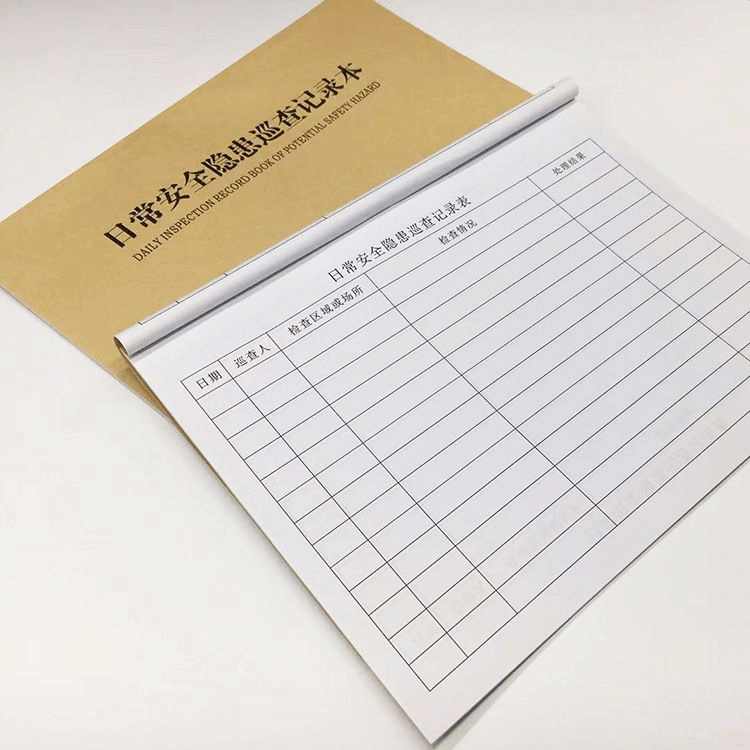
This method has the lowest barrier to entry, as it does not rely on networks or devices. Frontline employees can complete inspections by filling out forms directly. However, its drawbacks are evident: slow information transfer—reports must be submitted manually or verbally, often leading to delays like "forms lying on the desk for three days." Additionally, hazard records are difficult to trace, with no documentation of whether rectification was done, who did it, or what was done. Finally, data organization and statistical analysis are extremely challenging.
Paper forms are suitable for emergency or temporary situations but are not ideal for long-term hazard management.
2. Excel Spreadsheets
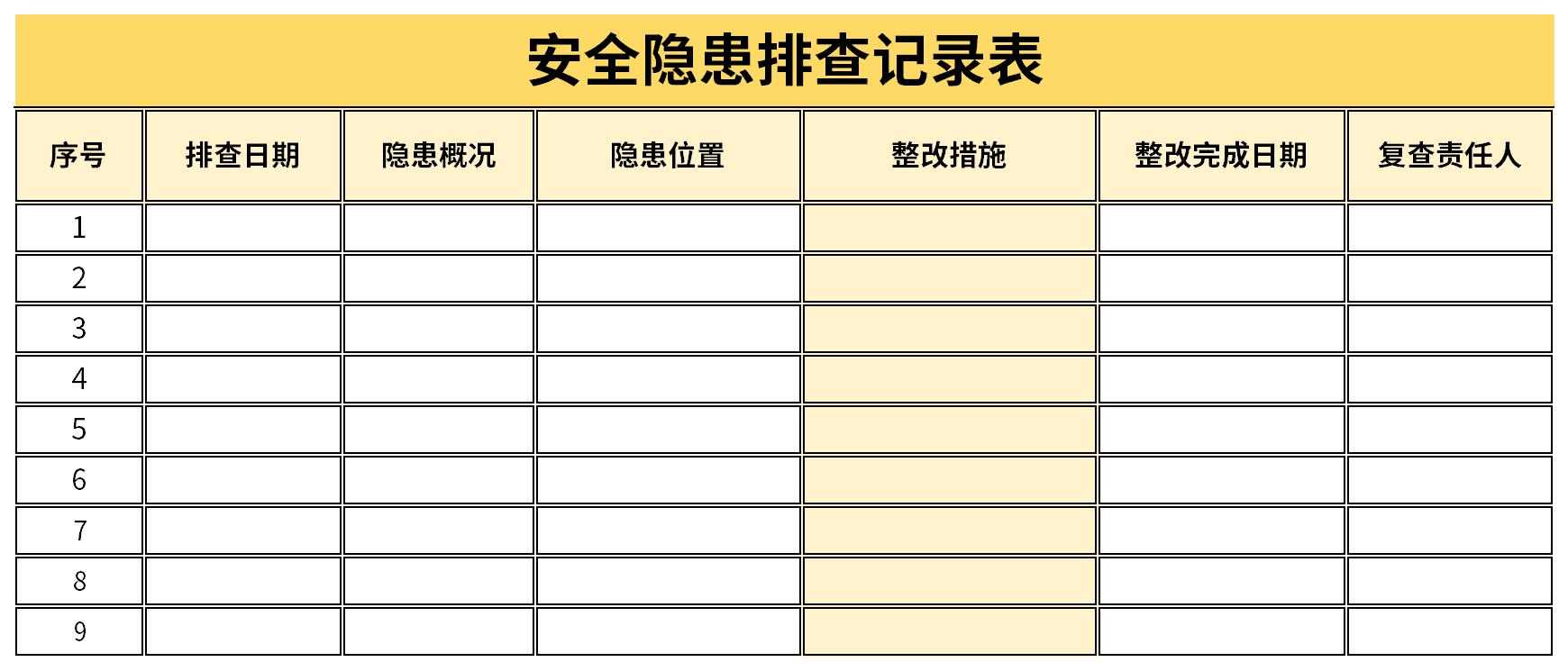
Compared to paper forms, Excel is an "upgraded" tool for information recording. It can be used to create inspection logs, facilitating data categorization, filtering, and summarization. It is a method adopted by many small and medium-sized enterprises.
Its advantages include flexibility, ease of customization, and low operational barriers. Its disadvantages include reliance on manual data entry, poor timeliness, and a lack of collaboration mechanisms, which can lead to version confusion and data loss when multiple departments work together.
The most critical issue is that Excel only records information and lacks process-driven functionality. In other words, it can tell you "what hazards exist" but cannot drive "who will fix them, by when, and how to confirm completion." It is suitable for data archiving and monthly summaries but struggles to support real-time closed-loop management for rectification.
3. Professional APP Systems
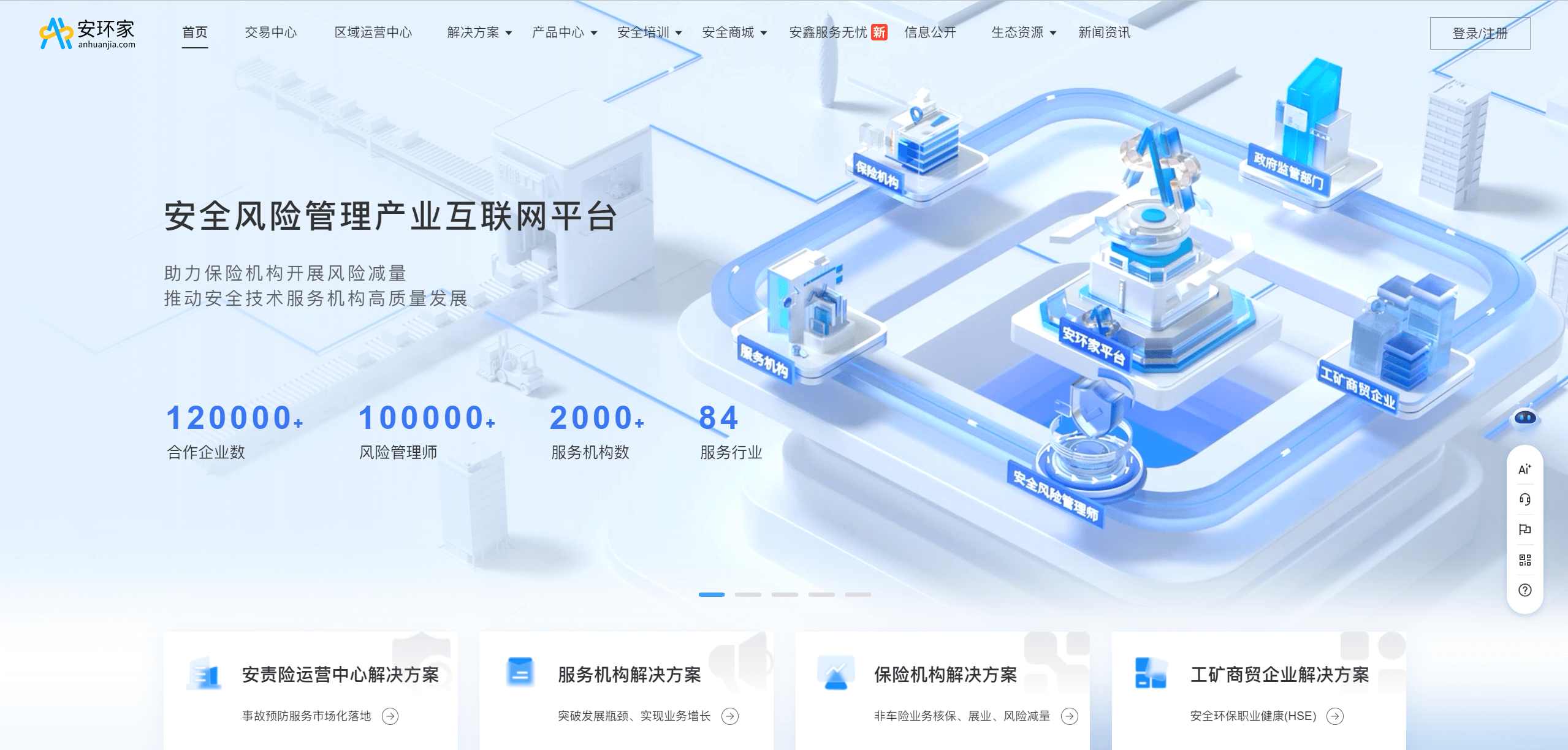
Some medium and large enterprises opt to deploy professional safety management systems or EHS platforms, such as "AnHuanJia," "EHS Cloud Platform," or "YiAn Cloud." These systems typically feature a complete functional chain, including hazard reporting, rectification assignment, progress reminders, result verification, and data analysis.
However, for small and medium-sized enterprises, these systems may present "high barriers to entry." They involve high implementation costs, complex processes, and long training cycles, making them difficult for some frontline employees to use. If process adjustments are needed later, secondary development and maintenance costs can be significant.
4. QR Code Reporting
In recent years, using QR codes for hazard investigation has become a popular approach for many small and medium-sized enterprises, especially those without IT development capabilities but seeking to implement closed-loop processes.
For example, with CaoLiao QR Codes, enterprises generate hazard reporting QR codes and post them in factories, on equipment, or at construction sites. Employees can simply scan the code with WeChat to submit hazards, including descriptions, photos, and location information. After submission, the system automatically notifies the responsible personnel for rectification. Rectification and review records can also be filled out by scanning the code, forming a complete closed-loop record for each hazard.
The advantages of this method include:
- No app installation required, easy to use with low barriers;
- Complete process, enabling full-cycle management from reporting to rectification and review;
- Structured data, automatically summarized into logs for export, analysis, and archiving;
- Quick deployment and low cost, ready to use once QR codes are printed and posted.
Overall, it is a highly cost-effective digital hazard management method, particularly suitable as a lightweight starting solution for "from zero to one."

Quality Over Quantity: The Key is Closed-Loop Action
Often, enterprise hazard data may look impressive—with numerous inspections, thick logs, and neatly filled forms. However, without tracking, handling, or review, all these records are merely "filling out forms."
The true value of hazard investigation lies in forming a complete chain from discovery and handling to closure. Is the process clear? Are responsibilities defined? Are results documented? Each step determines whether the hazard is genuinely "eliminated."
Whether you use paper, Excel, systems, or QR codes, the ultimate goal remains the same: to ensure that every hazard in the enterprise is not only seen but also resolved.