Restroom Inspection
Place QR codes in public restrooms. After each cleaning, staff can scan the code to upload on-site photos. The operation is simple for cleaning personnel, and managers can uniformly view the on-site conditions in the workbench.
Basic Information
- Monthly Installations: 1403
- Monthly Visits: 7222
- Original Text: https://cli.im/template/detail/65053893
Case Tag Images
Usage Instructions
I. Problems Addressed
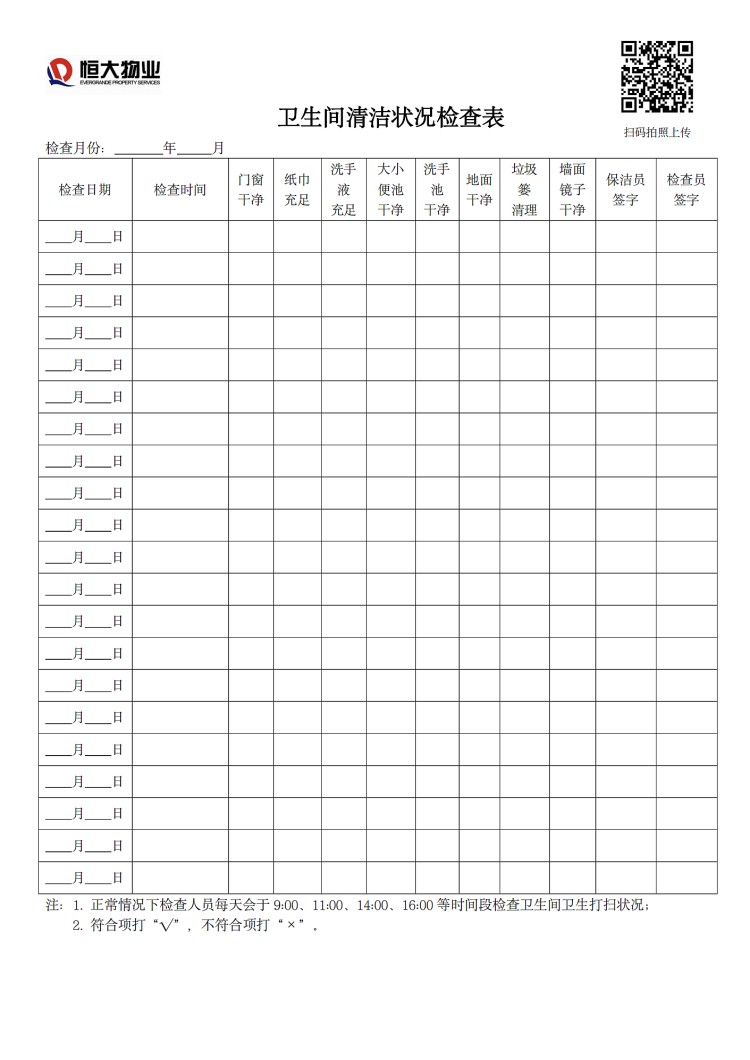
Traditional public restroom inspections rely on paper checklists and manual recording, leading to the following issues:
- Prone to Manual Errors: Inspection data may suffer from false checks or missed checks, affecting data accuracy.
- Delayed Anomaly Reporting: Inability to respond quickly makes it difficult for managers to monitor and handle anomalies promptly.
- Difficult Data Management: Paper documents are easily lost, hard to search, and data cannot be traced; manual statistics are inconvenient, preventing long-term accumulation of historical data and hindering trend analysis and improvements.
Solution:
- Use QR Codes to Replace Paper Checklists: Inspectors use WeChat to scan the code, which displays basic site information. Features like location tracking and on-site photo uploads help prevent false records and standardize inspection requirements.
- Automatic Anomaly Notifications: When an anomaly is reported, the system automatically notifies the responsible person for follow-up.
- Unified Data Management: All data records are saved under your account, allowing for easy viewing, tracing, and supporting data statistics and export for analysis.
This is a general template suitable for public restroom hygiene inspections. It is recommended to use bulk templates to generate one code per restroom for recording inspections. Learn More
II. Scan with WeChat to Fill Out and Record Inspection Status
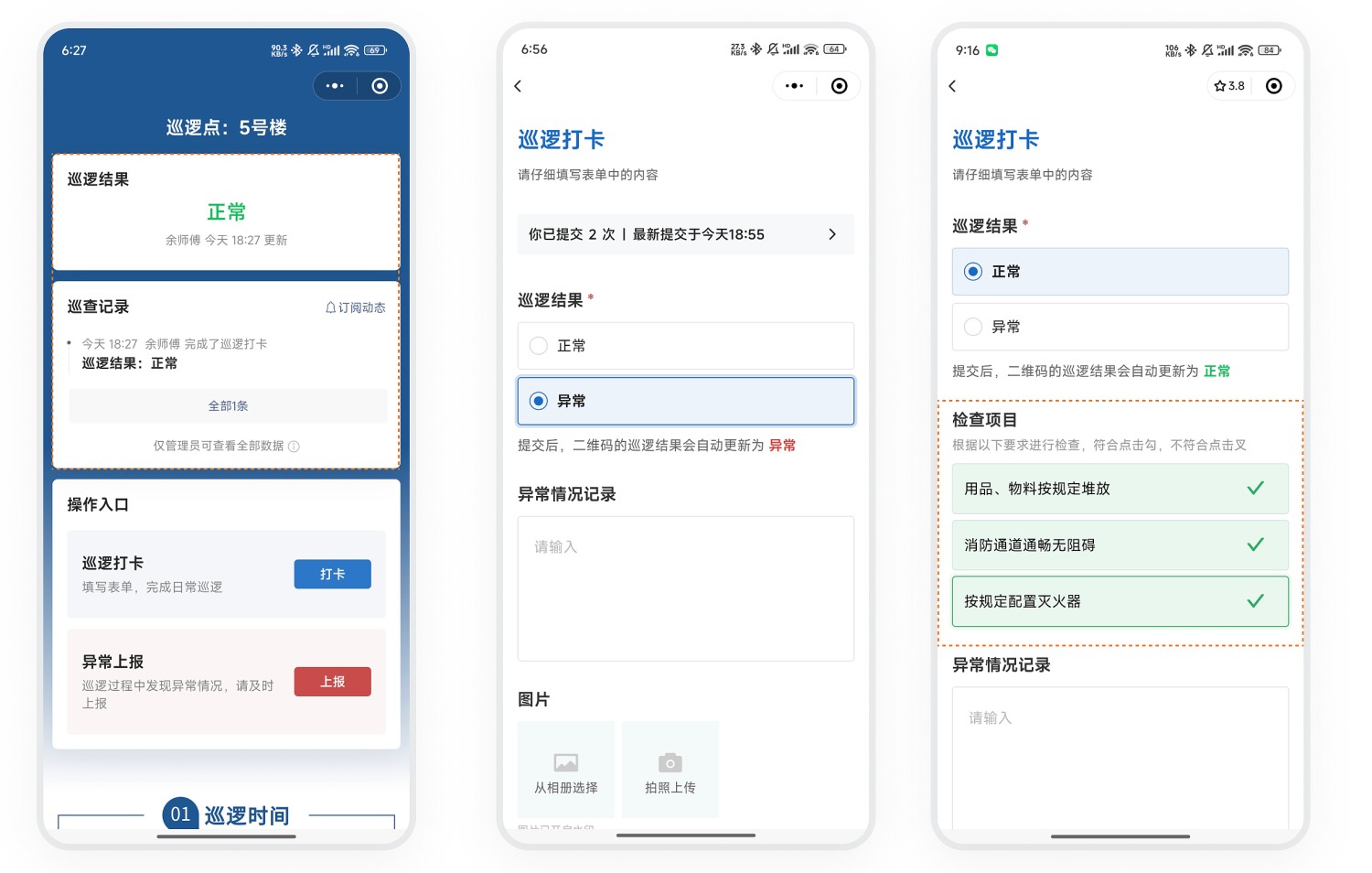
- Standardized Recording: After scanning the code, inspectors fill out the inspection form to record the status.
- Prevent False Inspections: Utilize features like on-site photo capture, image watermarking, and location tracking to ensure records are authentic and valid.
- Detailed Checks: Add inspection items and conduct detailed checks item by item to meet different inspection requirements.
- Status Display: The status dashboard on the QR code shows the current inspection result for the patrol point: Normal or Anomaly.
III. Anomaly Reporting and Rectification Closed Loop
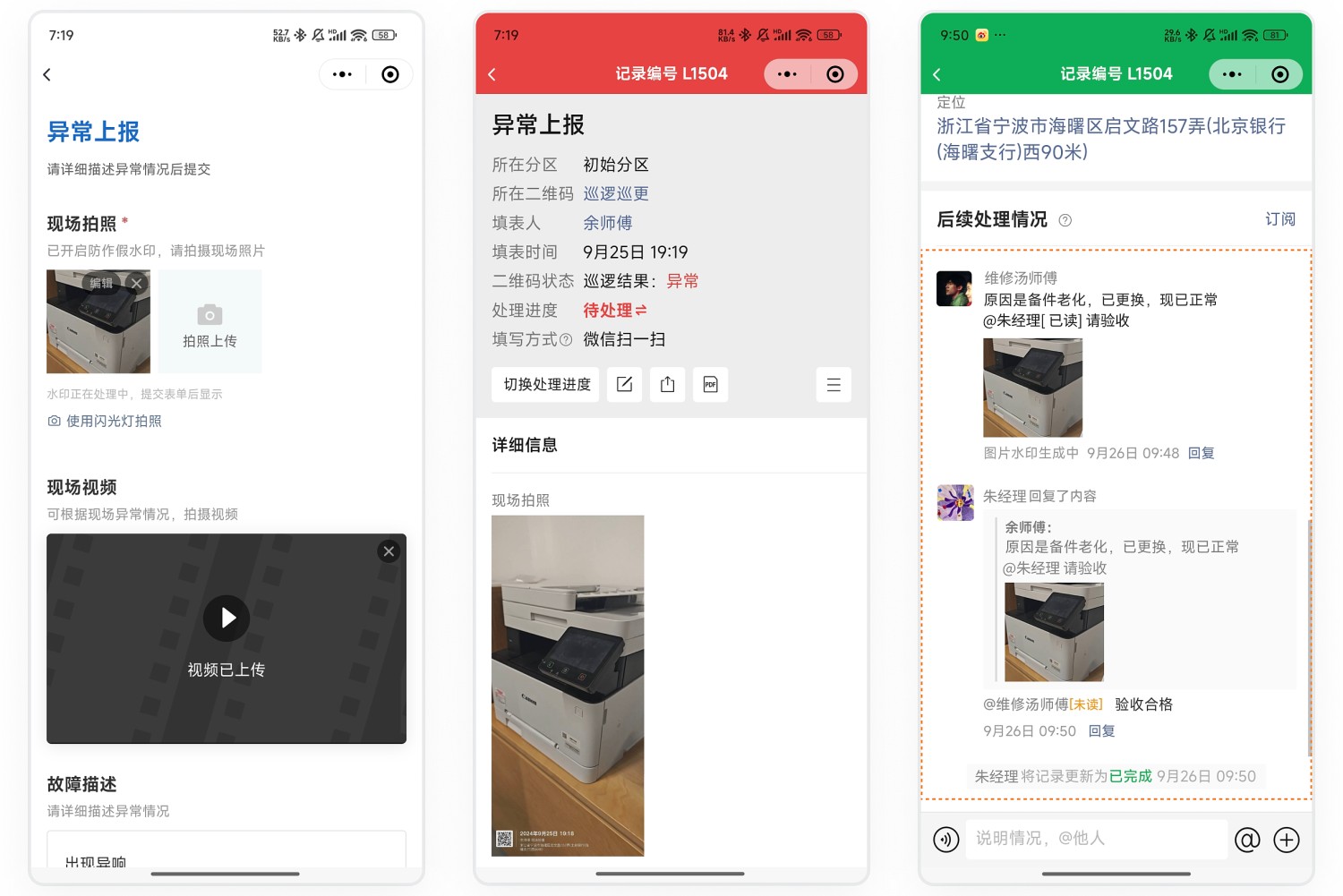
1. Report Anomaly
- Patrol personnel discover an anomaly, scan the QR code with WeChat, and fill out the anomaly reporting form, providing a detailed description of the issue and uploading relevant photos.
- Anomaly details are automatically sent via WeChat to notify the maintenance personnel.
2. Maintenance and Rectification
- Maintenance personnel promptly view the anomaly record, follow up on the handling, and document the entire rectification process.
- During the process, they can @mention the acceptance personnel within the record to notify them for acceptance checks.
3. Acceptance Confirmation
- Acceptance personnel receive the @mention message, review the rectification process, and go to the anomaly site for acceptance.
- After passing the acceptance check, they manually change the follow-up progress tracking status to Completed, finalizing the closed-loop management.
IV. Data Management
1. View Inspection Result Distribution
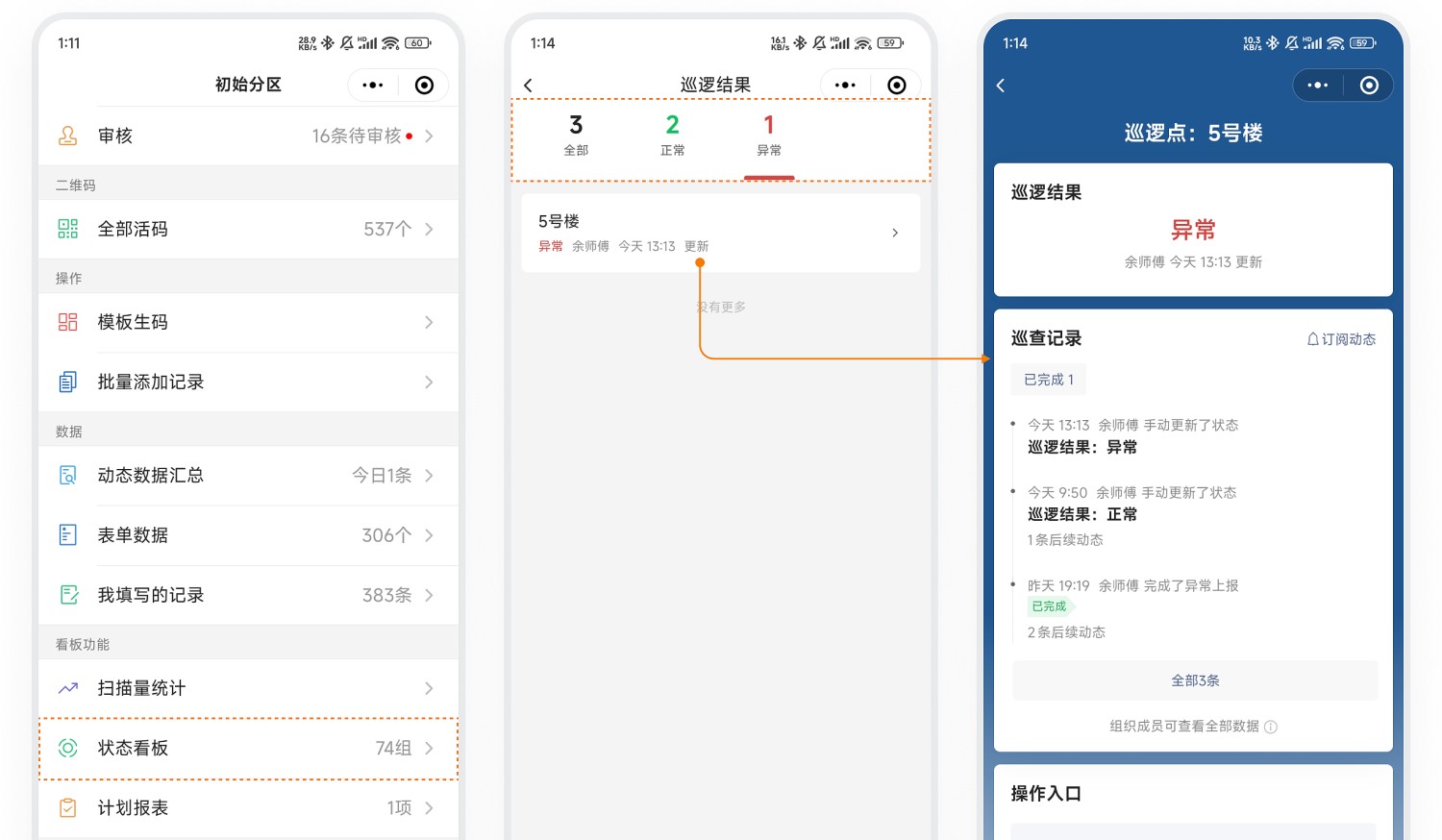
- Status Dashboard: The status dashboard on the QR code displays inspection results in real-time for easy viewing.
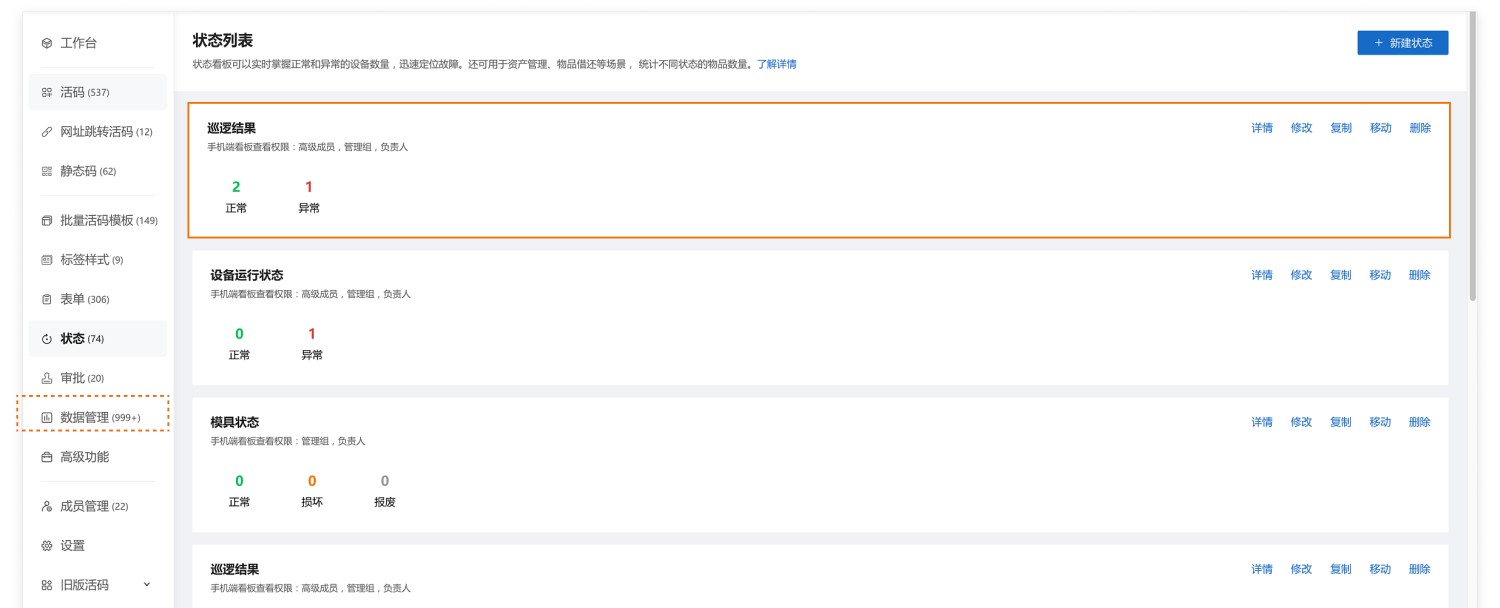
- Real-time Monitoring: Administrators can view the distribution of inspection results in the status list within the mobile or desktop workbench, keeping track of inspection status at any time. View Details
Note: Inspection result distribution currently does not support data export.
Desktop Workbench - Status
Mobile Workbench - Status Dashboard
2. View Detailed Inspection Data
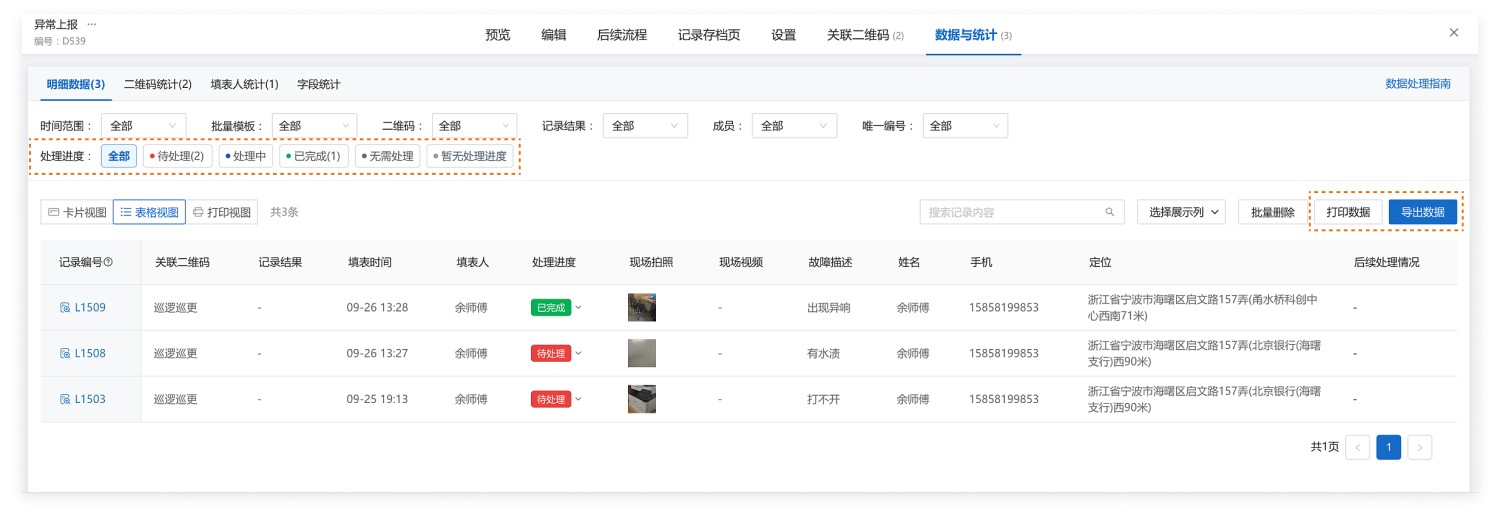
- Data Storage: All submitted inspection data and anomaly reporting data are saved under your account.
- View Anytime: Administrators can view inspection details at any time via the mobile WeChat Mini Program workbench or the desktop workbench.
- Filtered Viewing: For detailed anomaly reporting data, filter by follow-up progress tracking to quickly identify which patrol points have not completed anomaly rectification.
- Data Export: Supports data export for archiving and analysis.
3. Data API
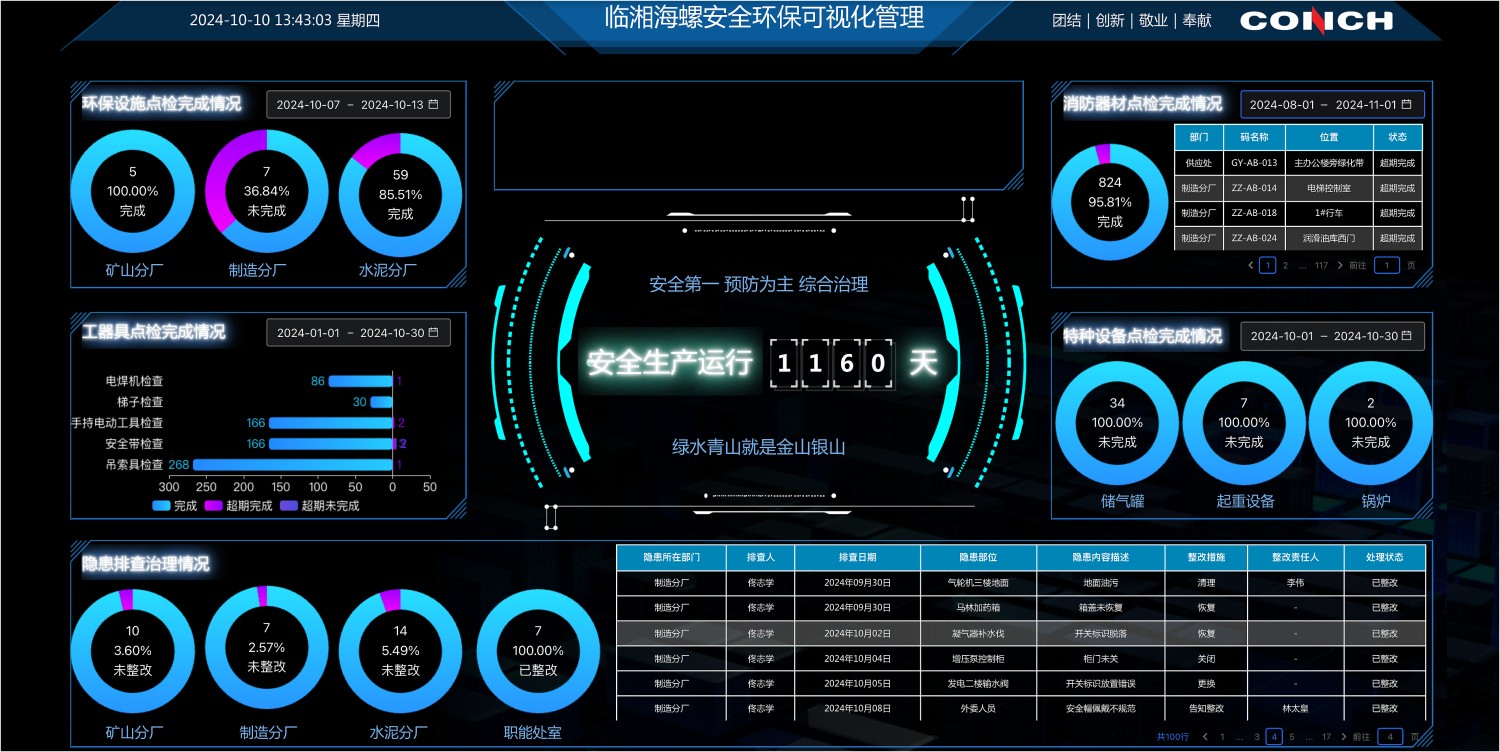
- Real-time Push: The data API feature allows setting up automatic pushes of inspection data to WeCom, DingTalk, or Feishu group chats, enabling real-time data sharing and improving communication efficiency.
- Data Visualization: Can be integrated with visualization tools to create data dashboards, intuitively displaying inspection and anomaly rectification status. Learn About the Feature
V. Frequently Asked Questions
1. How to Avoid Missed Inspections?
Answer:
- Create Inspection Plans: Establish inspection plans by cycle, such as daily inspection plans, specifying areas that need daily checks.
- View Plan Reports: Administrators can view plan reports on the mobile end to understand inspection completion status.
- Overdue Reminders: Before an inspection becomes overdue, the system automatically sends WeChat reminders to administrators about which areas have not been inspected, facilitating timely personnel assignment.
2. How to Set Up Anomaly Reporting Requiring Review Before Rectification?
Answer:
- Enable Review Feature: After an anomaly is reported, managers are first notified to review it.
- Review Process: Only after approval will the system automatically remind the responsible person for subsequent rectification; rejected anomalies are dismissed and require no action, avoiding excessive invalid notifications.
3. How to Set Operation Permissions?
Answer:
- Permissions Management: Configure permissions so that only specific personnel can view the QR code, change inspection results, fill out inspection forms, view data, etc., ensuring data security and standardized operations.
4. How to Improve Inspection Efficiency?
Answer:
- Quick Updates: After patrolling, inspectors can manually update inspection results, supporting image uploads and text descriptions.
- Quick Actions: Long-press the inspection result area to quickly update the inspection time, simplifying the operation process.
- Permission Control: If inspectors are not allowed to manually change results, this can be restricted in the permission settings.
5. Can Filling Out Subsequent Forms for Anomaly Reporting Be Linked with Follow-up Progress Tracking?
Answer:
- Current Limitation: Linkage functionality is not currently supported. After maintenance personnel fill out the maintenance form, they need to manually change the follow-up progress tracking status.
- Data Filtering: Administrators can filter and view data in the workbench based on follow-up progress tracking to monitor rectification status.