Solving the Small Task of Informing Guests About Hotel Check-in Information, I Tried Many Methods
Original: https://cli.im/article/detail/2397
Check-in guides may seem simple, but they often cause problems
If you run a hotel or homestay, you've likely encountered situations like this: a guest has just checked in, and before they can even ask a question, the front desk is already repeating answers: "The Wi-Fi password is on the back of the door," "The air conditioner remote is in the drawer," "Breakfast is from 7:30 to 9:00"...
This information should ideally be communicated more clearly to guests. But in reality, information in many accommodations is scattered across paper handouts, verbal reminders, and room stickers—difficult to update and not guaranteed to be seen by guests. Recently, while discussing how to improve this with a friend who runs a homestay, he expressed a desire to "organize these frequently asked questions in a hassle-free yet sustainable way." We tried several methods and eventually settled on QR codes. Here's a detailed look at our process.
We Tried Several Common Methods
1. WeChat Public Account Articles
This was our first attempt: compiling a "Check-in Guide" article in a public account, consolidating check-in times, usage instructions, and local dining and entertainment options, then sending the link to guests before their arrival.
The advantage was the clarity of the图文 format and the ability to include extensive content. However, issues quickly emerged: if any content needed updating, we had to publish a new article, but the old link would still be accessible, showing outdated information to guests. Deleting the old article would cause previously shared links to become invalid.
2. Printed Manuals or Room Card Inserts
We also created nicely designed booklets and cards placed in the rooms. The benefit was their visibility and accessibility. But even a minor change—like adjusted access rules or a new service—required reprinting the entire batch. This was labor-intensive, costly, and often led to outdated materials not being removed.
3. Verbal Reminders & Room Stickers
This method is still widely used. It's cheap and straightforward but heavily reliant on front desk staff or the owner to explain. If staff changed or forgot to mention something, information was easily missed. Outdated sticker information also frequently caused misunderstandings.
4. CaoLiao QR Code's Dynamic QR Code
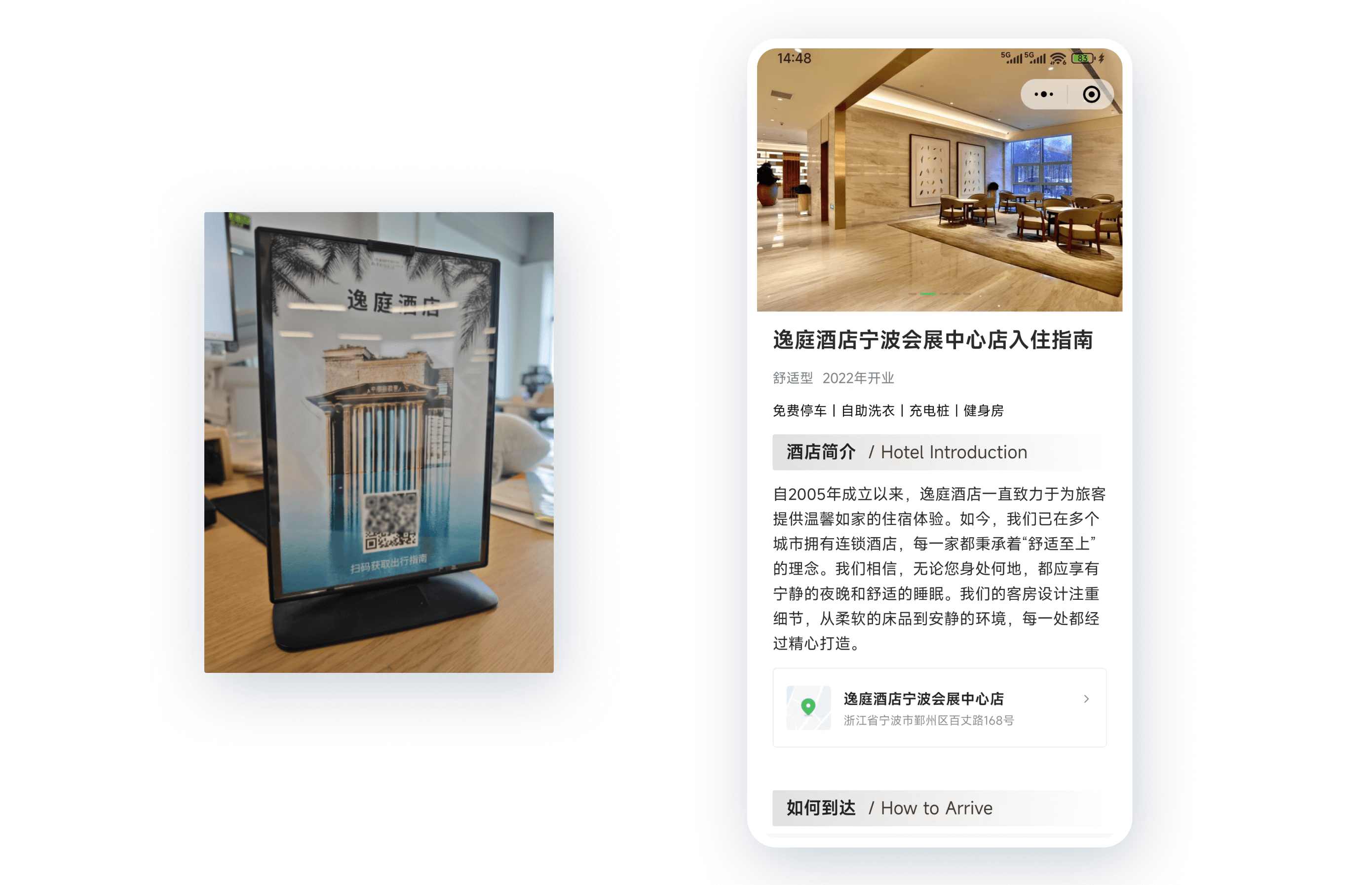
Finally, we tried CaoLiao QR Code to create a QR code-based check-in guide. It included homestay introductions, check-in procedures, usage tips, maps, contact details, etc. Guests could view everything seamlessly on their phones after scanning.
The key advantage was the ability to update content anytime without changing the QR code itself. For example, if check-out times changed or local recommendations were updated, modifying the backend ensured both new and returning guests always saw the latest information. The QR code could be placed in the room for long-term use without frequent replacement.
Why Did We Ultimately Choose QR Codes?
Looking back, we chose QR codes primarily because they proved more stable and hassle-free in several key aspects:
1. Long-Term Usability Without Frequent Changes Due to Content Updates
CaoLiao QR Code's "dynamic QR code" allows backend content updates at any time while the QR code pattern remains unchanged. This is crucial for offline materials, saving the effort of repeated printing and maintenance.
2. Simple Page Editing, No Technical Background Needed
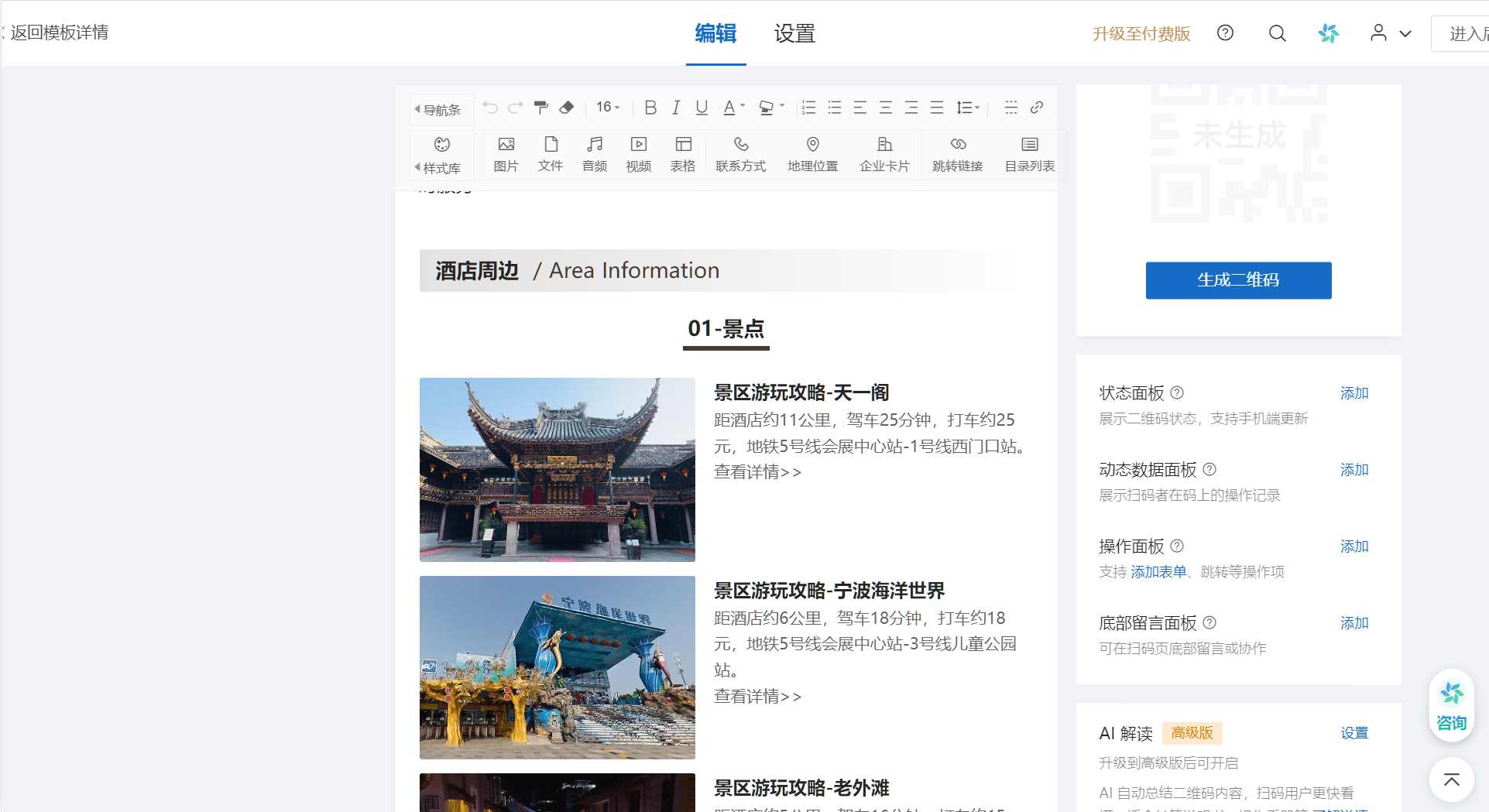
The图文 editor is similar to WeChat Public Account's editing interface—clean and intuitive. Ready-to-use templates (like the "Check-in Guide" template) are available. Both front desk staff and owners can get started quickly. The page layout is tidy, making information clear and easy to read.
3. Diverse Content Presentation Options
Beyond图文, you can embed video tutorials (e.g., for operating the air conditioner), map navigation links, feedback forms, and customer service contacts. Compared to the linear format of public account articles, QR code pages are better suited for structured presentation, making information easier to find.
4. Low Cost, Easy Maintenance
QR codes can be created for free, with no limits on scans or users. Most small homestays don't need extra investment. Updating content doesn't require much manpower; one person can manage it. For hotels with higher image requirements, the 780 RMB annual fee offers better display effects.
Optimizations We Made in Practice
After implementing the QR code solution, we made some detailed adjustments to enhance the experience:
- Placed a welcome message and basic homestay info on the homepage to build trust.
- Organized practical information into sections: check-in process, Wi-Fi instructions, device usage tips, precautions.
- Added navigation buttons at the bottom: nearby dining maps, transportation guides, etc.
- Included customer service contacts so guests can reach out directly with questions.
Once, when the air conditioner broke down, a guest used the "Maintenance Feedback" form on the page to submit the issue. The owner received an immediate notification and coordinated a prompt repair. The guest later mentioned "timely handling and smooth communication" in their platform review.
Suggestions for Fellow Operators
If you're also thinking about how to better organize your check-in information, consider trying QR codes. Here are some tips:
- Start small: Pilot in one or two rooms first, gather guest feedback, then expand gradually.
- Keep content practical and concise: Avoid excessive decorative language; focus on what guests care about most.
- Utilize statistics: The CaoLiao backend shows scan counts, time distributions, etc., for each QR code, helping you understand which information guests focus on most. Adjust content order based on this data.
- Don't hesitate to experiment: Even without design experience, using templates can quickly generate usable pages.
Summary
For most homestay operators, developing a WeChat Mini Program or app is too costly, relying on manual reminders is inefficient, and printed materials are hard to update. We ultimately chose QR codes because they genuinely reduced repetitive work and made information access smoother for guests.
CaoLiao QR Code isn't a "perfect solution," but it's stable, simple, and low-barrier enough to handle seemingly trivial tasks like "check-in guides" in a more organized and professional manner. Often, improving the experience doesn't require major overhauls—starting with a single QR code can bring significant change.