Sinohydro Bureau 9's Shunde Daliang Zhigu Project Introduces QR Codes to Promote "Digital-Intelligent" Safety Management
Original: https://cli.im/article/detail/2469
Sinohydro Bureau 9's Foshan Shunde Daliang Zhigu Project utilized the CaoLiao QR Code platform to establish a "Safety-on-Code" management system. By creating QR codes for equipment, personnel, and hazard sources, they achieved functions such as traceable equipment inspections, trackable hidden danger rectifications, and visual safety briefings. This significantly improved on-site safety management efficiency, shifting construction site safety management from "passive response" to "active prevention," and continuously advancing project safety management towards "intelligent safety" and "inherent safety."
The following content is republished from People's Daily Online - Guizhou Channel. The original title and link are "Sinohydro Bureau 9's Guangdong Foshan Shunde Daliang Zhigu Project Promotes 'Digital-Intelligent' Safety Management"
Scan a code, and safety protocols appear instantly; take a photo, and the entire hidden danger rectification process is documented. At the site of Sinohydro Bureau 9's Foshan Shunde Daliang Zhigu Project, seemingly ordinary QR codes are quietly transforming the traditional safety management model of construction sites.
"This small square is like giving every piece of equipment its own 'ID card'!" said Gu Liuxin, the site safety officer, pointing to a QR code on an electrical box. "In the past, inspecting equipment required experienced workers to sift through thick stacks of documents. Now, just by scanning with a phone, equipment information, operating procedures, and inspection records are all clear at a glance."
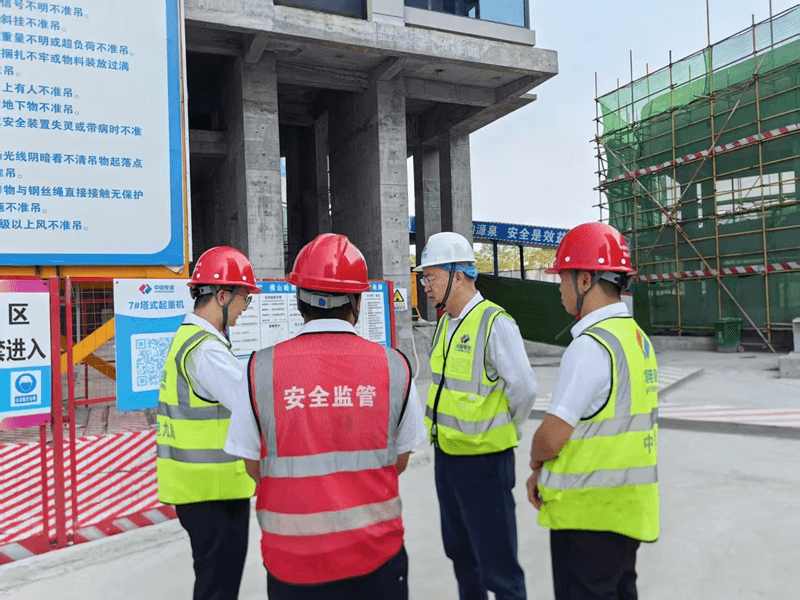
He demonstrated on-site how to retrieve equipment information using a mobile phone. When he scanned the QR code on the equipment with his phone, the screen immediately displayed the equipment's acceptance date, operating procedures, maintenance records, and relevant responsible personnel information. "Most importantly, each inspection requires an on-site photo upload. The photos come with a timestamp and cannot be selected from the phone's gallery, ensuring the inspection is genuinely conducted."
Safety Dilemmas: Exposing the Pain Points of Traditional Management Models
Conducting one inspection and spending three days organizing the paperwork was once the norm for project document controller Deng Wenfeng. Faced with tasks like safety inspection records, equipment checklists, and technical briefing documents, project document controllers often found themselves working overnight to organize materials, struggling with misplaced or mismatched information.
The challenges in safety management extended far beyond this. On the construction site of the Foshan Shunde Daliang Zhigu Project, covering approximately 89,000 square meters and including five high-rise residential buildings, dozens of equipment units, hundreds of construction workers, and complex construction processes formed a vast network for safety management. The collection, organization, and sorting of project data posed significant challenges for project management.
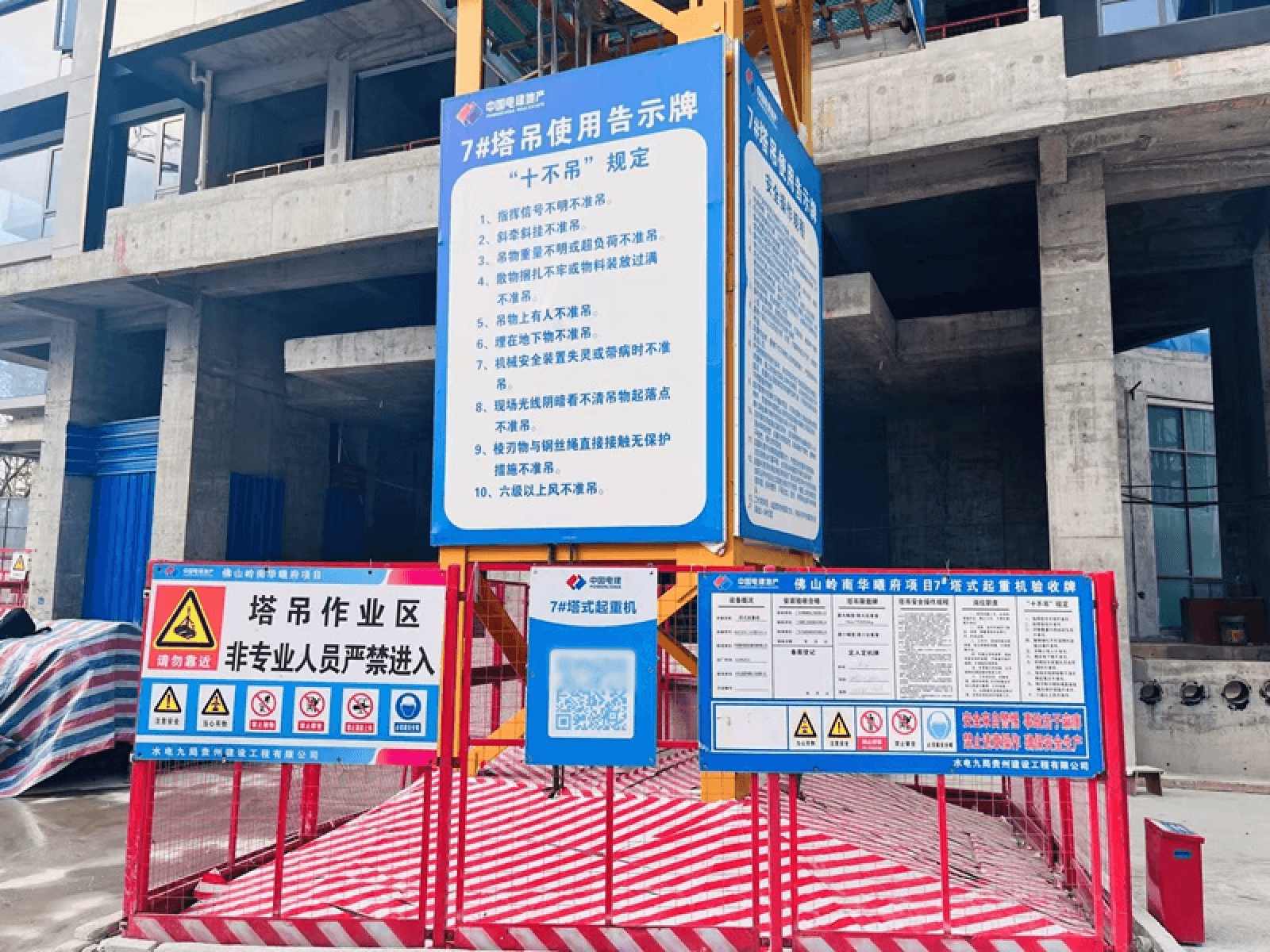
"Traditional safety management relies on personnel experience and paper records, resulting in low efficiency and being prone to omissions," admitted Project Manager Yu Lei. "Safety briefing content is often dry, workers don't like reading or can't remember it; equipment inspections become perfunctory, making it hard to distinguish genuine checks; hazard source supervision is inadequate—these are all potential risks."
The traditional management model brought numerous tests for project data management; the shortcomings exposed by outdated management methods became challenges hindering the efficient and orderly progress of project management.
Change on Code: QR Codes Enable Precise Control of Project Safety
The change began with the introduction of the CaoLiao QR Code system. The project team deeply integrated QR code technology with safety management, creating a distinctive "Safety-on-Code" management system.
One Code Per Person: The "Mobile File" on Hard Hats. "Scanning the QR code on my hard hat shows my safety training records, health status, etc.," said Old Liu, who was painting the exterior wall from a gondola, pointing to the QR code on his helmet.

One Code Per Equipment: The "Authentic Record" of the Inspection Process. Beside the construction elevator at Building #4, Equipment and Materials Manager Gu Lei was updating the information in the special equipment QR code. "After each equipment inspection, we must promptly upload all the inspection results," he said earnestly. "If scanning the QR code reveals that the equipment information has expired and not been updated, we must immediately stop using it and notify the manufacturer for inspection to prevent potential accidents."
One Code Per Area: The "Electronic Fence" for Hazard Sources. The project department manages hazard sources with QR codes, each having its exclusive "ID card." "Scanning the QR code in the basement fire protection area not only shows the specialized construction plan and acceptance records but also allows real-time viewing of daily monitoring data," introduced Safety Officer He Xingru.
Dialogue on Site: Workers from 'Not Understanding' to 'Can't Do Without'
"At first, everyone was unaccustomed and thought it was unnecessary," recalled Master Li from the carpentry team, thinking back to the initial promotion of QR codes. "We veteran workers trust our own experience and eyes more."
However, an incident changed their perspective. Last year during the rainy season, during a safety inspection before a typhoon, Master Li scanned the QR code on a temporary power distribution box and found an unresolved issue record indicating "excessive grounding resistance." He immediately notified the electrician to rectify it, eliminating a potential hazard.
"Now, if there's no QR code, I actually feel uneasy," Master Li said with a smile. "Scanning it gives me peace of mind. Especially for technical briefings, if there's something I don't understand, I can scan the code anytime to watch a video demonstration, which is much better than just listening to an explanation!"
"In the past, workers would forget technical briefings after hearing them," Project Production Manager Yao Kai deeply felt. "Now, we turn complex construction processes into illustrated operation guides stored in QR codes posted at the construction site. Workers can scan to learn anytime, significantly reducing construction error rates."
Significant Results: Promoting Comprehensive Improvement in Safety Management Level
After nearly two years of practical application, the benefits brought by QR code technology to the project extend far beyond efficiency improvements.
"The most intuitive feeling is the improvement in management efficiency," said Project Document Controller Deng Wenfeng excitedly. "We no longer need to carry stacks of paper documents for every on-site safety inspection. Checking equipment and process safety information requires just a simple scan, improving inspection efficiency by at least more than half."
According to the project department's intuitive statistical analysis, "QR Code + Safety Management" has shortened the average on-site hidden hazard identification and rectification cycle by 70%, with the rectification completion rate basically maintained at 100%. As the proportion of construction workers actively scanning codes to learn safety operation procedures gradually increases, on-site violations have significantly decreased. Additionally, the printing costs for project safety management materials have decreased by about 50%, substantially saving on office supplies like A4 paper and promoting cost reduction and efficiency improvement in project management.
"Most importantly, the application of QR codes has transformed project safety management from passive response to active prevention," said Project Manager Yu Lei. "It shifts the focus from post-event accountability to process control, from being the responsibility of a few to participation by all."
Future Outlook: Advancing from "Intelligent Safety" to "Inherent Safety"
"The next step, we plan to further summarize and promote the application experience of QR code technology and continuously integrate and upgrade it in practice," Project Manager Yu Lei envisioned. "For example, integrating QR code technology with smart construction site development, allowing scanning to view the overall progress of project construction and real-time monitoring of on-site safety dynamics; setting up electronic fences in hazardous areas, where scans by unauthorized personnel would trigger alerts."
"QR codes are not just a technological upgrade but a transformation in management philosophy," he added. "They make safety management visual, traceable, and quantifiable, ultimately achieving the leap from 'intelligent safety' to 'inherent safety'."
As night falls, the QR codes on the construction site flicker faintly under the lights, like "passcodes" guarding safety. These seemingly simple small squares carry the wisdom and responsibility of project safety management, quietly unlocking a new model for safety management in the traditional construction industry.
In today's era where the digital wave is sweeping across all industries, the practice of Sinohydro Bureau 9's Shunde Daliang Zhigu Project proves that technology-empowered safety management is continuously advancing project safety management towards "intelligent safety" and "inherent safety," injecting new momentum into the high-quality development of the construction industry. (Text/Liu Shuailing, Gu Liuxin, Yin Fangfang Photos/Liu Shuailing)