One Vehicle, One Code: Making Vehicle Management Responsibility Clearer
Original: https://cli.im/article/detail/2478
Companies typically have several official vehicles for daily procurement, deliveries, or errands. However, drivers are often not fixed and change frequently. When traffic violations or accidents occur, accountability discussions often sound like this:
"The violation notice for last week's vehicle is here. Who was driving?" "Maybe Old Li? No, he was on leave that day."
Half an hour passes, and the responsible person remains unconfirmed. This situation leads to numerous management loopholes:
- Unclaimed traffic tickets pile up.
- Vehicle scratches go unreported with no knowledge of when they happened.
- Chaotic fuel receipts make financial reconciliation difficult.
These may seem like minor issues, but they accumulate into significant financial losses. For a company with 20 official vehicles, these ambiguous expenses can cost tens of thousands per year.
More importantly, when responsibility cannot be clearly assigned, management rules become empty talk. Employees feel unchecked, and managers find constant follow-up exhausting. Over time, the company's vehicle management system becomes ineffective.
Core Problem: Lack of Timely and Authentic Records
Many companies mistakenly believe the problem lies with the tools: they switch from logbooks to Excel, or even consider purchasing new systems. However, the root cause is often not the tool itself, but the lack of authenticity and timeliness in the records.
As long as vehicle usage information relies on manual retroactive entries and post-event recollection, issues like proxy sign-ins, missed records, and blurred responsibility are inevitable. Truly effective improvement doesn't come from implementing a more complex system, but from ensuring that every vehicle use is recorded promptly and authentically.
Achieving "whoever takes the vehicle registers on the spot, leaving a trace" naturally creates a closed-loop responsibility chain.
However, traditional paper-based records struggle to meet authenticity requirements, and electronic forms often cannot implement per-vehicle recording. Consequently, many companies are turning to QR codes, generating a unique code for each vehicle as an "electronic ID card," scanned to complete pickup/return registration and record-keeping.
The QR code approach is simpler than large-scale systems, with lower setup and usage barriers. Yet, it enables timely recording and aggregation of vehicle usage, thereby closing the responsibility loop.
One Vehicle, One Code: Clear Responsibility
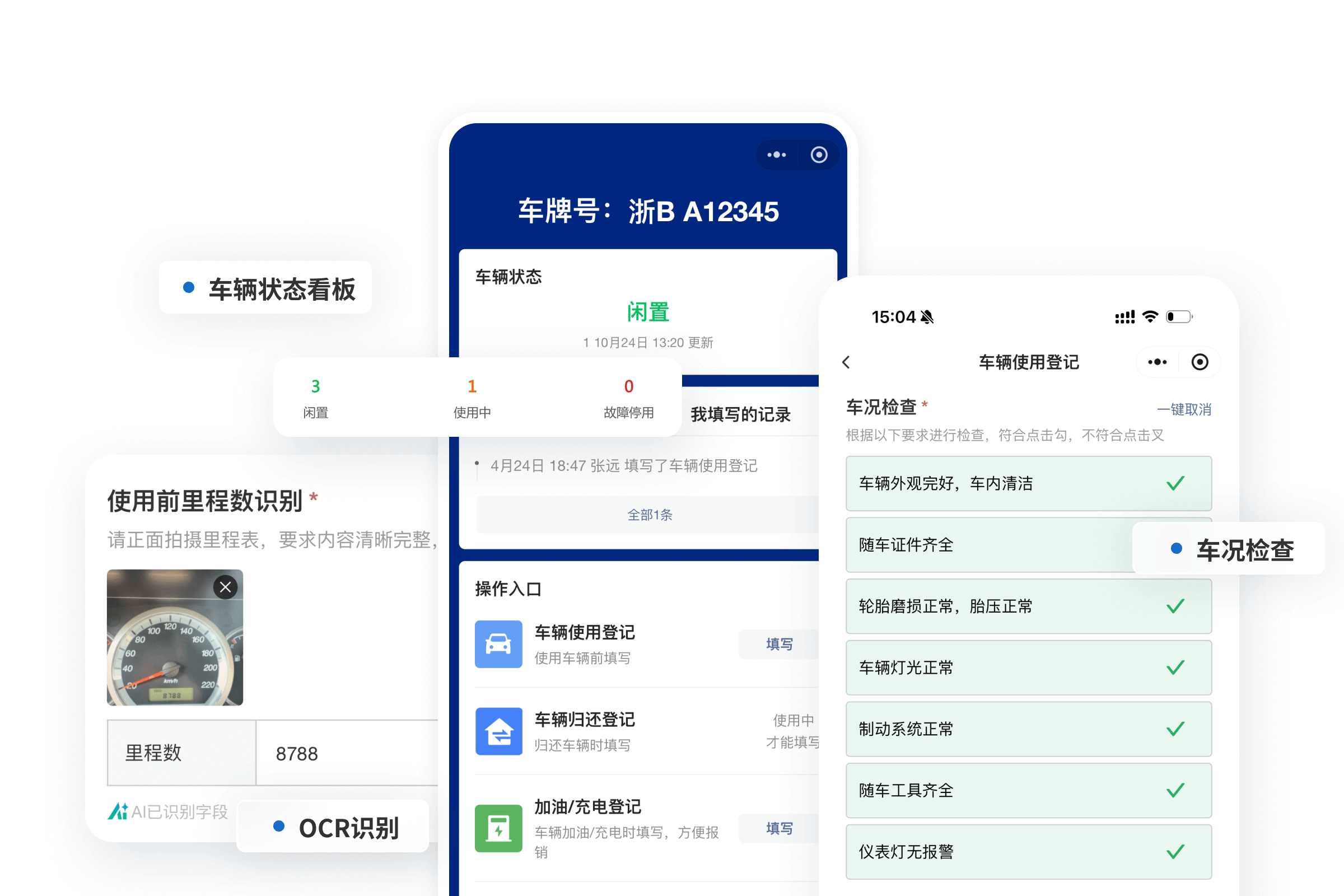
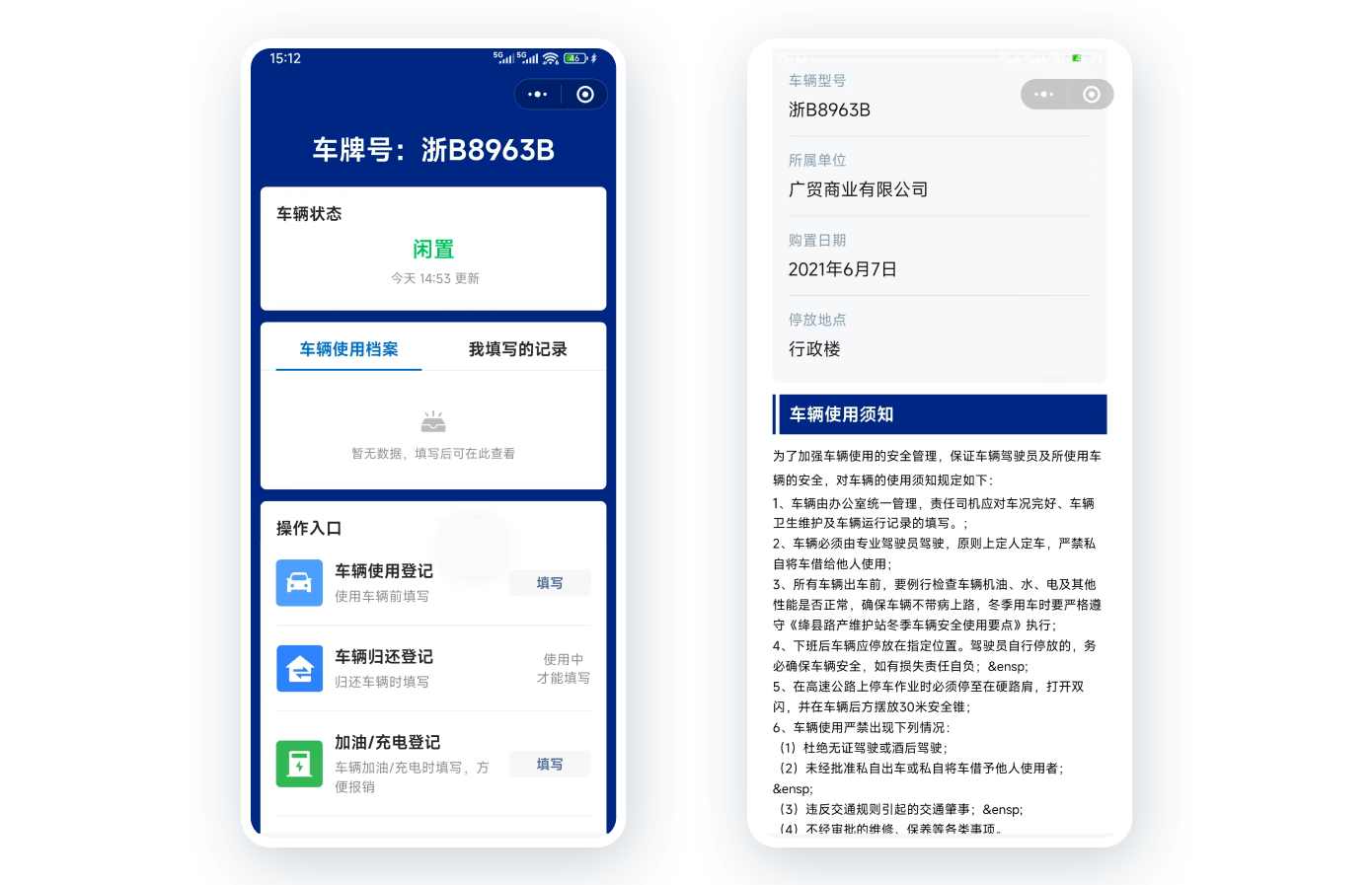
Using the CaoLiao QR Code Platform, generate a unique QR code for each vehicle and affix it in a conspicuous location inside the vehicle. Scanning the code allows users to view the license plate number, vehicle status, historical usage records, and vehicle usage guidelines.
Drivers scan the code via WeChat to fill out records:
- When taking the vehicle: Scan, then enter the purpose of use, driver's name, starting mileage, and vehicle condition.
- When returning the vehicle: Scan again to add the ending mileage and current vehicle condition.
All submitted records are automatically saved to the workbench and can be viewed or exported at any time.
When violations, accidents, or fuel reimbursements occur, simply entering the license plate number in the workbench automatically filters that vehicle's usage records, quickly identifying the responsible person. This eliminates disputes and arguments—everything is based on data.
All data can be exported to spreadsheets, providing clear visibility into who used the vehicle, for how long, fuel consumption, etc.
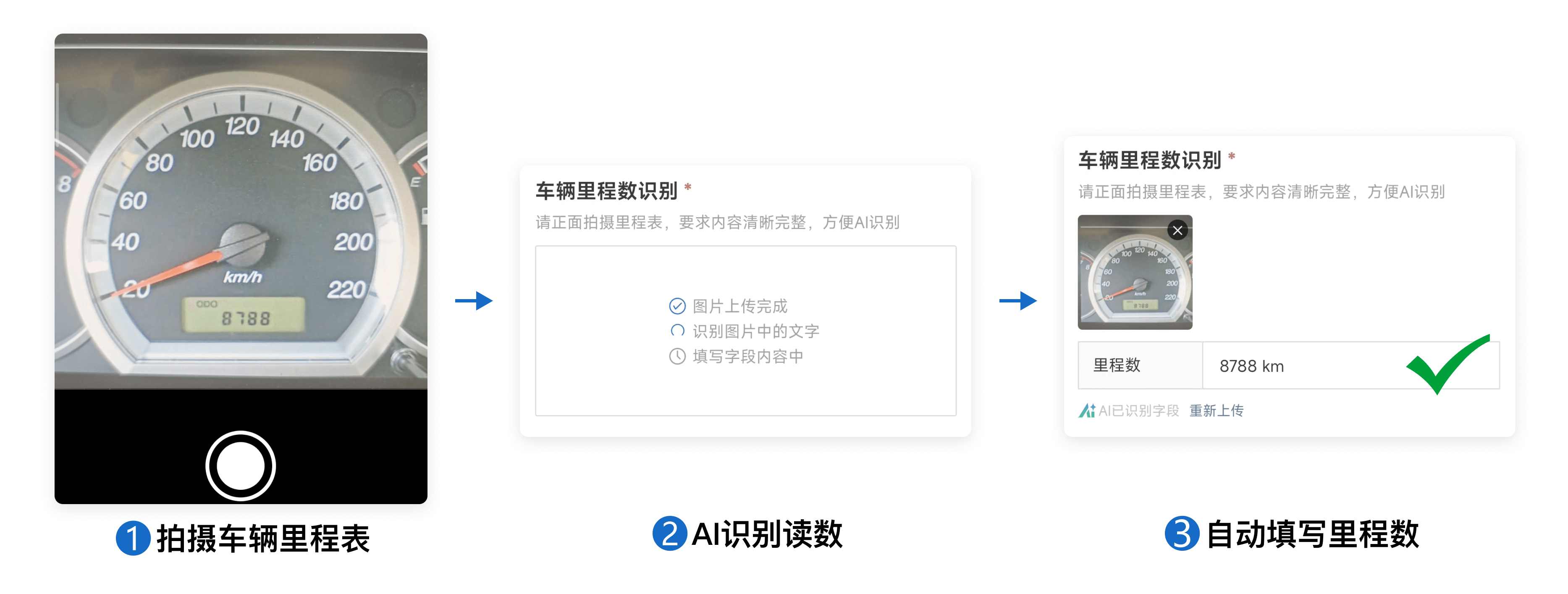
An AI feature automatically recognizes the vehicle's odometer reading. Just take a photo of the odometer, and the AI reads the mileage, reducing manual errors and false reporting.
Combined with features like requiring on-site scanning to submit, photo watermarks, and handwritten signatures, this approach effectively prevents proxy filling, retroactive entries, and胡乱填写 (húluàn tiánxiě - careless/incorrect filling), ensuring more authentic records.
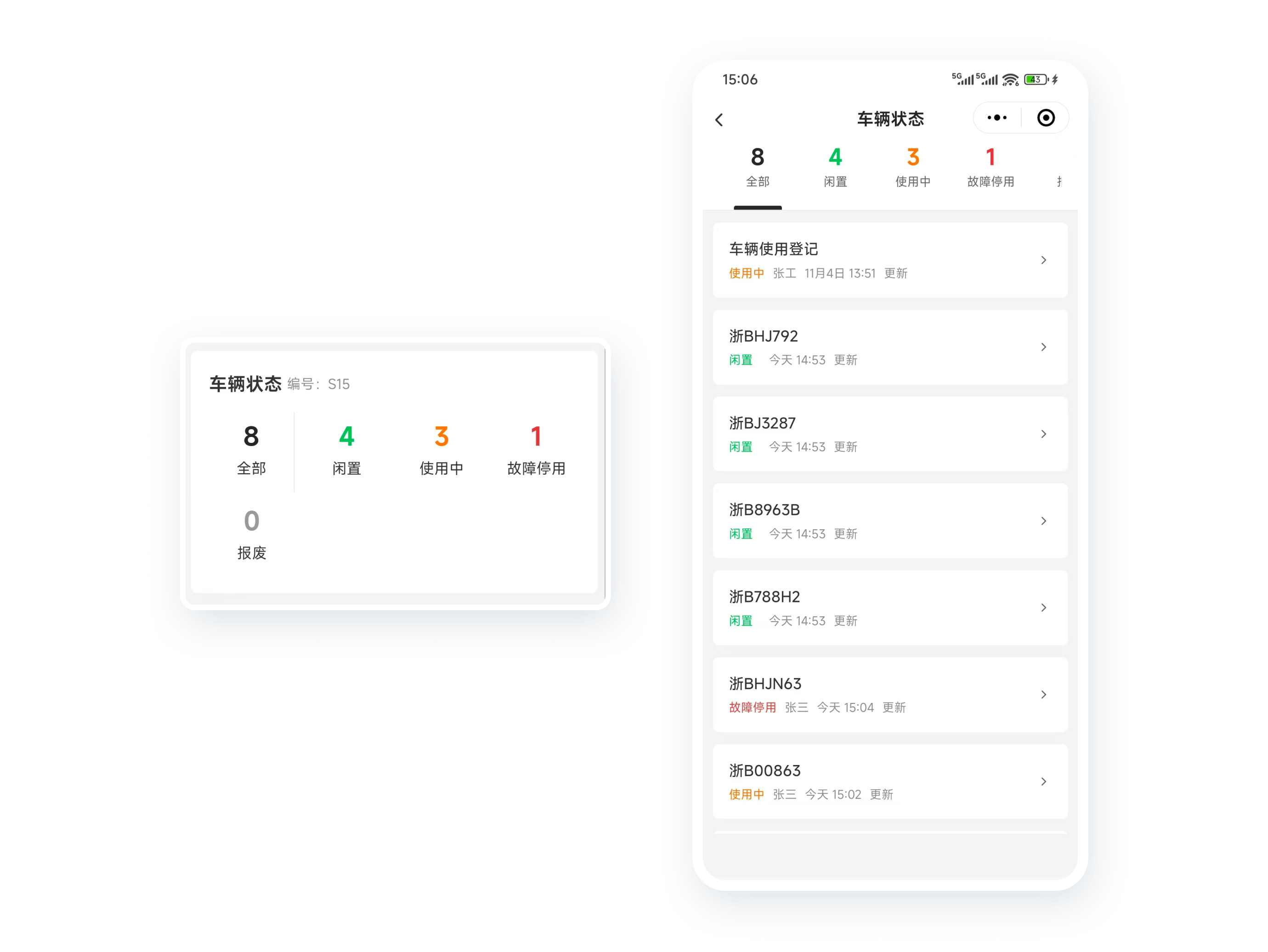
Furthermore, managers can conveniently check the status of all vehicles via their mobile workbench, seeing which vehicles are currently idle, facilitating more rational vehicle allocation.
Returning Responsibility to Its Rightful Place
The main challenge in corporate vehicle management lies with people: vehicles circulate daily, but responsibility easily blurs when records are inaccurate and handovers unclear.
Instead of chasing people after the fact, it's better to establish proper traceability beforehand, ensuring every vehicle use and handover has precise timestamps, personnel involved, and data evidence.
What CaoLiao QR Code offers is not a complex system, but a lighter approach: Making recording simpler, data more authentic, and responsibility automatically accountable.
A property manager described the change after using CaoLiao QR Codes like this:
"Before, when an incident happened, everyone said 'It wasn't me driving.' Now the system shows clearly—who scanned to take the vehicle, who took the photos—responsibility is obvious. Now everyone uses vehicles more properly. This alone saves us thirty to forty thousand a year."
The value of digitalization lies not in "launching a system," but in ensuring every trip is documented, every responsibility is clearly traceable, and making the entire management process more efficient and transparent.