Fire Hazard Reporting
Scan the QR code to report fire safety hazard clues. Managers can receive real-time notifications and assign corresponding responsible personnel for rectification. The entire rectification process can be documented with photos, and records can be exported for archiving.
Basic Information
- Monthly Installations: 1460
- Monthly Visits: 7072
- Original: https://cli.im/template/detail/121463290
Case Tag Image

Usage Instructions
1. Problems Solved
Traditional fire hazard reporting methods in fire safety management face the following issues:
- Incomplete Information: Descriptions lack standardization, information is insufficient, and details are missing, affecting accurate hazard assessment and handling. Inability to attach photos, videos, or other evidence prevents intuitive presentation of the hazard situation, increasing difficulty in judgment and processing.
- Slow Information Transfer: Hazard information must pass through multiple hierarchical levels, leading to slow transmission and delayed response. Traditional methods rely on paper records or verbal reports, which are time-consuming and prone to omissions and delays.
- Lack of Effective Tracking: The progress and results of hazard rectification lack effective tracking, potentially leading to inadequate or delayed rectification. The entire process from discovery, reporting, rectification to re-inspection lacks closed-loop management, failing to ensure hazards are truly eliminated.
- Insufficient Management Oversight: Management struggles to grasp the overall hazard situation promptly, hindering effective supervision and decision-making.
This template enables:
- Timely Hazard Reporting: Upon discovering a fire hazard, record and report hazard information via text, photos, or videos.
- Automatic Notification to Responsible Personnel: After reporting, the system automatically pushes notifications to relevant responsible persons for easy access to hazard details.
- Recording Rectification and Acceptance: After completing rectification, personnel can record the process; acceptance personnel can document the results, ensuring traceability at every stage.
- Data Aggregation and Viewing: All process records can be aggregated and exported via the workbench, or current hazard handling status can be viewed via QR codes or account backend.
Additionally, a single QR code can be used for the entire premises, or separate codes can be created for different areas, implementing "one code per area" for convenient on-site reporting.
2. Hazard Handling Process Implemented by the Template
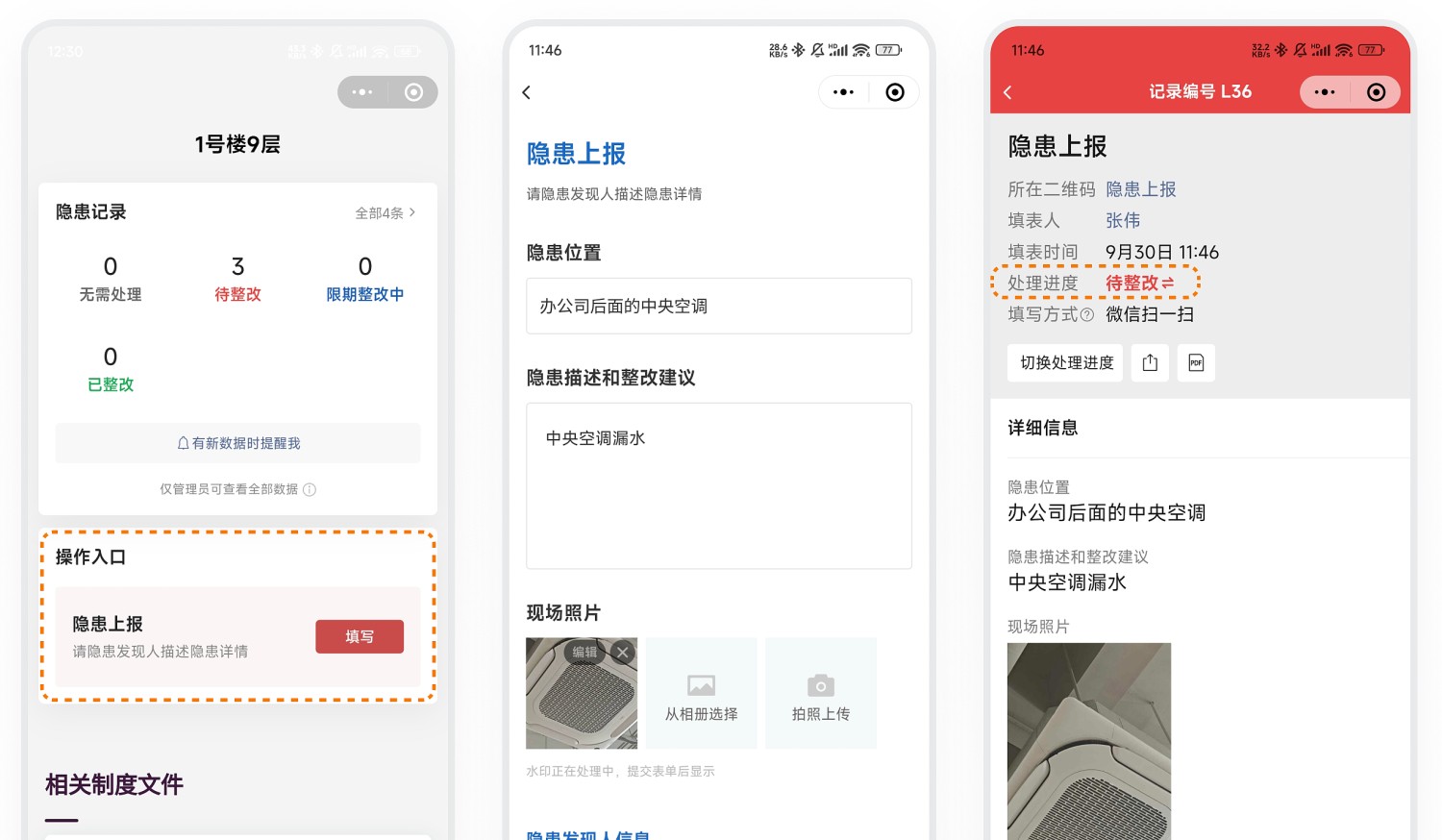
1. Hazard Reporting
- On-site personnel discover a hazard and scan the QR code to report.
- Fill in the hazard description and upload photos.
- After submission, the handling status defaults to "Pending Rectification".
2. Maintenance and Rectification
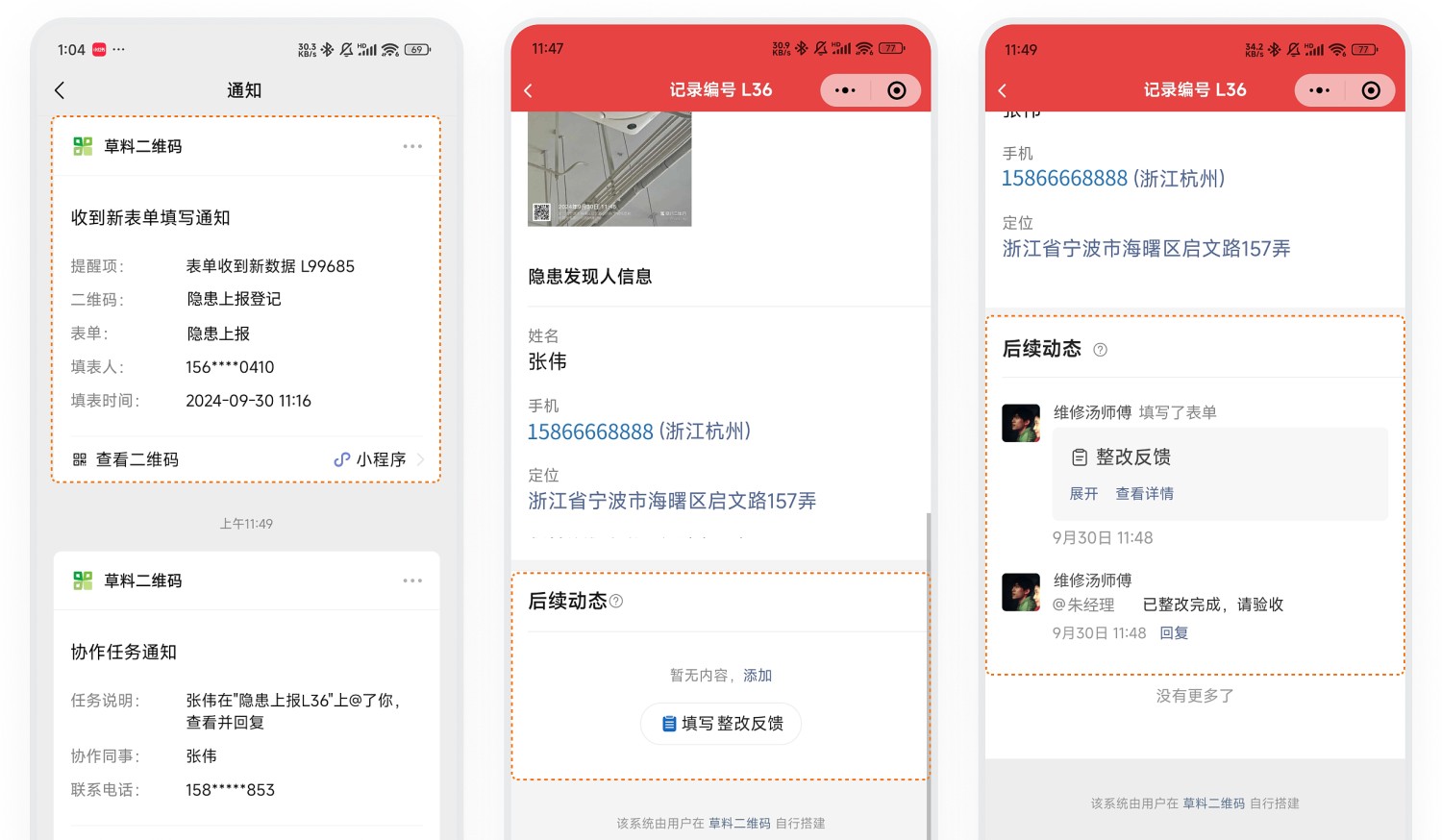
- The system automatically notifies maintenance personnel via WeChat.
- Maintenance personnel review hazard details, handle promptly, and record the rectification process.
- After completion, @mention acceptance personnel in the record to notify them for acceptance.
Tip: To standardize rectification records, you can link a rectification feedback form in the follow-up actions of the hazard report.
3. Acceptance and Closure
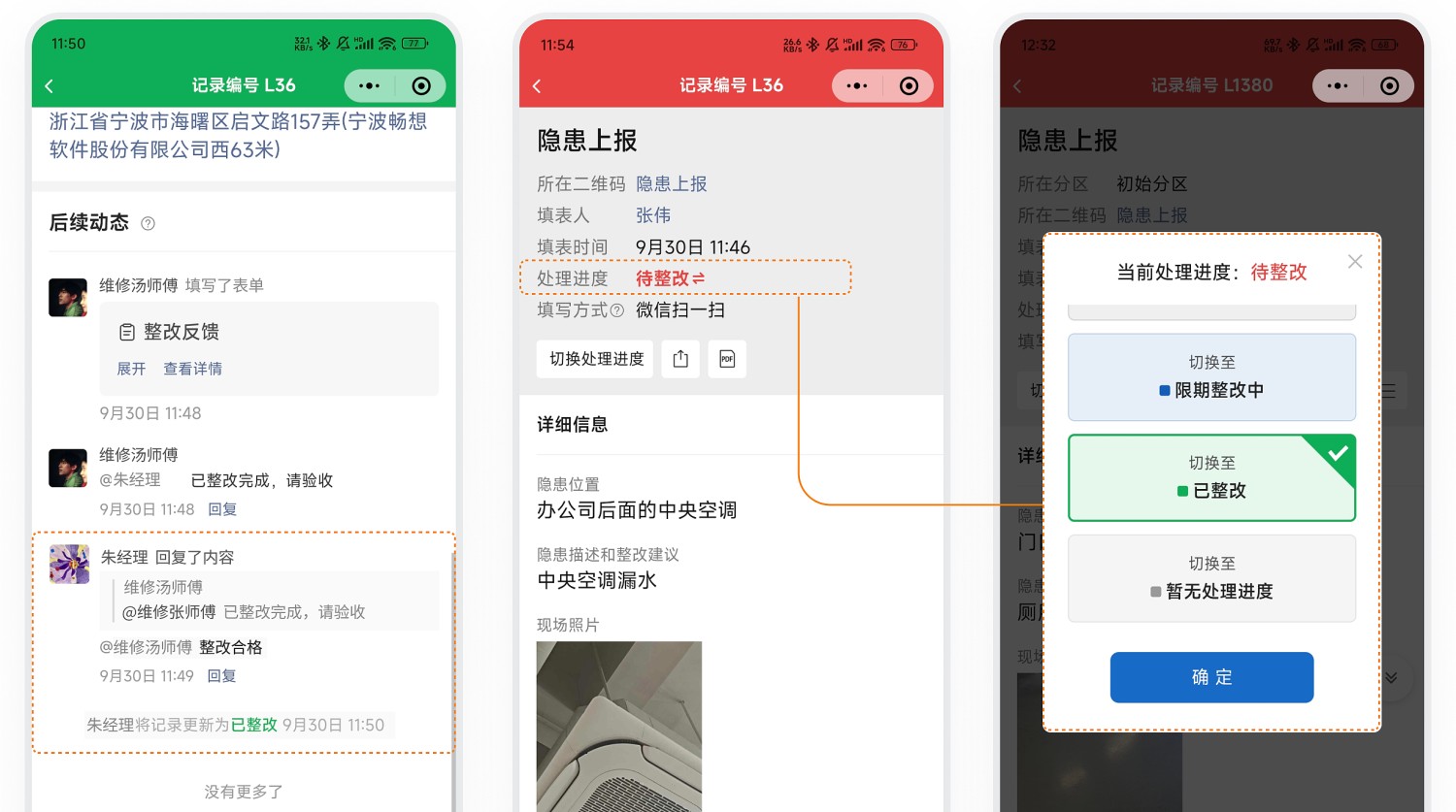
- Acceptance personnel receive the @mention notification and review the rectification status.
- Proceed to the site for acceptance.
- Upon successful acceptance, manually update the handling status to "Rectified", completing the closed loop.
Note: Time-limited rectification functionality is currently not supported. Administrators can filter unremediated hazards in the workbench and promptly remind relevant personnel.
3. Data Management
1. Data Viewing and Exporting
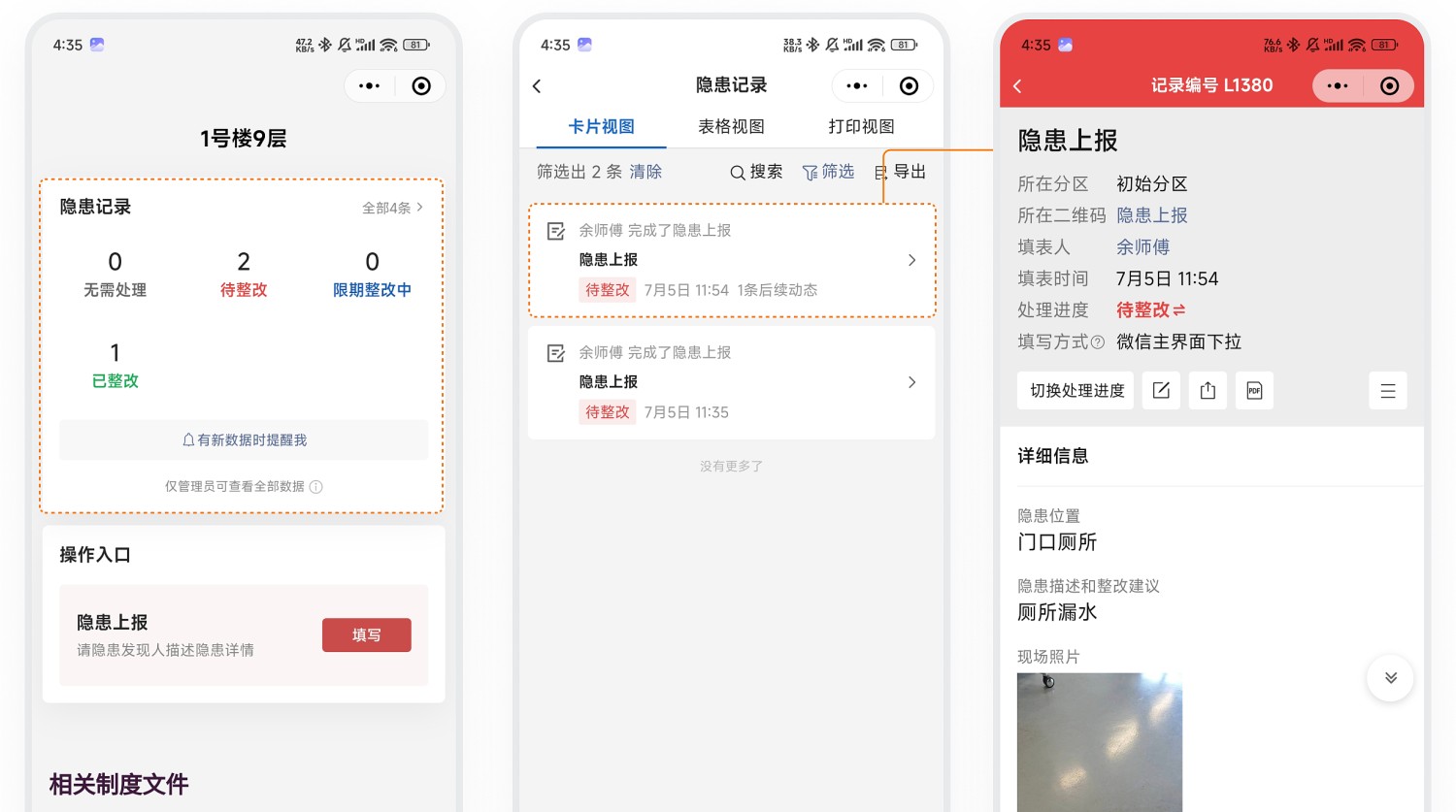
- Centralized Workbench Management: All hazard reporting and rectification data is stored under your account. Administrators can log in to the workbench anytime to view detailed data.
- Handling Status Filtering: Filter data by handling status to quickly identify unremediated hazards and arrange timely handling.
- Dynamic Data Panel: Scan the QR code to view the dynamic data panel, which provides statistics on handling status for quick overview of pending rectifications.
Desktop Forms Data

On-Code Dynamic Data Panel
2. Data Export for Archiving
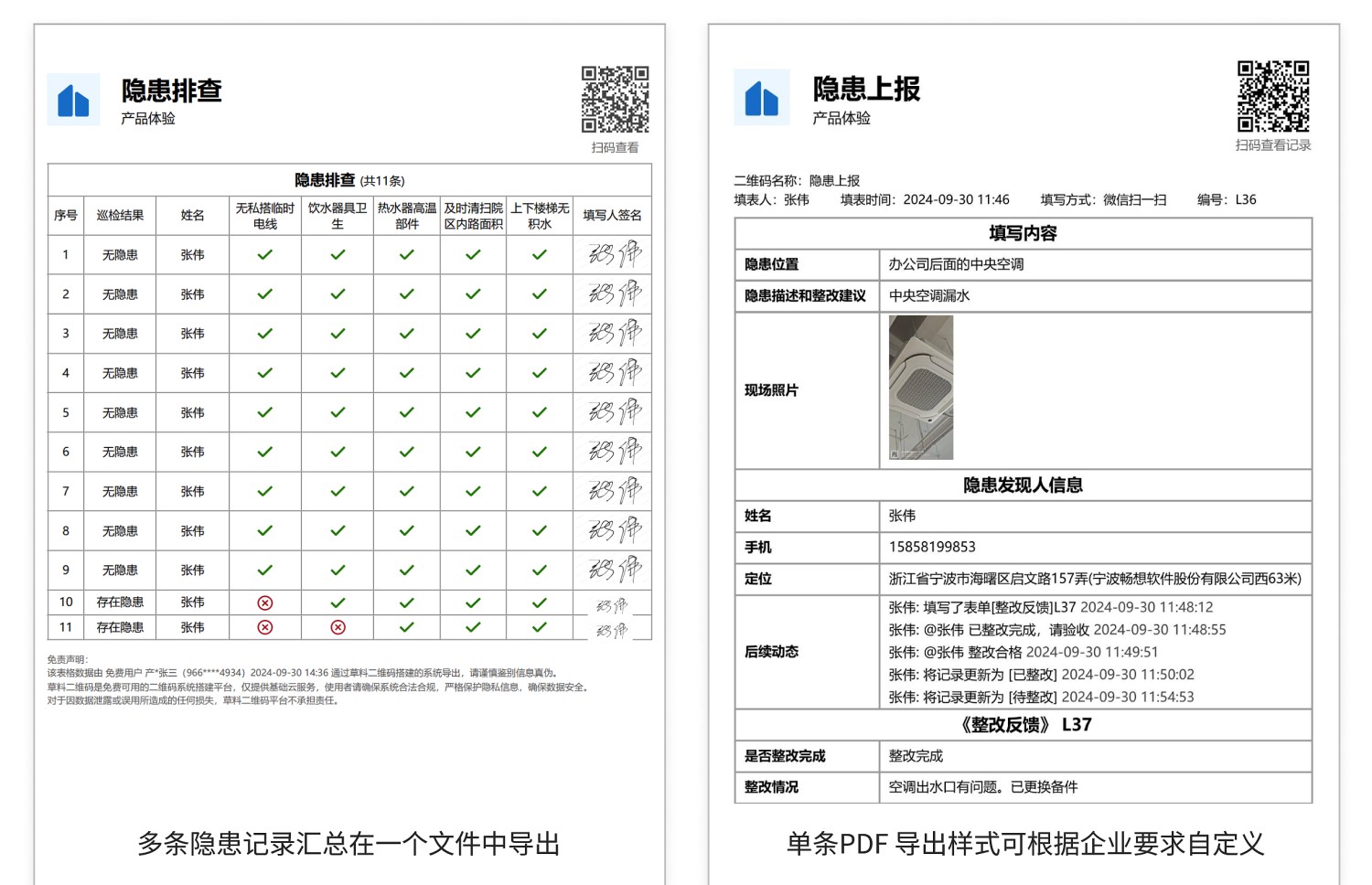
- Supports Data Export: Hazard reporting and rectification records can be exported as PDF files for archiving.
- Customizable Export Format: When exporting individual records, the PDF export format can be customized according to enterprise requirements.
For detailed setup instructions, please refer to: Hazard Reporting Setup Tutorial
4. Frequently Asked Questions
1. How to scan the QR code to view hazard handling progress?
A: Add a dynamic data panel to the QR code, set to the handling status statistics style. Submitted hazard reports are statistically displayed on the QR code based on handling status; click to view detailed data. View Setup Tutorial
2. How to set up management review before rectification after hazard reporting?
A: Use the review function. After a hazard is reported, managers are notified first for review. Only after approval is the responsible person automatically notified for rectification; if rejected, no action is required. View Setup Tutorial
3. Can the rectification feedback form be linked with the handling status?
A: Linkage functionality is currently not supported. After maintenance personnel fill out the rectification feedback form, they need to manually change the handling status. Administrators can filter and view data based on handling status in the workbench.