Hospital Department Visitor Registration
Suitable for hospital departments with access control requirements such as laboratory departments and operating rooms. Visitors can complete registration by scanning a QR code with WeChat. Visitor data is retained while preventing data leaks. Administrators can view, search, and export visitor records in real-time from the workbench.
Basic Information
- Monthly Installations: 460
- Monthly Visits: 1426
- Source: https://cli.im/template/detail/121463489
Case Label Image

Instructions
I. Usage Process
This template uses Operating Room Access Registration as an example. You can modify it based on actual needs and apply it to visitor registration for other hospital departments like the laboratory department or pharmacy department.
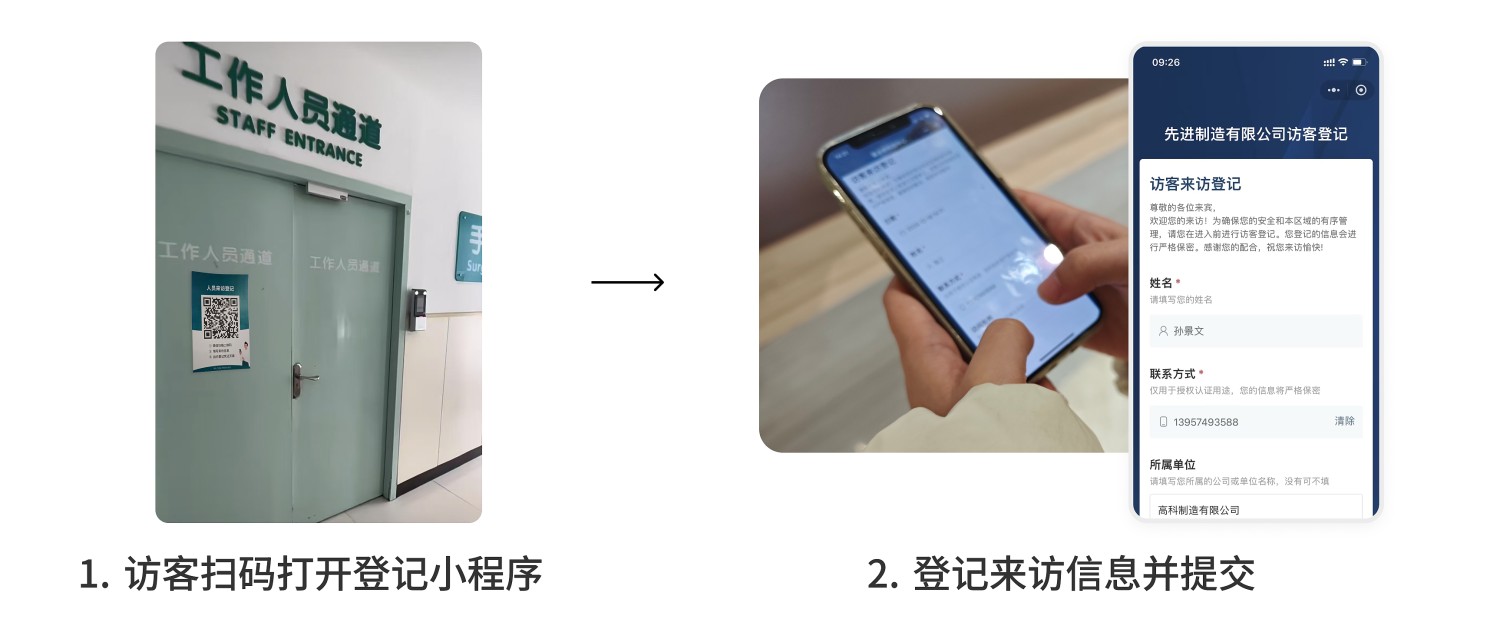
1. Visitors Scan On-site and Fill in Visit Information
- Auto-fill: Visitors only need to fill out the information completely once. For subsequent visits, their previously entered information can be auto-filled, saving time.
2. Access Control Personnel Verify Credentials and Grant Access After Verification
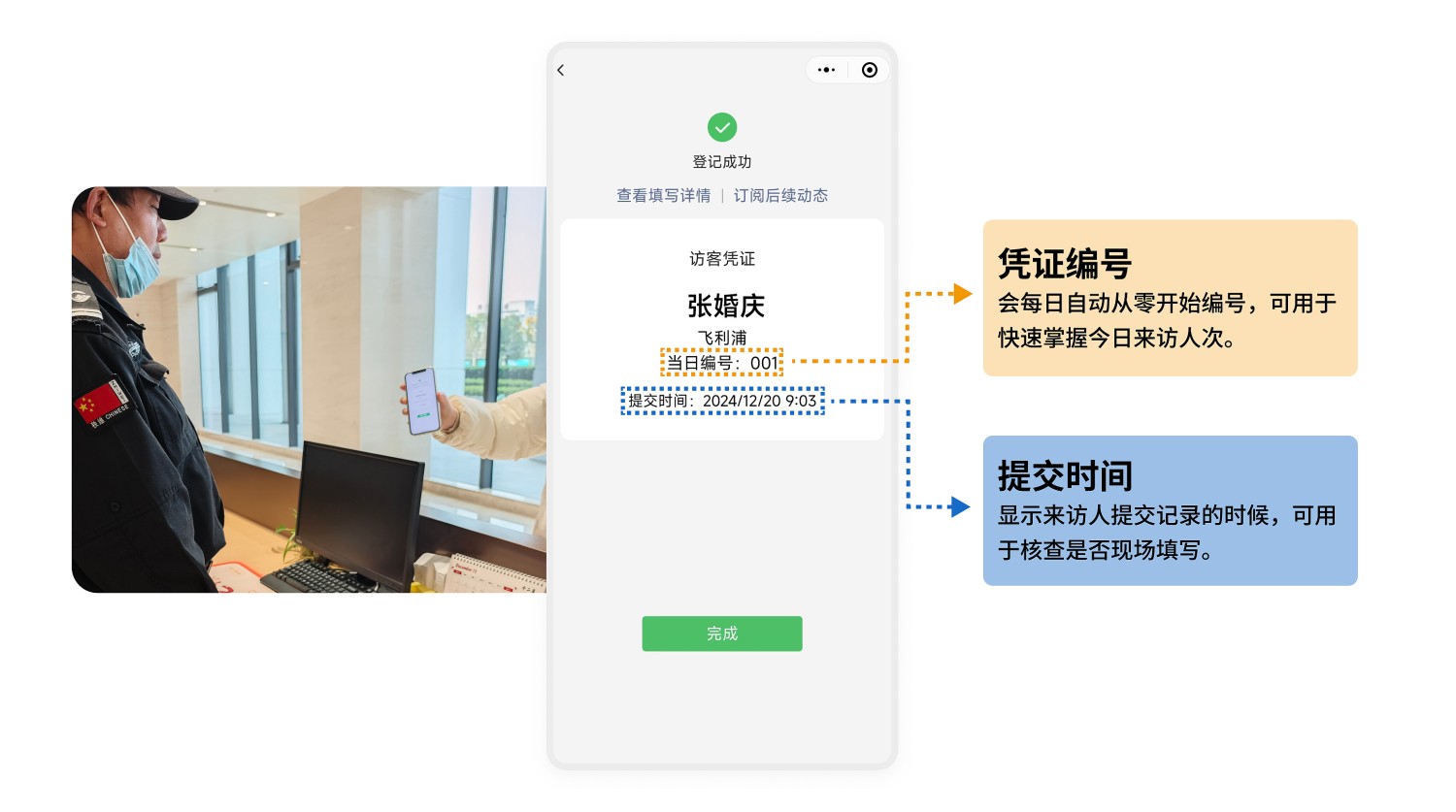
The credential displays: Visitor's name, affiliated organization, credential number, and submission time, which can be used to verify the visitor's authenticity.
- Credential Number: Automatically resets to zero and starts numbering daily. Useful for quickly understanding the number of visitors for the day.
- Submission Time: Shows the time the visitor submitted the record. Useful for verifying if the form was filled out on-site.
Operation Manual: We have prepared an easy-to-understand user guide for access control personnel. It can be downloaded directly or printed as an instruction manual for on-site operations: Download Here
3. Methods for Finding Visitor Data
- Quick Search on Mobile: The bottom of the QR code page records the visitor's submission history (visible only to organization members to prevent data leaks). Click to view all records and perform searches.
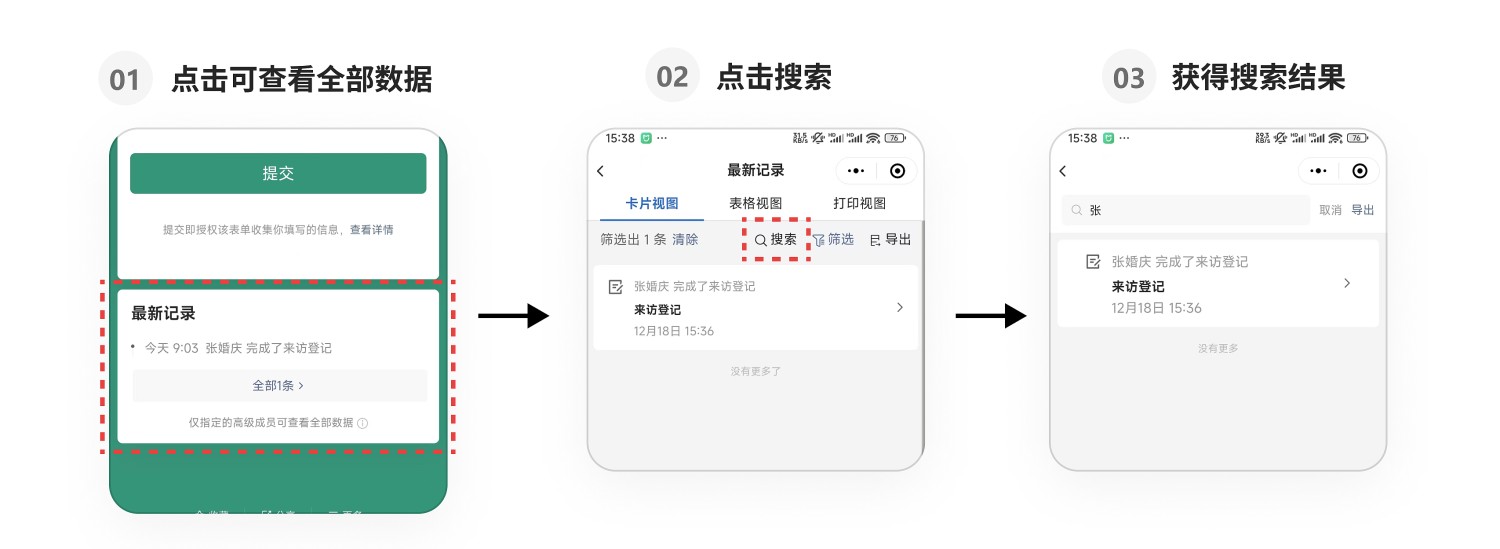
- Detailed Tutorial: Visitor records are automatically saved to the workbench for subsequent archiving and querying. For a detailed tutorial, see: Data Summary Feature
4. Visitor Data Management
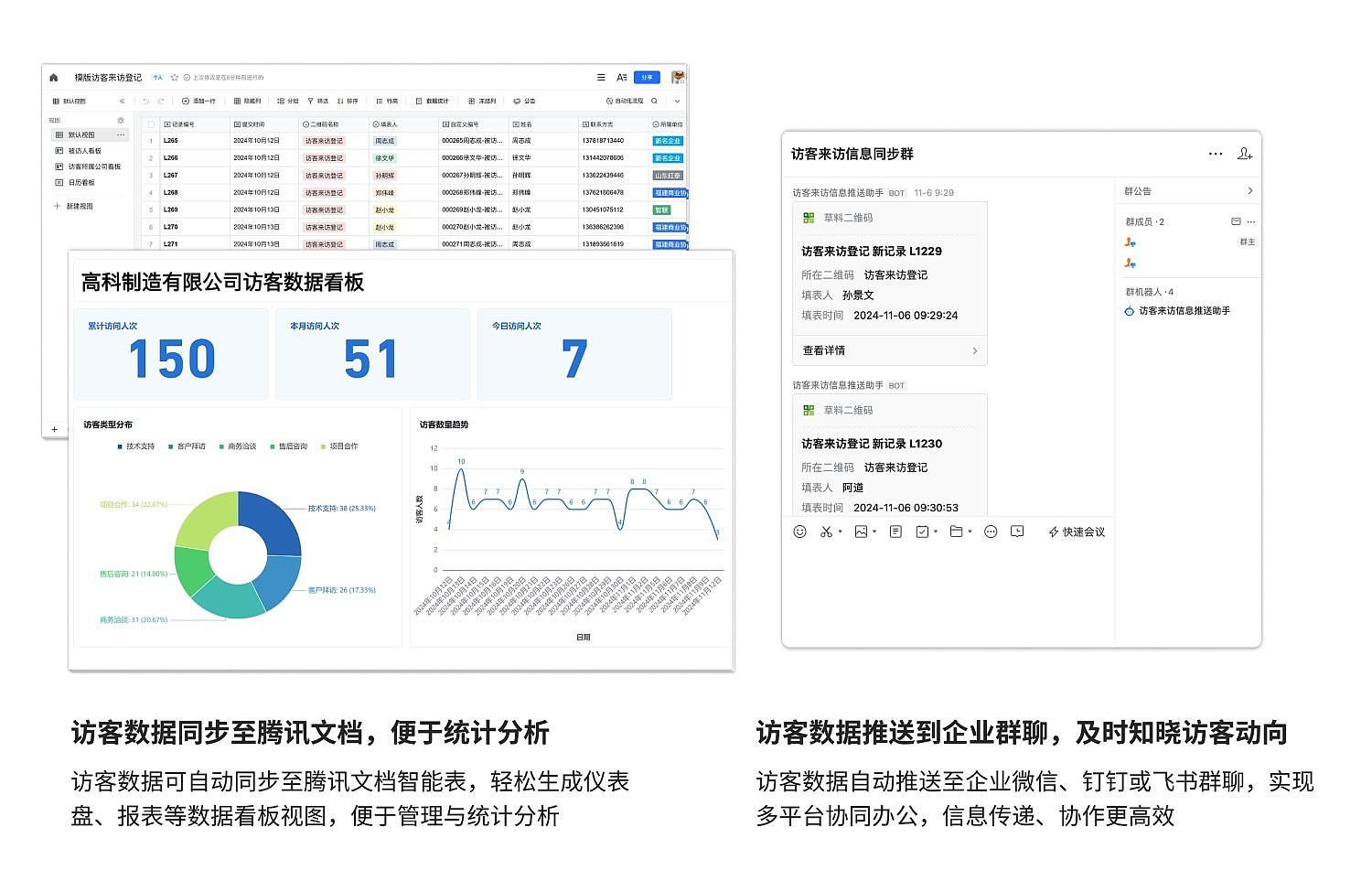
- Notifications: When a visitor submits a record, you can set up automatic notifications to alert managers or automatically push messages to enterprise group chats.
- Data Push: Supports pushing visitor data to platforms like Tencent Docs for analysis and display, meeting more refined management needs.
II. Setup Process
Step 1: Create the QR Code
- You can modify the QR code title, add or remove fields in the registration form, etc. Detailed tutorial: Modify Forms
- After making changes, click 【Generate QR Code】 to complete the QR code creation.
Step 2: Deploy and Post the QR Code
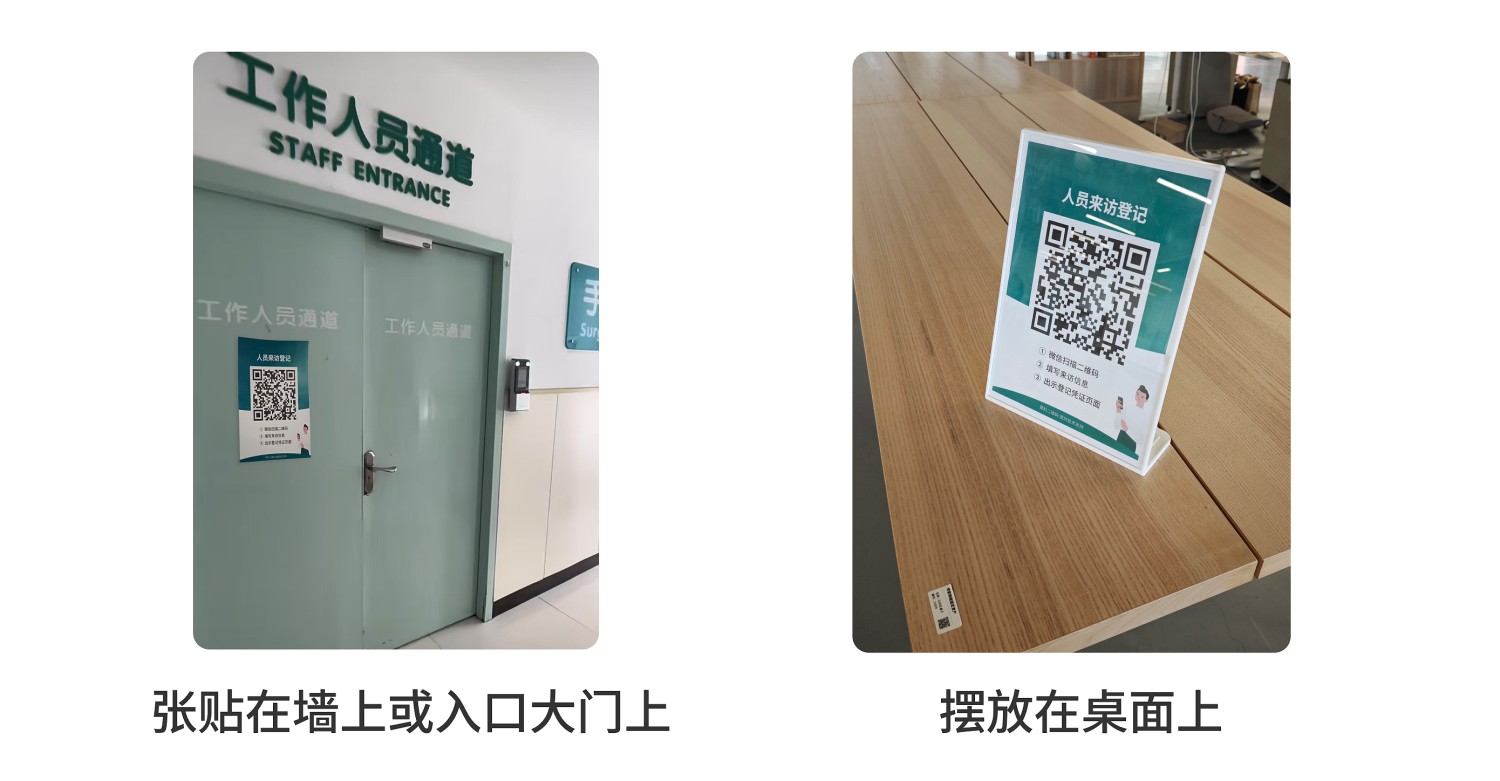
- Wall Posting: Can be printed directly on A4 paper and posted. Alternatively, use materials like 【PVC Sticker】 or 【Silver Sticker】 for better durability and longer use.
- Desktop Placement: Can be used in smaller standee formats. Detailed printing tutorial: Label Download and Printing
III. Frequently Asked Questions
1. Is there a charge for using this template?
Answer: Templates on CaoLiao QR Code can be used for free. If you need advanced features, you can choose to purchase a paid version based on your requirements.
2. Are there any limits on the number of scans or users for this QR code?
Answer: QR codes generated by CaoLiao are valid long-term, with no limits on the number of scans or users. You can use them with confidence.
3. How does CaoLiao ensure data security?
Answer: CaoLiao places great importance on user data security, adhering to strict data security standards to ensure your data is reliable, secure, and compliant. For details, see: CaoLiao QR Code Data Security
IV. Related Templates
Medical Equipment Daily Management: Create unique QR code identifiers for medical instruments and equipment. Scanning the code allows viewing usage instructions. Multiple record sheets can be associated to aggregate registration data from usage, cleaning/disinfection, maintenance, calibration, and other processes, establishing a dynamic equipment history.
Outpatient Medical Guide: Contains essential information needed during outpatient visits, such as travel information, outpatient hours, and treatment procedures. Patients can scan the code to view the information and can also save the QR code for later access.
Health Education: Place health education content into a QR code, providing richer content and more diverse formats of educational knowledge, making it easy to view, save, and share.
Resuscitation Cart Inventory Check: Used during shift changes (e.g., A, P, N shifts in the emergency room) to count items and medications on the resuscitation cart, ensuring smooth handovers. Forms a dynamic archive for traceability and retention. Form content can be modified based on actual resuscitation cart inventory items.