No Time to Study Fire Safety Codes? This Template Is Already Organized According to Standards
Original: https://cli.im/article/detail/2381
A while ago, our property management department took over a new commercial complex. With various fire safety facilities—sprinklers, alarms, fire hydrants, and a host of control equipment—our workload multiplied overnight. Initially, we thought we could just follow our old inspection procedures, but then a colleague from the engineering department reminded us: "The new project needs to comply with GB55036-2022."
I was completely lost: "What's that?"
A Shocking Discovery
GB55036-2022, officially titled General Code for Fire Protection Facilities, has been in effect since March 1, 2023. It consolidates previously scattered fire safety facility standards, covering design, construction, acceptance, and maintenance requirements for various systems like fire alarms, extinguishing systems, smoke exhaust, and integrated controls.
The scope of this code is extensive, applying to almost all new construction, renovation, and expansion projects. It also details requirements for facility maintenance, routine inspections, and record-keeping.
For example, common equipment like fire hydrants, fire extinguishers, and alarm control panels must be inspected at specified frequencies. Each inspection requires clear records, responsible personnel signatures, and electronic archives for future audits. It's not just about checking—it's about checking correctly, documenting clearly, and being able to present the records when needed.
Not That We Don’t Want to Follow the Code—We’re Just Too Busy
I did try to read through the code seriously at one point. Honestly, it's not that thick—just over twenty pages. But that's just one code. To truly manage fire safety well, you need to reference other related standards.
For instance, the newly implemented GB4351-2023 Portable Fire Extinguishers mandates that all extinguisher bodies must use the standard bright red color per GB/T3181. The model labeling has also been updated to be more intuitive, indicating suitable fire types, filling capacity, and propellant methods. Then there's GA95-2015 Maintenance of Fire Extinguishers, which specifies retirement conditions, inspection cycles, and more.
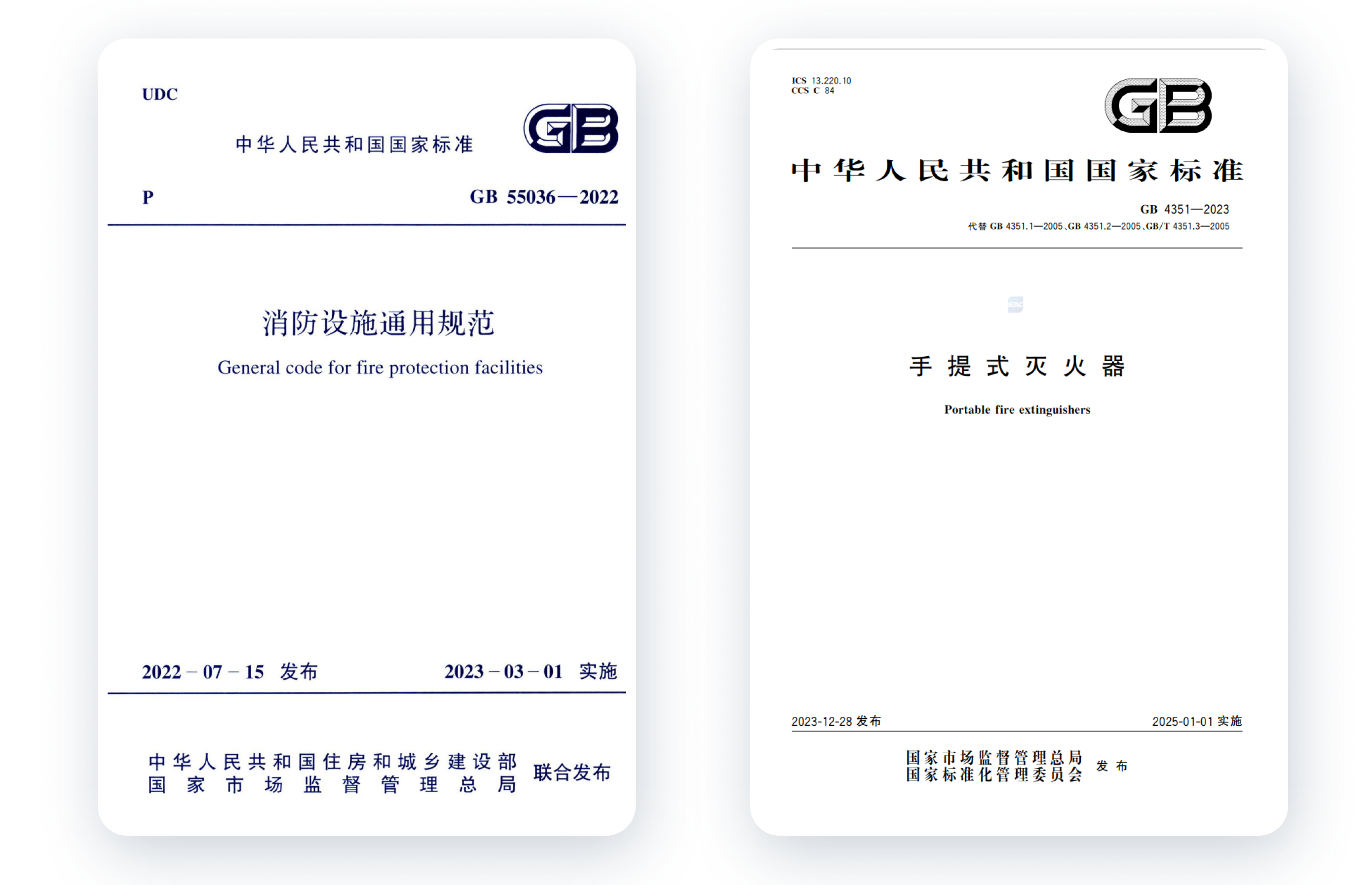
Ultimately, a single standard can't solve everything. You need to understand the terminology, align processes, and then convert them into checklists and record templates. For frontline staff like us, that's just not realistic.
Our daily work involves site visits, overseeing maintenance, and attending various owner meetings. We simply don't have the time to scrutinize every clause in detail.
But the problem is, not following the standards isn't an option. If an audit happens, the first question will be: "Have you been managing according to the code?"
Then We Switched to CaoLiao QR Code’s Template—Basically, It "Read" the Codes for Us
Switching templates wasn't some forward-thinking decision; it was more about "fear of making mistakes." During an internal meeting, a colleague mentioned that CaoLiao QR Code offers ready-made templates based on current national standards. These templates include inspection frequencies, key inspection points, record fields, and anomaly logging—all pre-built.
I tried it out, and it was indeed much clearer than the forms we had created ourselves. Moreover, these fire safety facility templates specify exactly which standards they reference and which industries they're suitable for. The content covered is very detailed, such as:
- Whether fire extinguishers are correctly positioned;
- Whether all components are intact, without looseness, detachment, or damage;
- Whether sprinkler end discharges are unobstructed and water pressure is stable;
- Whether facility labels are clear and undamaged;
- Every inspection must record the time, responsible person, and inspection details.
Previously, we relied on random checklists found online or just our experience. Now, scanning the code leads you through each item with prompts, ensuring you don't stray too far from the requirements.
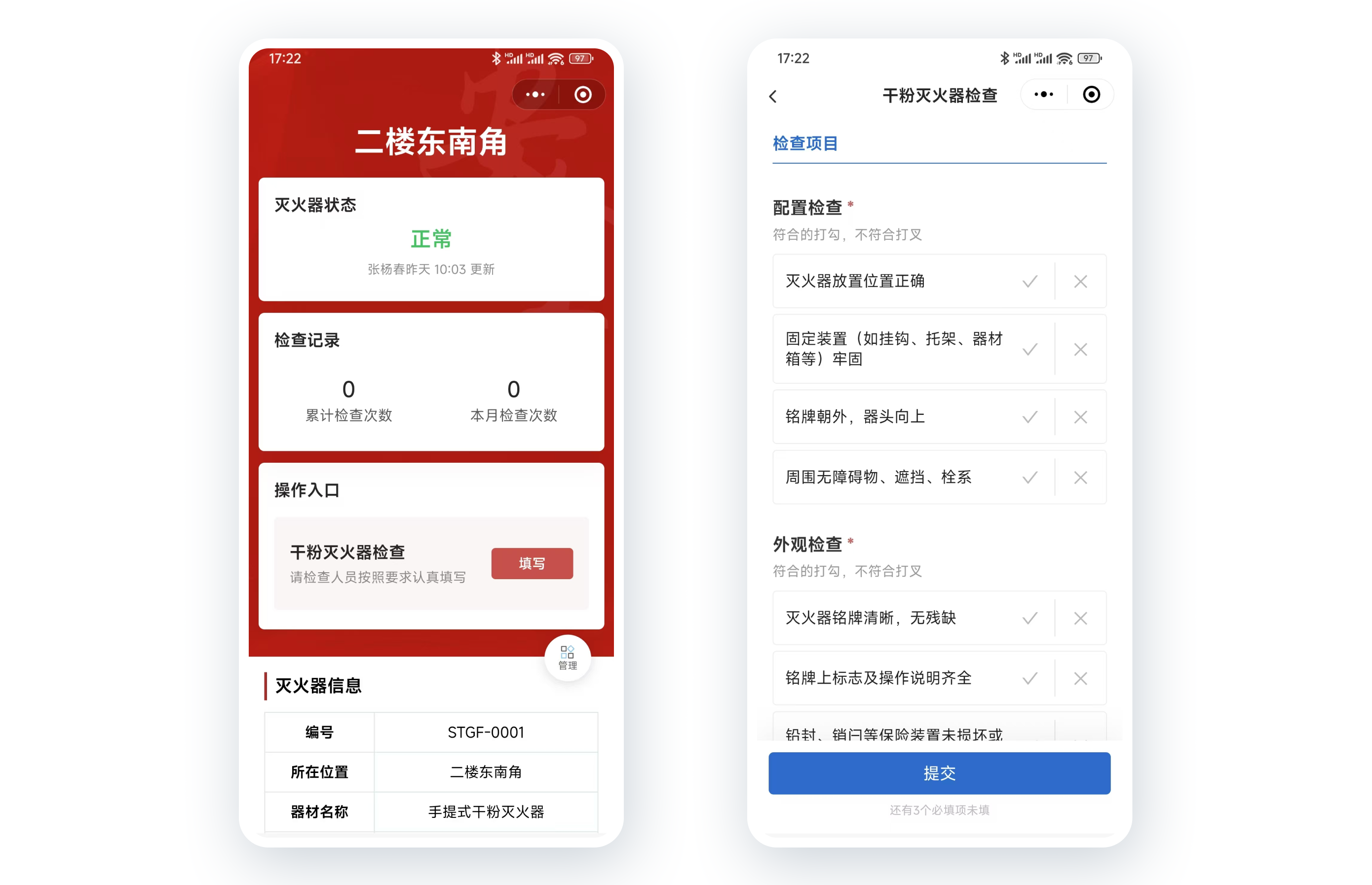
I Don’t Know the Full Code, But I Know "We Can’t Cut Corners"
Here's how we operate now: Each fire safety facility has a QR code attached. Maintenance or inspection personnel scan the code on-site to fill out the form, with options to take photos, type notes, and sign—all in one step. The system automatically generates timestamped records, making it easy to trace issues if they arise.
All records are aggregated in the backend, and we export and archive them monthly. During a surprise city inspection, we simply let the inspectors access the records via the backend. They could select equipment, check photos—everything matched up. That was the first time I felt completely calm during an inspection.
Do I understand the codes and standards now? Honestly, not really. But I know that every inspection record we leave is within the standard framework, unlike the old days when we "filled it out but did it wrong."
To Sum Up
Many frontline facility managers aren't ignoring standards or unwilling to comply. It's just that daily operations leave no energy to study complex terminology, convert it into forms, and then train frontline staff.
But compliance isn't something you can gamble on. Especially with fire safety—if something goes wrong, it's serious.
CaoLiao isn't about making decisions for you; it's about making those "easily overlooked steps" more secure. When there's no time to read the entire standard, tools like this aren't just a bonus—they're a safety net.