How to Report Safety Hazards Quickly, Track Them Effectively, and Manage Them Reliably? Our Unit Tried This Method
Original: https://cli.im/article/detail/2393
At the beginning of this year's Safety Month, our leader assigned us a task: "This year's focus is the 'Safety Hazard Investigation Campaign.' We need to integrate the newly issued 'Accident Hazard Judgment Standards,' address minor hazards early, manage major hazards effectively, and ideally digitize the process to prevent issues from being lost after being passed down through layers."
We are a manufacturing enterprise. Previously, hazard reporting mainly relied on paper forms or WeChat groups, but there were always several pain points:
- Frontline workers discovered problems but were either afraid to report them or didn't know how.
- Reporting methods were non-standardized; sometimes, even photos were unclear.
- After reporting, there was no follow-up or closure.
- Multiple departments would pass the buck, and issues would eventually be dropped.
This Year, We Tried a Different Approach – Using QR Codes for Hazard Reporting
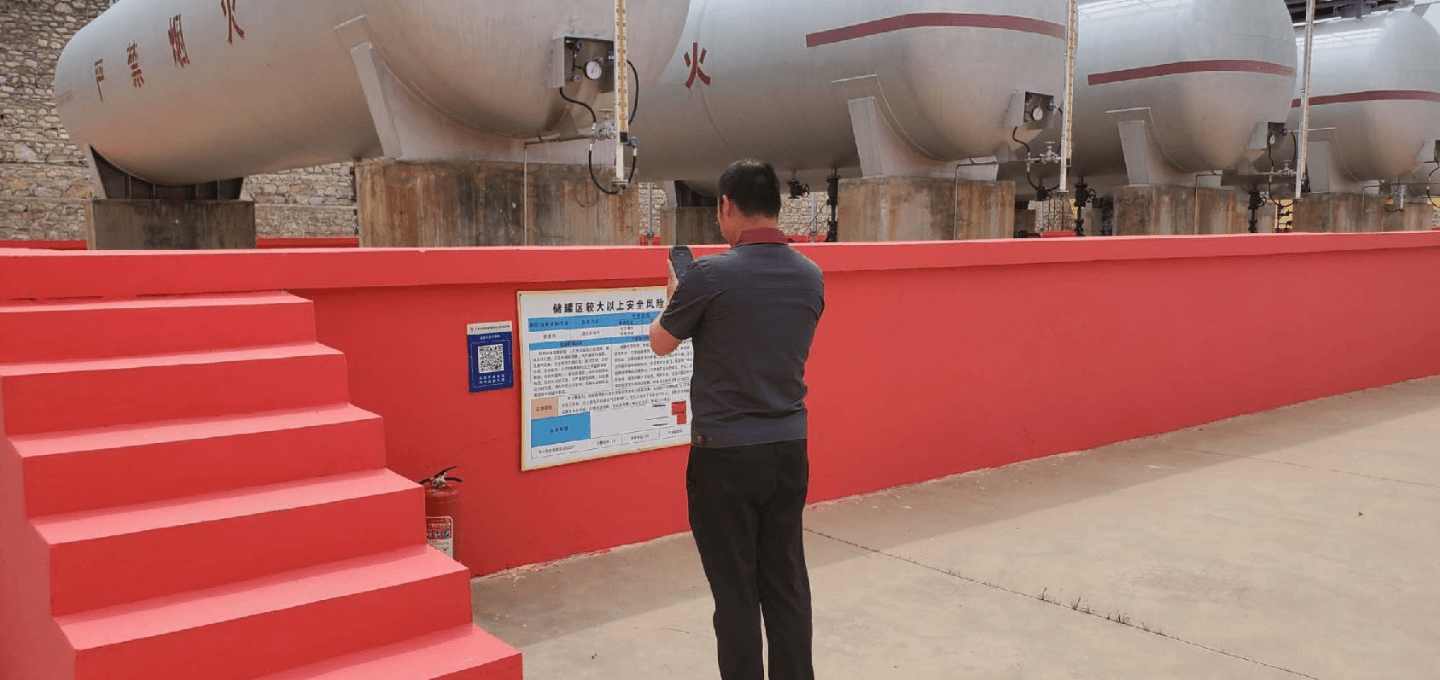
We posted QR codes at several key locations in the workshop. If workers find issues—such as oil on the floor, abnormal equipment noise, or blocked fire exits—they can immediately scan the code with their phones and fill out a hazard reporting form.
We pre-created the hazard reporting QR codes on the CaoLiao QR Code platform, configuring the form content to include photo uploads, location tagging, and brief descriptions. Frontline employees simply need to use WeChat's scan feature, follow the prompts, complete the form, and submit it.
After several trials, we found the results far exceeded expectations:
- Faster Frontline Feedback
Previously reliant on verbal reports, some employees felt "awkward speaking up." Now, scanning a code to report has made people more willing to contribute. We also adopted an incentive method of "small rewards for minor hazards, larger rewards for major ones," setting up a reward mechanism for each reported hazard. Combined with a monthly "recognition list" on the bulletin board, this has genuinely boosted engagement.
- More Standardized Follow-up Process
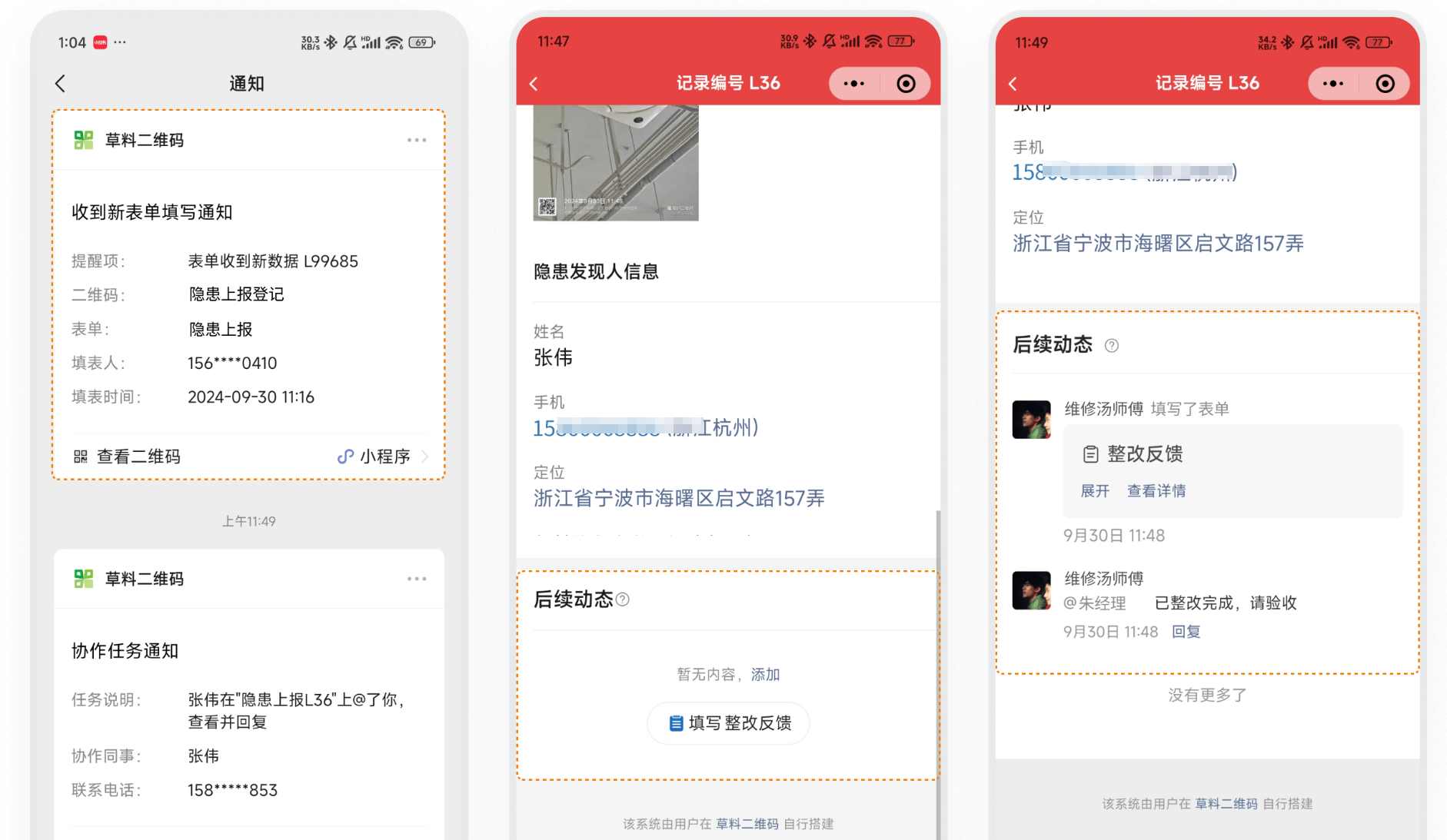
For every hazard reported, we set up automatic notifications. The Safety and Environmental Department, Equipment Department, and responsible area supervisors all receive immediate WeChat notifications about new hazard reports. Clicking the message reveals detailed records, clarifying who is responsible for handling it, the progress status, closure confirmation, and enabling traceability if issues arise.
- Easier Data Aggregation and Analysis
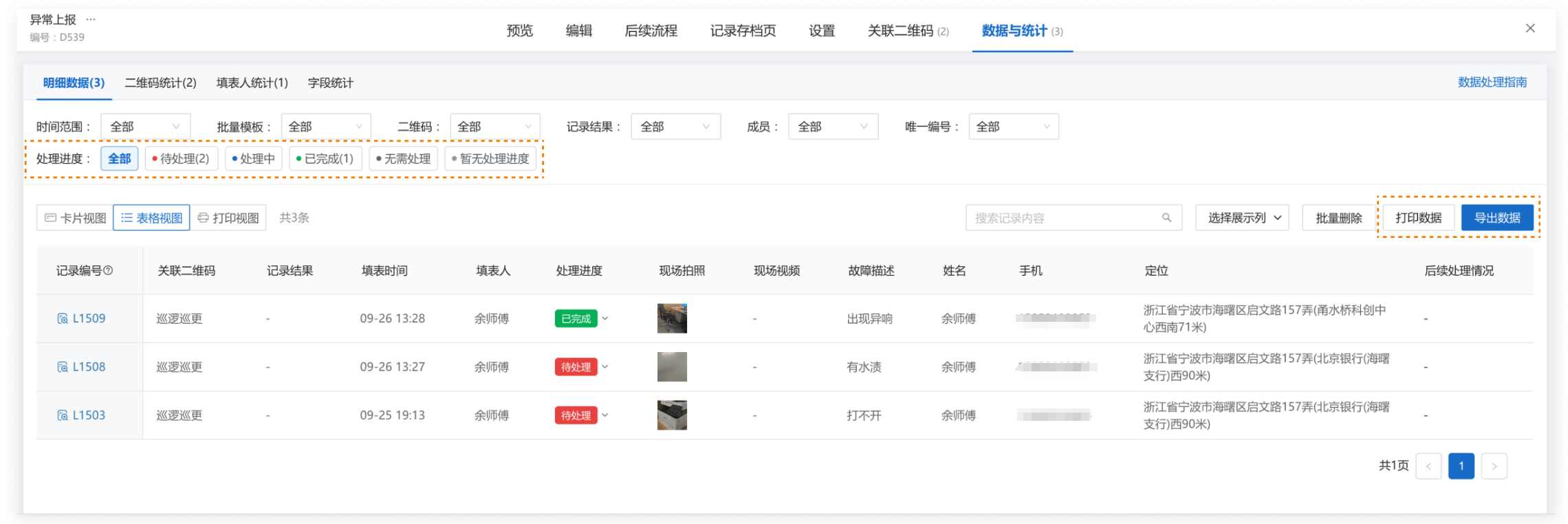
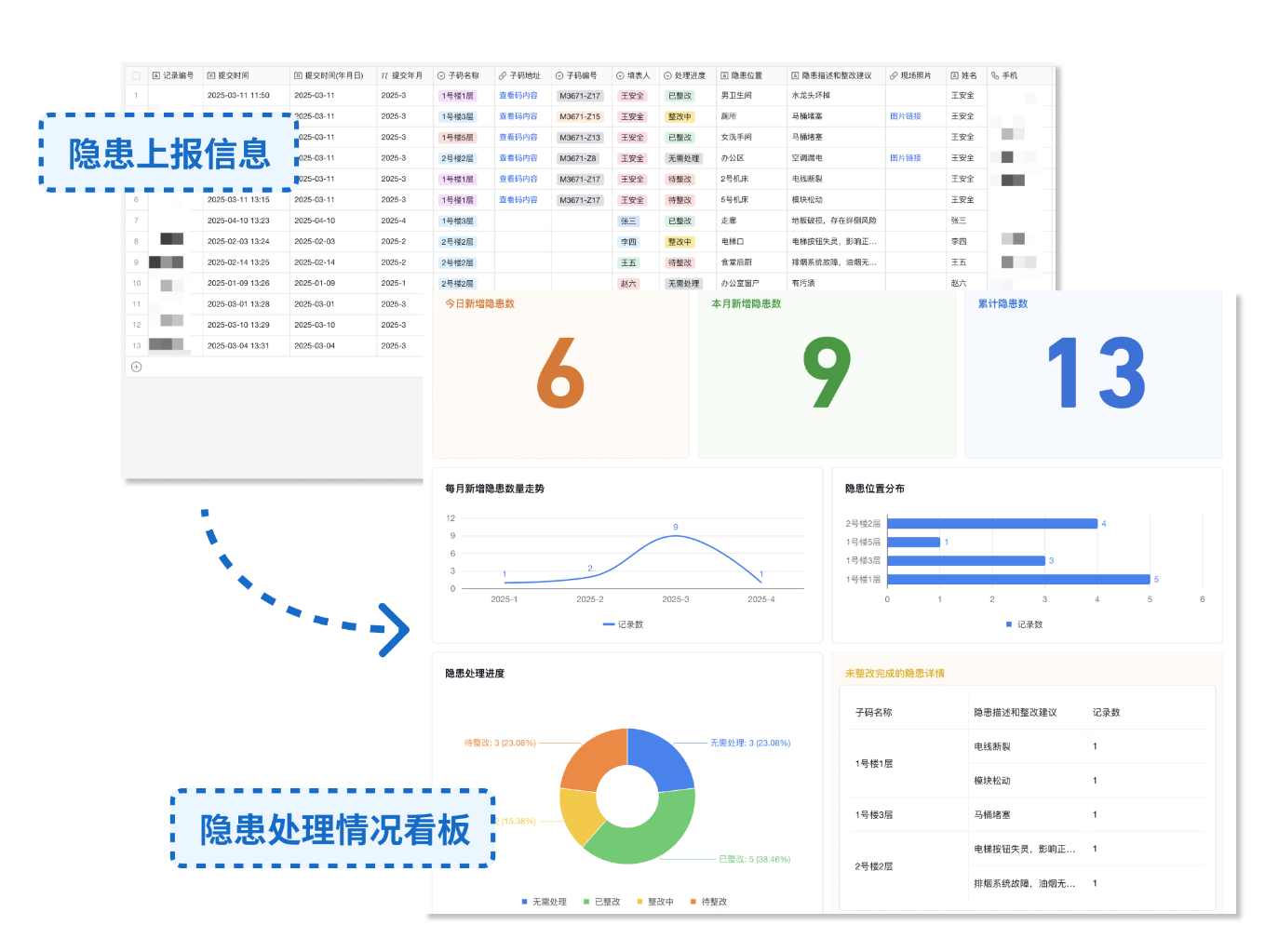
Hazard data is automatically updated and aggregated. Scanning a code allows viewing a dynamic data panel to quickly see pending hazards requiring rectification. Accessing the CaoLiao QR Code desktop workbench enables viewing hazard trends categorized by department, time, and type—making it clear which areas have recurring problems and which hazard types are most frequent.
The CaoLiao QR Code platform also offers API functionality. Reported hazards and rectification information can be synchronized via API to BI analysis tools or Tencent Smart Sheets, allowing quick setup of data dashboards for monitoring hazard handling progress.
II. Using Digital Tools for "Expert Interpretation" and "Experience Promotion"
Beyond reporting, we also used CaoLiao QR Codes to create educational QR codes containing key points from the Major Accident Hazard Judgment Standards. These are posted near the training room entrance, allowing employees to scan and review the content, even after training sessions.
For every training or briefing session, we also have employees scan codes to check in and provide feedback. This not only creates a record but also facilitates subsequent statistics.
III. Here's What We Did
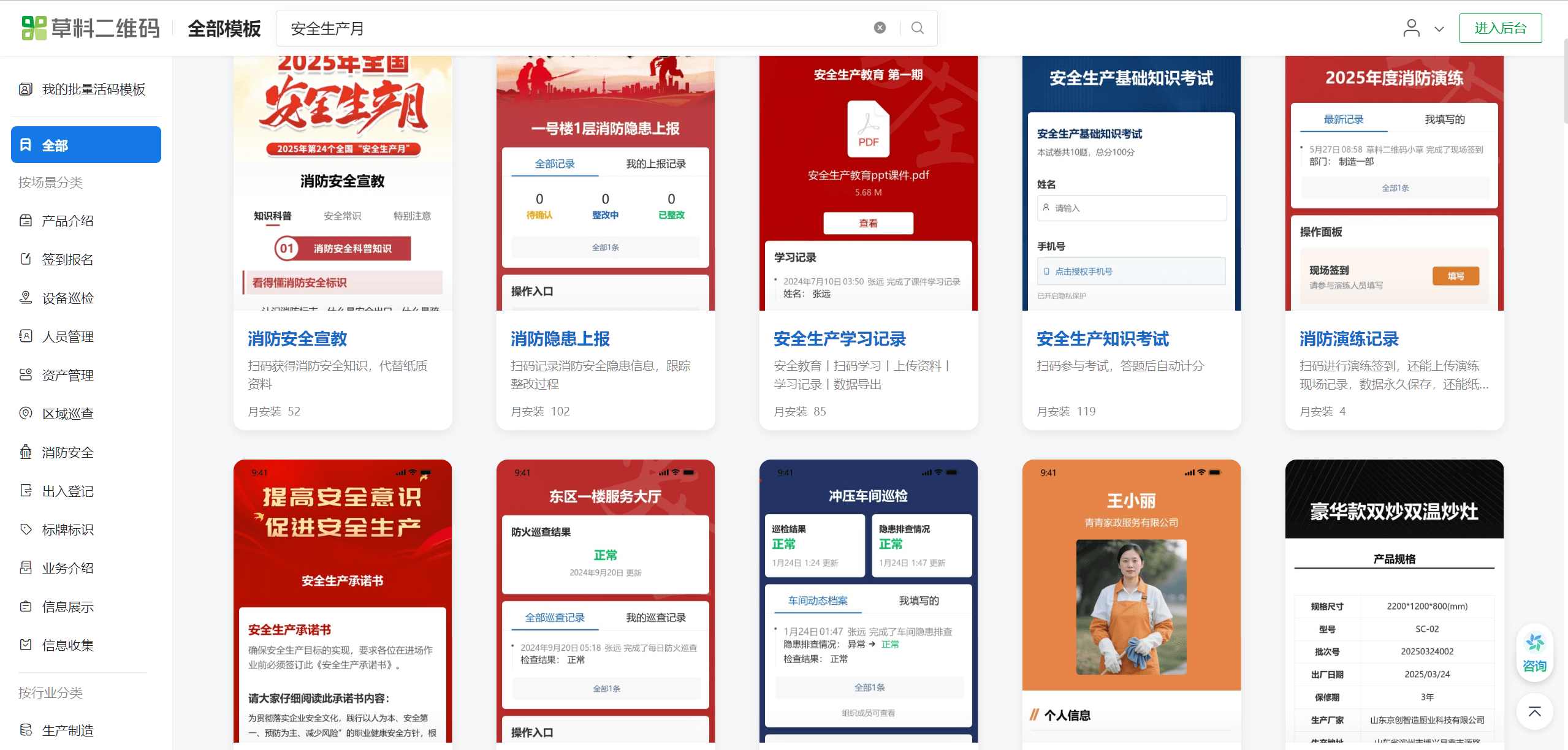
We used the "Hazard Reporting" template on the CaoLiao QR Code platform, modified the form content according to our requirements, set up notifications and handling processes, generated several hazard reporting QR codes, and printed and posted them in areas like workshops and warehouses. Based on the reports, we carried out rectifications and combined this with a "Hazard Grading Reward" incentive mechanism to provide rewards to employees who reported hazards. We performed categorized analysis of the hazard data in the workbench to guide the focus of the next phase's investigations. We are not a tech company, but using a simple QR code made a previously complex process run much smoother.
This year's Safety Month theme is "Everyone Talks Safety, Everyone Can Respond – Find Hazards Around You." Figuring out "how to talk about it, how to report it, and how to follow up" are precisely the problems enterprises need to solve. This "low-cost, zero-threshold" method not only helped us implement the required measures but also genuinely involved frontline employees in safety management—perhaps the most crucial part of building a safety culture.
If you are also responsible for safety management in your company, consider trying QR codes for hazard reporting. We used the CaoLiao QR Code platform. It requires no development, no special training, and isn't complicated to operate. Simply modify the template to generate your QR codes. Implementation can take less than an hour, making it particularly suitable for small and medium-sized enterprises that are too busy to deal with complex systems.