Research Report on Digital Transformation of Fire Safety Management
Original: https://cli.im/article/detail/2463
In the first half of 2025, national fire data once again served as a wake-up call for businesses and the public. According to the National Fire and Rescue Administration, there were 552,000 reported fires across the country, resulting in 1,084 deaths, 1,149 injuries, and direct property losses amounting to 4.08 billion yuan. Compared with the same period last year, the number of fires increased by 0.04%, indicating that overall risks remain high.
For any industry, these figures are not just cold statistics. A single fire can mean workshops shut down for months, critical equipment scrapped, loss of customer trust, and even irreversible personal injury.
Stricter Regulations, Evolving Management Logic
In recent years, the legal framework for fire safety supervision has been continuously improved. The "Fire Protection Law" and the "Work Safety Law" clarify the primary responsibilities of enterprises and institutions. The "Regulations on Fire Safety Management for Organs, Organizations, Enterprises, and Institutions" (Ministry of Public Security Order No. 61) require entities to establish fire inspection systems and implement record management and responsibility tracing. National standards like GB50444-2008 "Code for Acceptance and Inspection of Building Fire Extinguisher Configuration" provide operational details for firefighting equipment, clearly specifying inspection cycles and methods.
Regulations and standards no longer merely emphasize "conducting inspections" but further stress that "inspections require evidence, and responsibilities must be traceable." This means it's not enough for enterprises to simply "have done" the work; they must also "be able to clarify who did it, when it was done, the results, and how issues were rectified."
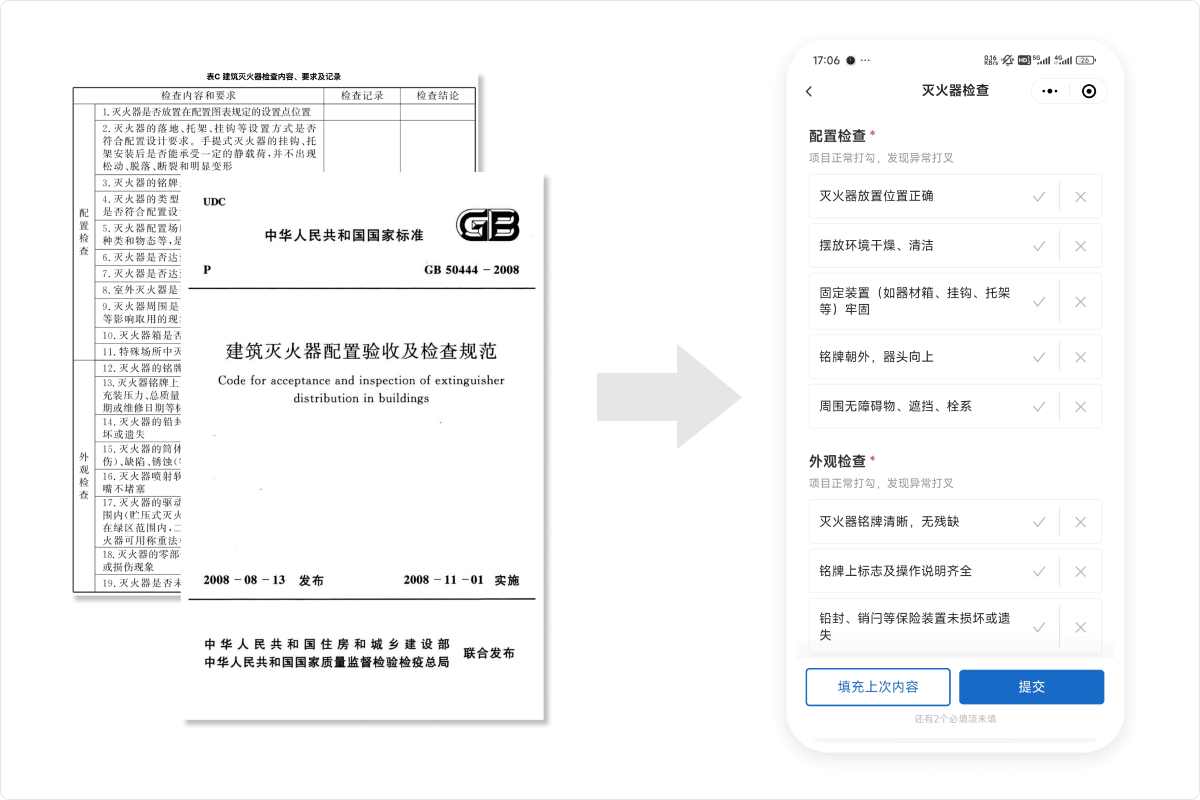
Real-World Challenges: Systems Don't Equal Implementation
Many enterprises and institutions have established tiered inspection systems: frontline staff conduct daily inspections, supervisors review weekly or monthly, and company-level or third-party parties conduct systematic联动 tests quarterly or annually. The scope of inspections is also specific, covering everything from whether safety exits are unobstructed to the effectiveness of facilities like fire extinguishers, hydrants, and sprinklers, as well as high-risk points such as electrical loads, hazardous chemical areas, boiler rooms, and approvals and on-site protection for special operations like hot work, confined space entry, and chemical usage.
The problem is that many units still primarily rely on paper and verbal processes:
- Forms are still circulated on paper, with records scattered across different Excel files;
- Photos are stored on personal phones, making it difficult to match them with work orders;
- Hazards are identified but often get stuck "in process," failing to form a closed loop for rectification and re-inspection.
The result is that even after numerous inspections, complete records cannot be produced at critical moments. It's common in the industry to struggle to explain during regulatory spot checks, fail to trace responsibilities during accident investigations, and lack evidence for insurance claims.
Digital Transformation is the Major Trend
Against this backdrop, the digital transformation of fire safety management has become a major trend. The value of digitalization is not about flashy technology but about solving three key issues:
- Leaving verifiable data for "work done by people," using data to prove whether tasks were completed;
- Connecting the complete chain of "discovery — reporting — rectification — re-inspection," preventing hazards from remaining unresolved;
- Consolidating scattered records into views that managers can understand at a glance.
In different types of organizations, the implementation of digitalization is also diverging: large campuses and high-risk industries tend to deploy smart fire protection platforms, integrating sensors, video, and AI analysis to achieve early warning and联动 control. However, such systems are powerful but have long construction cycles, high maintenance costs, and high requirements for IT capabilities, making them unaffordable for all enterprises. Small and medium-sized enterprises (SMEs) and public institutions, with limited budgets and manpower, are more concerned with questions like: "How can we launch quickly? Are there simple, easy-to-use, low-cost solutions that don't rely on outsourcing?"
Driven by such demand, lightweight, low-cost QR code-based business management systems, primarily represented by CaoLiao QR codes, have become the choice for a growing number of organizations. The advantage of QR codes lies in their ability to turn institutional requirements into small actions that employees can complete effortlessly, striking a balance between compliance and practicality:
- No hardware investment required: Simply generate a unique QR code for each inspection point or device, affix it to on-site locations like equipment, passages, or electrical boxes—no need to replace equipment or wiring;
- Zero learning curve: Employees can use WeChat to scan the code, fill out inspection records, and upload photos—no additional training needed;
- Rapid setup, flexible expansion: No system development required; frontline supervisors can quickly set up using templates, with full deployment possible in less than a day;
- Full-process traceability, automatic summarization: Hazards can be reported immediately, with the system automatically notifying responsible persons; comparative photos are uploaded after rectification, confirmed by the re-inspector; digital records are automatically generated in the backend, allowing data export by date, area, device, etc., ready for inspections.
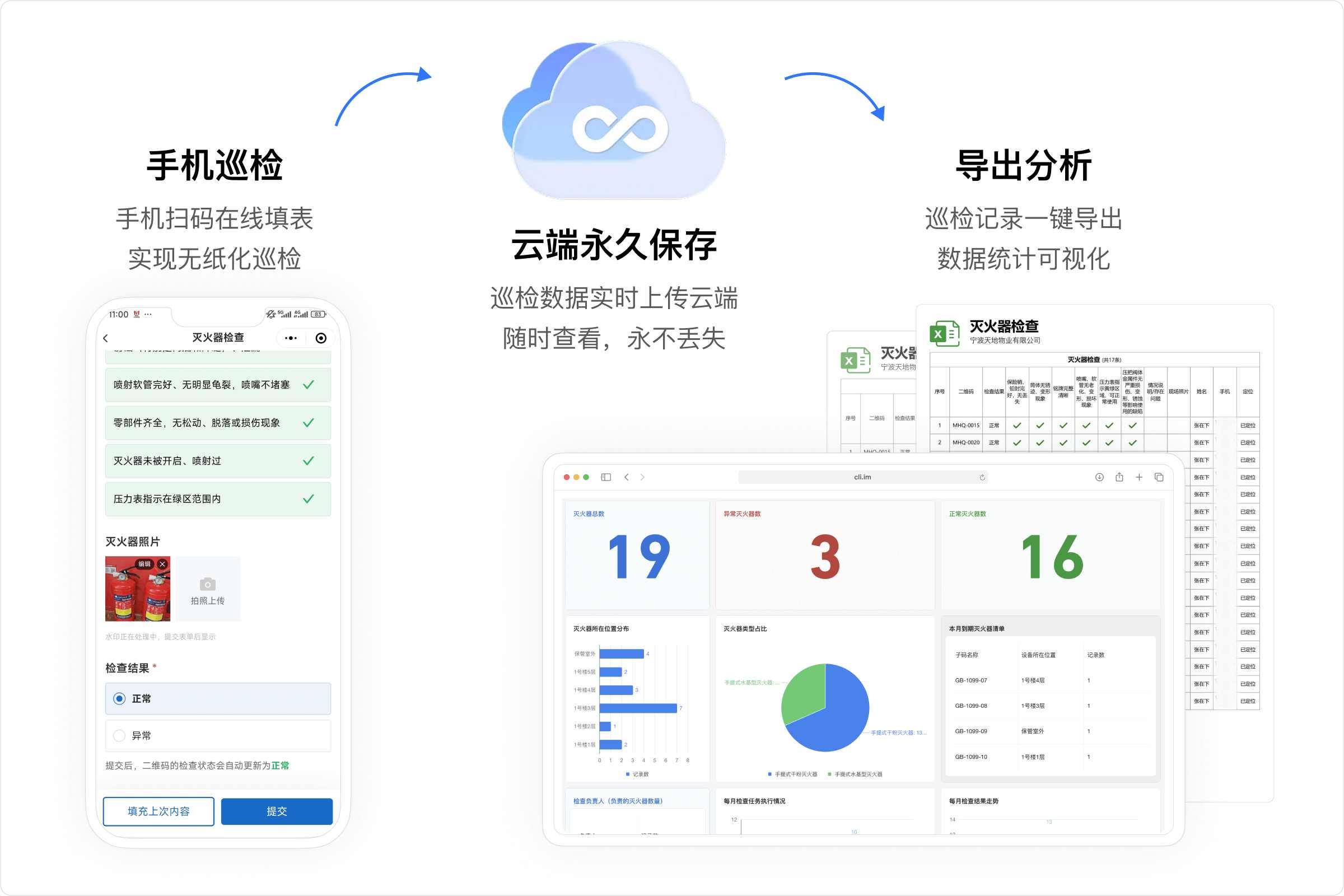
Three Key Points for Digital Implementation in SMEs
For resource-limited SMEs, digitalization isn't just about moving a bunch of forms online. The key is whether it can genuinely form a management process of "traceability, closed loops, and accountability" in daily operations.
In this process, three aspects require special attention:
- Ensuring Data Authenticity: Employees might scan or fill out forms on behalf of others. Mechanisms to prevent falsification (such as location verification, watermarks, blockchain notarization offered by CaoLiao QR codes) and accountability systems are needed to constrain this.
- Closed-Loop Hazard Handling: Identifying problems is only the first step; rectification and re-inspection must follow to form a true closed loop.
- Data Informing Decisions: The value of digitalization isn't in how pretty the reports look, but in its ability to genuinely analyze trends and optimize investments. Digitalization truly yields management benefits when data can guide decision-making.
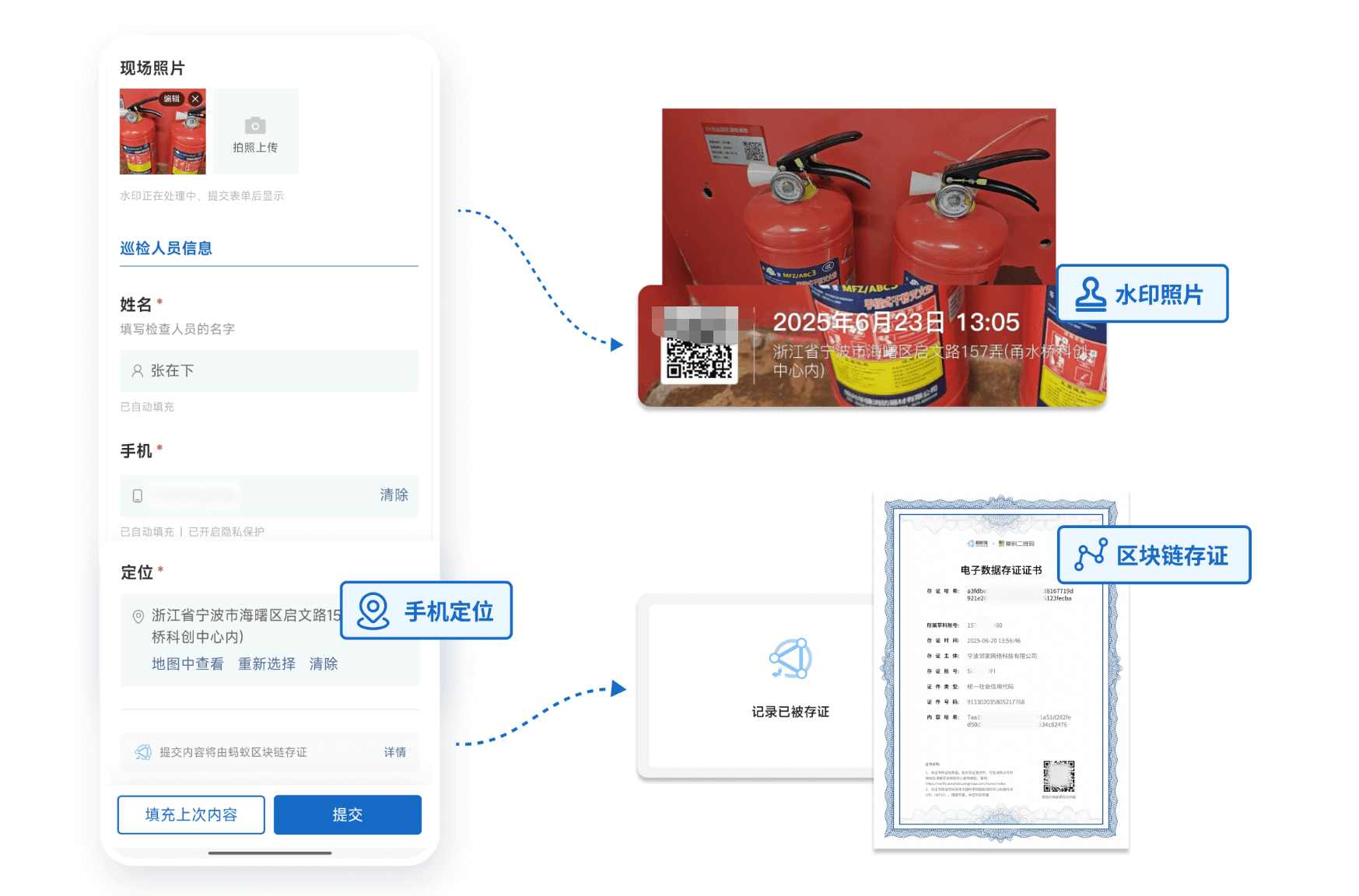
Breaking Difficult Tasks into Sustainable Small Actions
Safety is often misunderstood as "the more technology, the safer." While technology is important, in resource-limited enterprises and organizations, what truly determines outcomes is often "the ability to break complex requirements into small, actionable tasks that everyone can do, every day." Large enterprises and high-risk industries need smart platforms for early warning, while SMEs and public institutions更需要 tools that can be implemented immediately without disrupting daily routines.
The value QR code solutions provide for SMEs is combining "work done" and "evidence" at the lowest threshold, and linking "seeing problems" with "driving solutions" into a connected line. In the coming years, as regulations continue to tighten and corporate digital awareness increases, this lightweight path may become the practical choice for more enterprises.