School Fixed Assets Hard to Manage? Maybe You Just Haven't Chosen the Right Tool
As educational resources gradually become more abundant, the quantity of fixed assets in schools, such as equipment and public assets, continues to grow. From electronic devices in multimedia classrooms to instruments and consumables in laboratories, and from library books to reading room tables and chairs, effectively registering, managing, and inventorying these items has become a persistent challenge in school logistics and academic administration.
Traditional management methods mostly rely on manual registration and paper-based record-keeping, or use basic Excel spreadsheets for manual entry. As equipment usage frequency increases and cross-department usage scenarios multiply, these inefficient and error-prone methods struggle to meet the demands of modern campus management. In response, many schools have begun adopting a "one QR code per item" approach, assigning unique numbers, creating digital files, and implementing digital management for on-campus assets.
Numerous Devices, Widespread Distribution
A typical middle school teaching building is often equipped with over a dozen classrooms, multiple specialized rooms, laboratories, teacher offices, and storage areas. Each space contains a large number of teaching equipment and supplies. The annual year-end asset inventory and counting work often requires several teachers, logistics staff, and even volunteer students weeks to complete. Issues like chaotic equipment numbering, unclear responsibilities, and missing damage records frequently arise, not only affecting asset accounting but also leading to responsibility disputes within school management.
Questions like "When was this device purchased? When was it last repaired? Who is responsible for it?" have become the "three soul-searching questions" among management staff. If one still relies on manual records and offline communication, finding answers to these questions quickly is nearly impossible. Now, more and more schools are introducing QR code asset management methods, attaching a unique QR code to each piece of equipment. Scanning the code allows viewing or submitting relevant information, greatly enhancing management efficiency and transparency. In fixed asset management, a QR code is not just a sticker; it's the "unique ID card" for each asset.
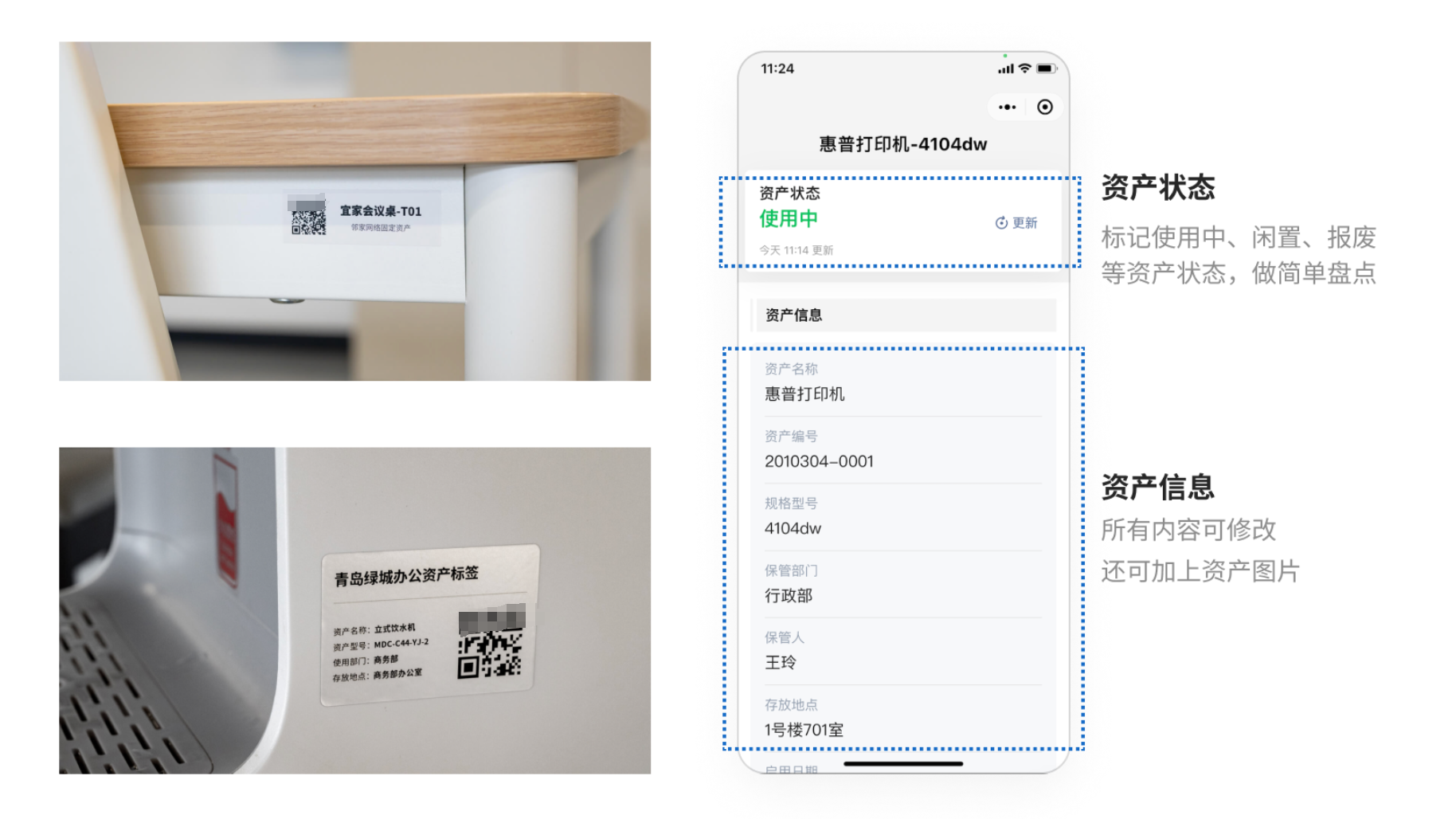
Use Instantly via WeChat Scan, Easy Operation for Teachers and Students Alike
Taking Hongtang Middle School as an example, the school began using QR codes to manage its fixed assets in 2023. The school's financial personnel used the CaoLiao QR Code platform to establish a QR code-based fixed asset management system suitable for the campus environment. They imported existing asset data into the system, generated QR codes in bulk containing information such as device name, number, purchase date, and responsible person, printed them as fixed asset QR code labels, and uniformly affixed them to the equipment.
Usage scenarios cover computer equipment in teaching buildings, laboratory instruments, library office equipment, sports equipment, and office supplies. Teachers simply scan the code with their mobile phones to view device status, update usage records, or submit repair requests; logistics personnel can also view the ledger in real-time through the backend system, manage uniformly, and export reports, reducing time spent on manual communication and organization.
Director Zhang from Nanjing University of Science and Technology used CaoLiao QR Code to create a batch of equipment QR codes applied to devices in various practice classrooms. Students scan the codes using WeChat, and information such as equipment photos, name, price, technical specifications, functions, operational safety precautions, and even ideological and political education content related to the course appears on their phone screens.
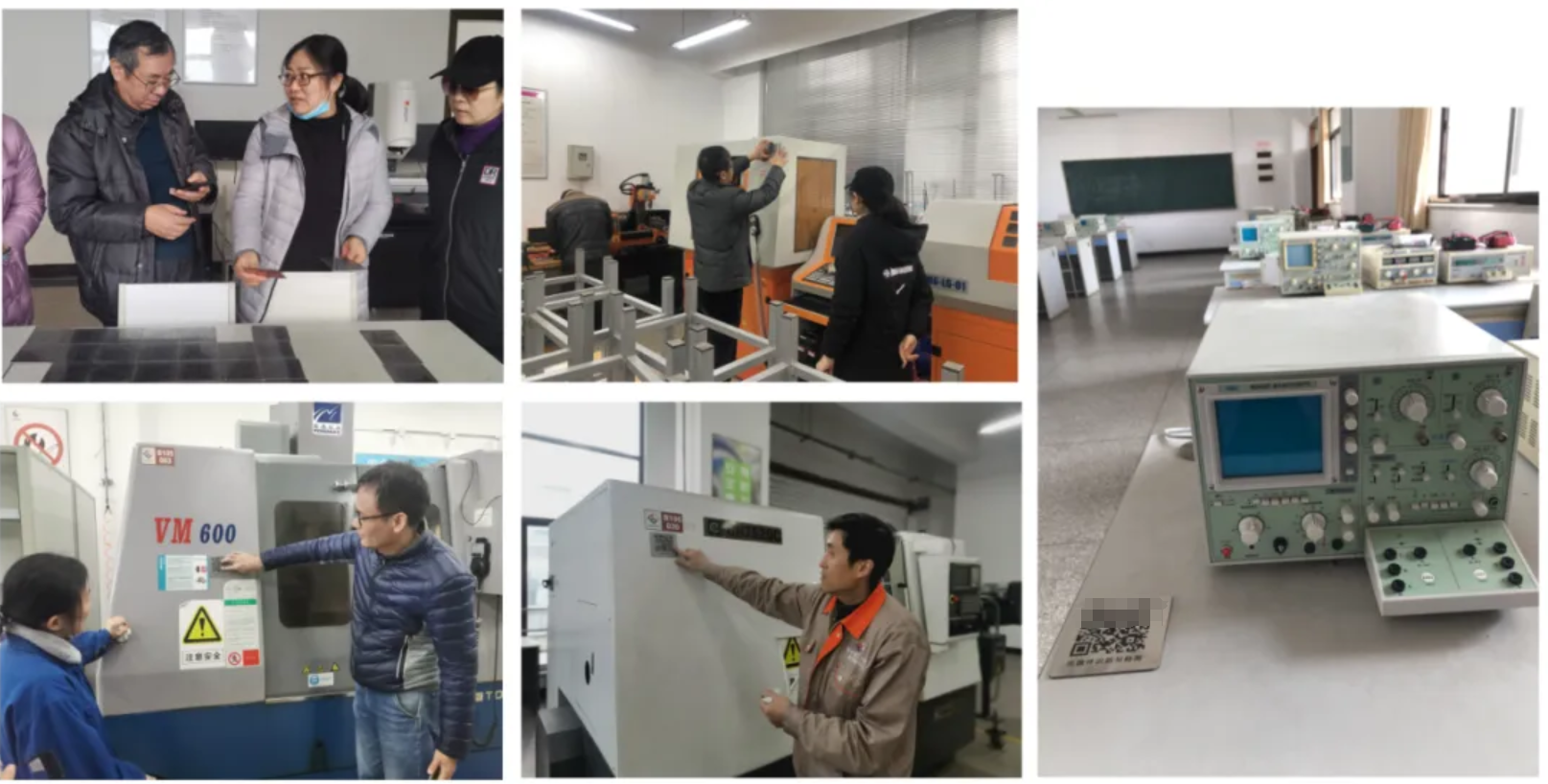
The entire deployment process involved no development and required no installation of additional system software. Operations are completed entirely via web pages and WeChat scanning. For schools lacking specialized asset management personnel, this solution is both convenient and efficient, truly realizing "building a fixed asset management system even for non-technical personnel."
Cross-Department Collaboration, Clear Responsibilities
In the past, equipment usage and management often suffered from blurred responsibilities due to cross-department involvement. For instance, computers might be purchased by the IT group but maintained by the Academic Affairs Office, making it difficult to pinpoint where issues occurred if equipment broke down. Now, through QR code filing, each piece of equipment is linked to its purchasing department, using department, and responsible teacher upon entry. If a problem arises, it can be traced and accountability assigned.
Furthermore, equipment maintenance cycles and repair records are recorded in real-time. Each time a repair is requested via scan and completed, the status is updated, and the system automatically saves the change history, forming a complete data chain for the asset's lifecycle. This approach avoids the uncertainties of verbal handovers and handwritten registrations, making management responsibility boundaries much clearer.
End-of-Term Inventory Data Summarized with One Click
The annual end-of-semester asset inventory is one of the most headache-inducing tasks in school asset management. Especially in cases involving multiple campuses or teaching buildings, issues like dispersed equipment, lagging updates to accounting information, and chaotic records极易 lead to inventory inaccuracies or even asset loss.
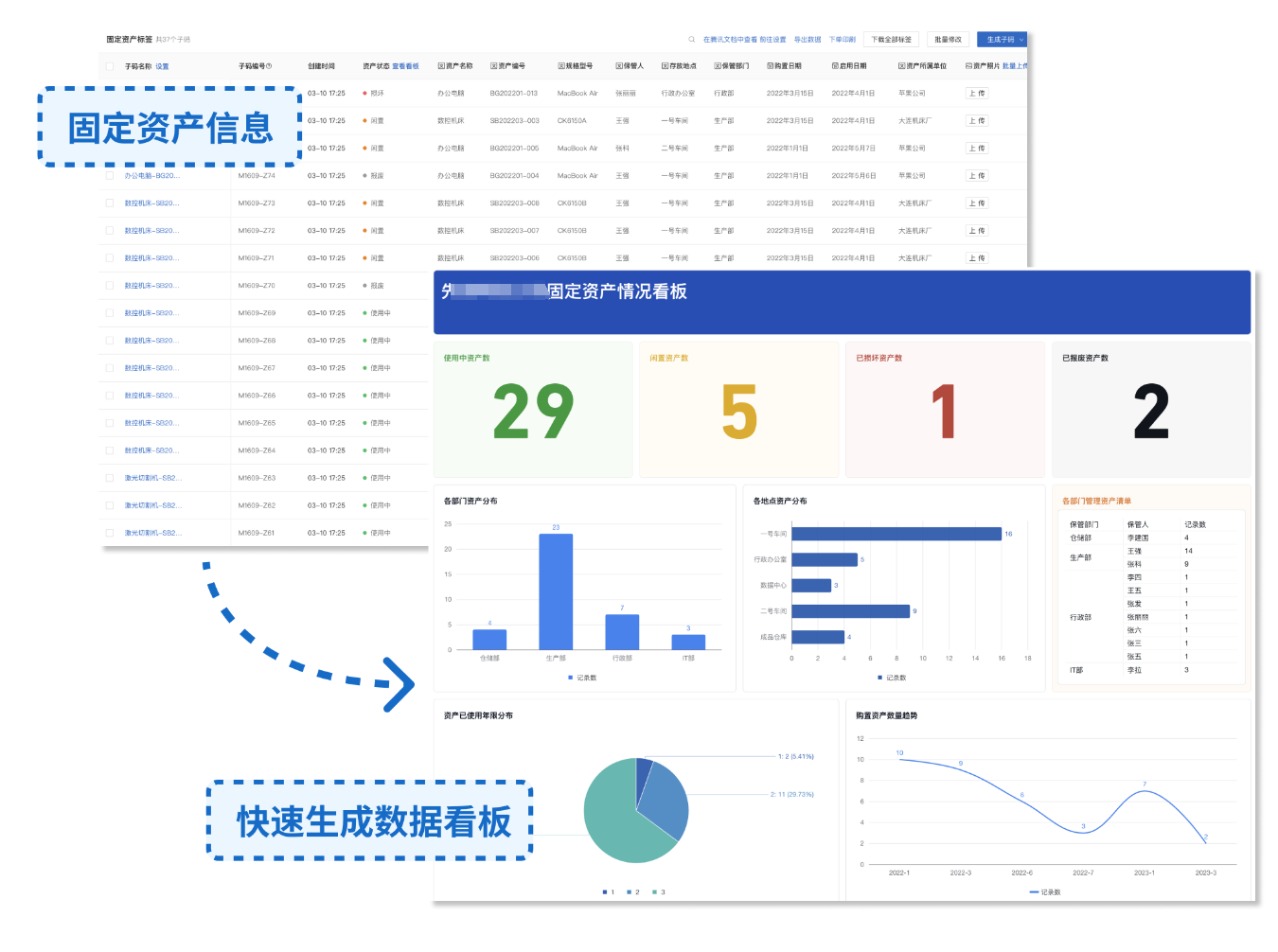
After adopting QR code management, the inventory process becomes extremely simple. By utilizing the inventory status function on the fixed asset QR codes, staff can take their mobile phones, scan each code to fill in the device status. The system automatically updates the inventory status, and the backend can immediately view inventory reports, see which assets have been counted, and compare ledger data with physical information to quickly identify discrepancies.
Applying CaoLiao QR Code's fixed asset QR codes for asset inventory can compress a task that originally took nearly two weeks down to within a single day, saving significant labor costs and greatly improving the accuracy of asset accounting.
From Assets to Responsibility, From Management to Optimization
QR code asset management not only solves the "visible" challenges of equipment management but can also promote the standardization of internal management processes within schools. Through data centralization, traceable processes, and real-time status visibility, school administrators can more clearly grasp asset allocation efficiency, usage patterns, and renewal cycles, providing a basis for decision-making regarding subsequent procurement budgets and configuration adjustments.
For educational institutions, this represents more than just a change in management tools; it embodies a modern, responsible, and data-driven management philosophy. Against the backdrop of limited budgets and fixed personnel, trying the CaoLiao QR Code fixed asset management system can help you quickly achieve resource visualization and data-driven management.