How to Build a Fire Safety Management System from Scratch
Original: https://cli.im/article/detail/2391
In recent years, fire safety has evolved beyond a last-minute formality before inspections. It has genuinely become an integral part of many companies' institutional systems. While regulatory requirements drive this shift, more importantly, real-life incidents serve as stark reminders for every manager: fire safety isn't just about placing a few fire extinguishers or going through the motions of annual drills. It's about protecting lives, property, and the fundamental continuity of business operations.
We're well aware of the realities for small and medium-sized enterprises (SMEs): limited staff, lack of specialized expertise, and a constant stream of diverse, urgent tasks. Safety management often falls to administrative staff, support personnel, or even the business owner themselves as an "additional duty." In this context, systematically implementing fire safety measures is challenging. But it's not impossible—it just requires a more practical, down-to-earth approach.
This article aims to provide a framework—not grand theories, but a clear, actionable breakdown of fire safety. You don't need specialized background knowledge or a large budget. If you're willing to invest some thought, you can gradually build a management system tailored to your enterprise.
Fire Safety Isn't Just Policy on Paper—It's Daily Habit and Practice
According to fire safety regulations, enterprises have six fundamental tasks in fire safety management: defining responsibilities, establishing systems, configuring and maintaining equipment, conducting daily inspections, providing training and drills, and maintaining records. These six areas form a complete cycle for managing risks in both routine and emergency situations.
Put more simply, it boils down to this: someone is accountable, rules are in place, assets are controlled, and responses are ready.
The starting point for implementing this is assigning clear roles. National regulations explicitly require the appointment of a Fire Safety Responsible Person and a Fire Safety Manager—one accountable for overall safety, the other managing daily operations. These aren't just "empty titles" in a policy document; real individuals must take responsibility for fire safety.
The same logic applies to system development. Slogans on the wall don't constitute a system. Effective systems are those that guide daily work—like emergency plans, inspection schedules, and drill procedures. Even if you start with a ready-made template, adapting it to your organization's specific context is the first step toward genuine management.
Many people struggle with the concepts of "systems" or "accountable persons," often because they are unsure if standards even exist. They do. The Fire Protection Law of the People's Republic of China clearly stipulates organizational duties, including establishing structures, ensuring equipment availability, formulating systems, and organizing drills. The Measures for the Implementation of the Fire Safety Responsibility System emphasize responsibility fulfillment at all management levels. The Regulations on Fire Safety Management for Organs, Organizations, Enterprises, and Institutions directly outline what needs to be done, how to inspect, and how to archive records. These aren't optional; they are the baseline for legal operation and compliant management.
Starting with a QR Code: Moving Fire Management Beyond "Relying on Memory"
Many organizations handle the "surface level" of fire safety well: fire extinguishers are neatly arranged, exit signs are clear. But upon closer inspection, problems emerge: expired pressure gauges, fabricated usage records, manually filled check times, incomplete information.
The root cause of these issues is the lack of effective tools to support daily management processes. The old methods—relying on memory and paper forms—simply can't keep up with the pace of modern business.
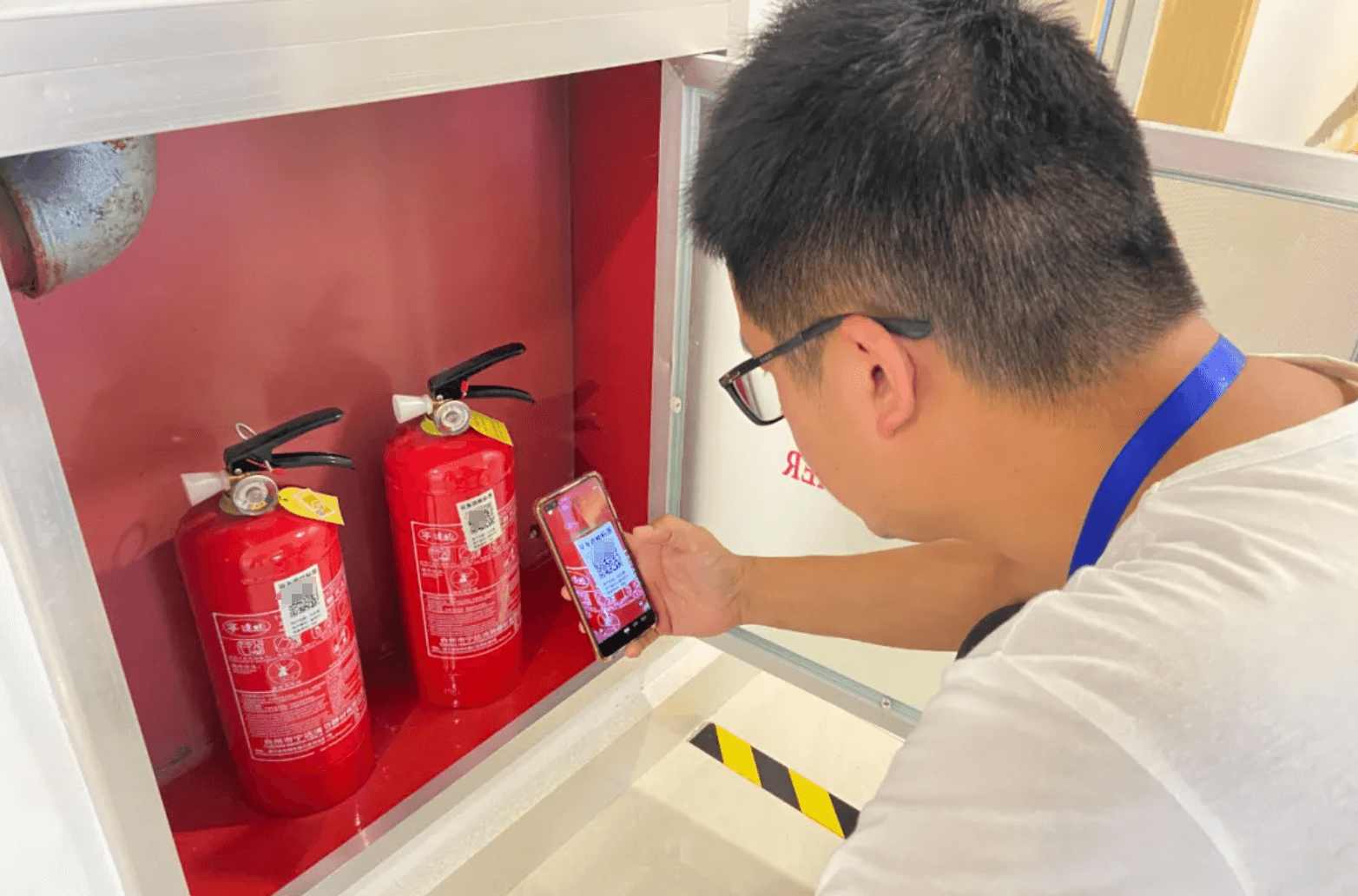
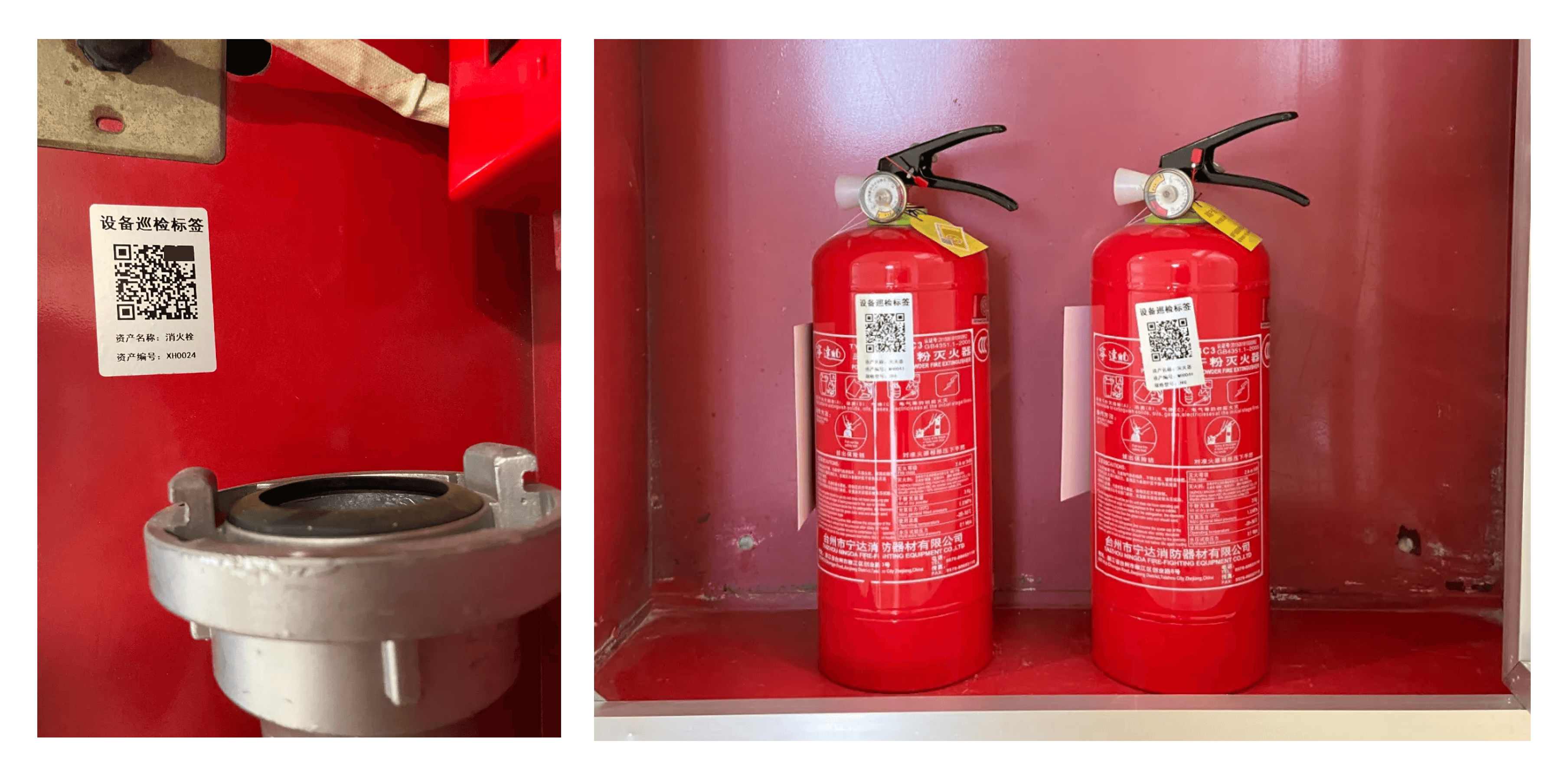
Today, digital tools make this much simpler. For example, CaoLiao QR Code offers a lightweight solution. You can generate a unique QR code for each piece of equipment. Scanning it reveals the device's information, inspection history, and last maintenance record. To conduct a new inspection, staff simply scan the code with their phone and fill out the form. The backend automatically logs the data, clearly showing who filled it out and when.
This approach doesn't rely on complex information systems or additional hardware investments. It's particularly suitable for SMEs facing the reality of "no dedicated personnel and no resources for development."
Management Isn't About Compliance—It's About Staying Calm in a Crisis
Many companies conduct inspections, drills, and training, but their effectiveness hinges on whether these activities form a closed loop. Consider inspections: Are they regular? What is checked? How are identified issues handled? Are records kept? If any of these links are missing, even the most diligent inspections lose their impact.
The same applies to training and drills. Many organizations treat them as a "paperwork exercise" for year-end reports: the drill happened, but there was no genuine emergency response process, roles were unclear, and actions were robotic. A truly effective drill means that during a fire, everyone knows what to do, where to go, how to use equipment, and who to report to.
These tasks don't require advanced theoretical knowledge; they rely on consistent, incremental accumulation through daily practice. The key to sustainability is having a clear, easy-to-follow process that helps everyone implement the work.
Digital Management is an Opportunity for SMEs
In fire safety, "refined management" isn't exclusive to large corporations. While SMEs have limited resources, they also possess advantages—agility and simpler processes. With the right tools, they can often implement changes more easily than larger companies.
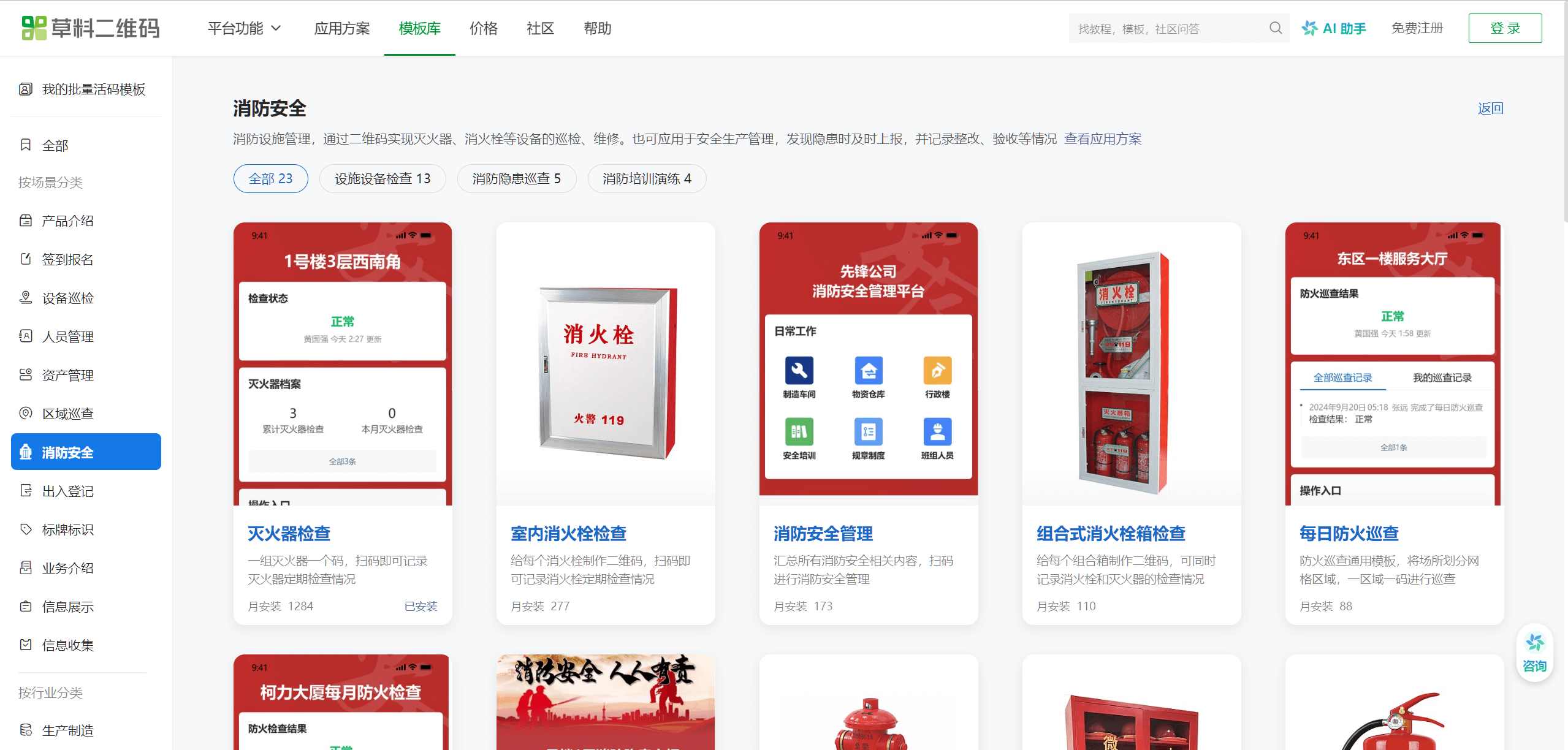
CaoLiao QR Code's fire management QR codes are an example. You don't need to design processes from scratch. The platform offers various templates for fire equipment checks, hazard inspections, training records, and more. By adapting these to your specific context, you can put them to use immediately.
You don't even need to install software or provide extensive system training. A single smartphone can connect the entire workflow—from creating equipment records and generating QR codes, to posting labels and uploading inspection data—everything is completed online. This isn't about "showing off technology"; it's a pragmatic solution. It transforms management that once relied on "memory" into a verifiable, routine practice.
Of course, certain tasks still require professional services, such as sending fire extinguishers for inspection or conducting electrical line testing. But for daily management, the right tools can handle 80% of the foundational work.
Fire Safety Shouldn't Be a Last-Minute Rush
Many business owners say, "We want to do this properly, but we don't know where to start." The exact starting point matters less than simply beginning. A single QR code, an inspection form, a responsibility checklist—these are all excellent starting points. If you commit to making it real and sustainable, it will become a stable, long-term part of your organization.
With limited budgets and staff, we don't need to pursue complex, intricate systems. We need to identify solutions that are "usable, practical, and sustainable." These seemingly minor details are precisely what safeguard your risk baseline.