Guide to Real-Name Management for Labor Personnel: 5 Key Aspects You Must Master
Original: https://cli.im/article/detail/2277
In the construction industry, real-name management for labor personnel has become a crucial method for enhancing site safety, standardizing employment practices, and improving work efficiency. Traditional manual management methods often face issues like delayed information updates and disorganized data management, which can easily lead to safety hazards and management loopholes. Real-name management addresses these challenges fundamentally by integrating, managing, and updating each worker's information in real-time through digital means.
This article will explore in detail the core functions and implementation methods of real-name management platforms for construction workers, using CaoLiao QR Codes as an example to illustrate how digital technology can enhance the efficiency and accuracy of real-name management.
1. The Role of Real-ame Management
1. Standardizing Labor Employment and Protecting Workers' Rights
Real-name management requires each worker to provide detailed personal information (such as identification, job certificates, safety training records, etc.), ensuring employers fully understand each worker's qualifications and background. This effectively prevents risks like illegal employment and uncertified personnel entering the site. It also ensures that employees' work content, job responsibilities, and safety training are managed compliantly, thereby reducing labor disputes and illegal employment practices.
2. Improving Safety Management Efficiency and Preventing Accidents
Safety management on construction sites is a demanding task, especially with frequent personnel turnover. Through real-name management, companies can keep track of each worker's identity information and training records in real-time, ensuring workers possess necessary safety qualifications and job certificates. In the event of a safety incident, this efficient management system allows supervisors to quickly retrieve worker information and training records, enabling timely response measures and avoiding post-incident accountability and disputes.
3. Enhancing Management Efficiency and Reducing Human Error
Traditional manual attendance and information management methods are prone to errors and inefficient in retrieving worker information. In contrast, a real-name management information system allows companies to access workers' attendance, work progress, and other critical data in real-time, significantly improving management efficiency. Digital management not only reduces human errors but also automatically updates information, ensuring data accuracy and timeliness.
4. Facilitating Government Oversight and Enhancing Corporate Social Responsibility
Real-name management not only aids in a company's self-management but also provides a convenient tool for government supervision. Through the real-name management system, authorities can monitor a company's employment practices in real-time, promptly identify and address violations, and ensure site management complies with laws and regulations. Furthermore, actively implementing real-name management helps companies build a responsible image that values employee rights, enhancing their social responsibility and corporate reputation.
2. How to Implement Real-Name Management?
To effectively implement real-name management, companies need to assess their current management status and select appropriate tools based on actual needs. As a digital management tool, CaoLiao QR Codes can provide personalized QR codes for each worker, becoming a vital component of real-name management and helping companies improve management efficiency and precision.
1. System Development
First, companies must establish a comprehensive real-name management system, clearly defining responsibilities for all parties, including construction companies and labor service providers, regarding information collection, attendance tracking, wage payments, etc. Additionally, detailed operational procedures should be formulated to ensure real-name management tasks are carried out systematically and effectively.
2. Information Collection and Registration
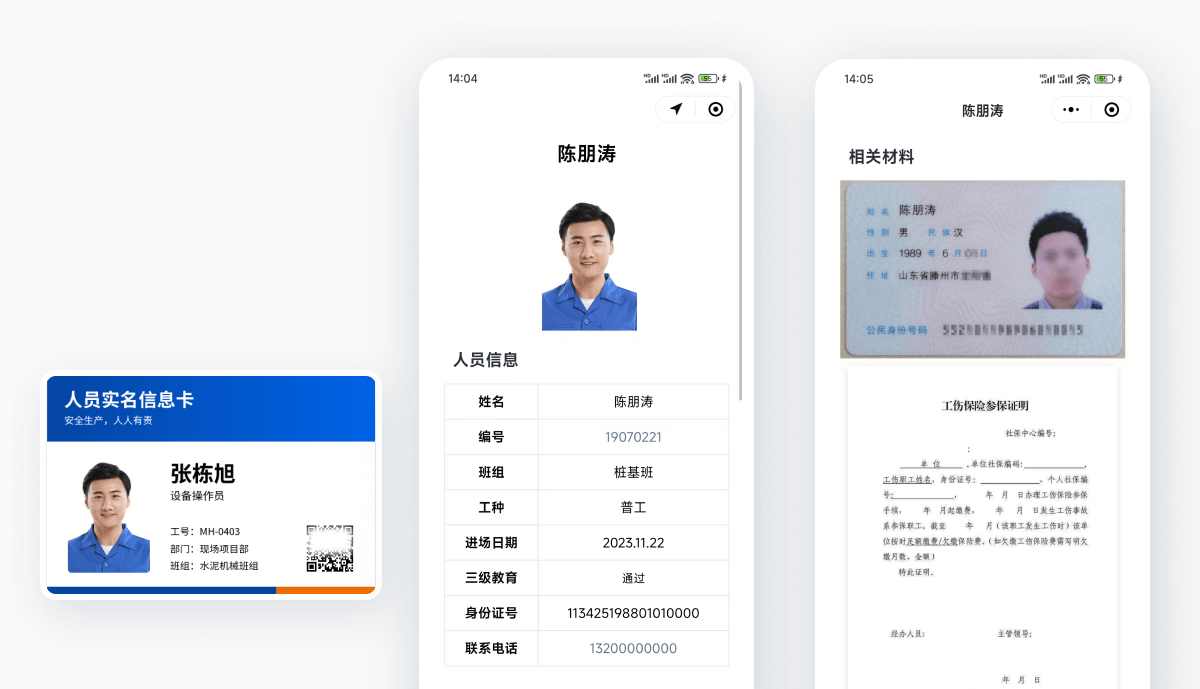
When implementing real-name management, companies need to collect detailed information from each laborer, including ID numbers, labor contract numbers, job skill certificates, etc. This information must be accurate and entered and stored digitally to avoid cumbersome paper records and information retrieval. Using CaoLiao QR Codes' bulk QR codes generation feature, worker information can be quickly generated in QR code format, reducing the complexity of manual operations. The information is directly accessible via the QR code, allowing managers to view complete details by scanning.
3. Building an Information Management System
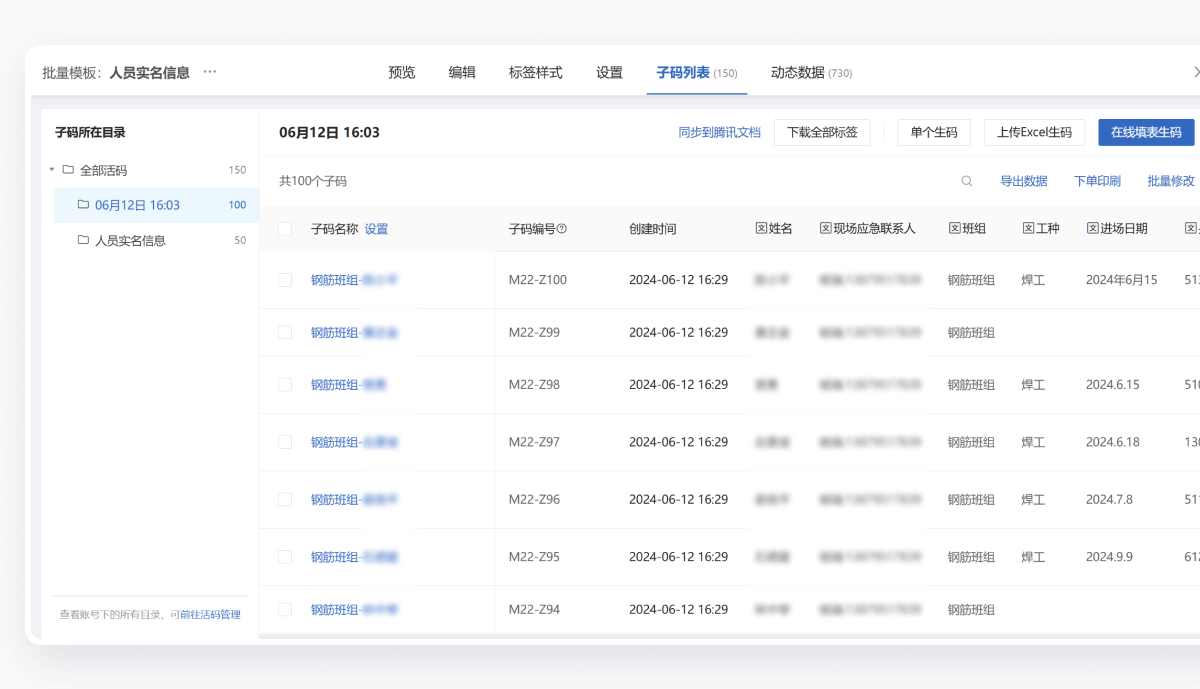
The entered personnel information is stored in the backend, forming a labor personnel information management system that ensures all worker data is properly stored and managed. The QR code system can record not only workers' personal identity information but also related records such as attendance and safety training. In the management backend, all worker information data can be viewed and exported at any time, enabling real-time monitoring and management of site personnel.
4. Attendance Management and Safety Education Records
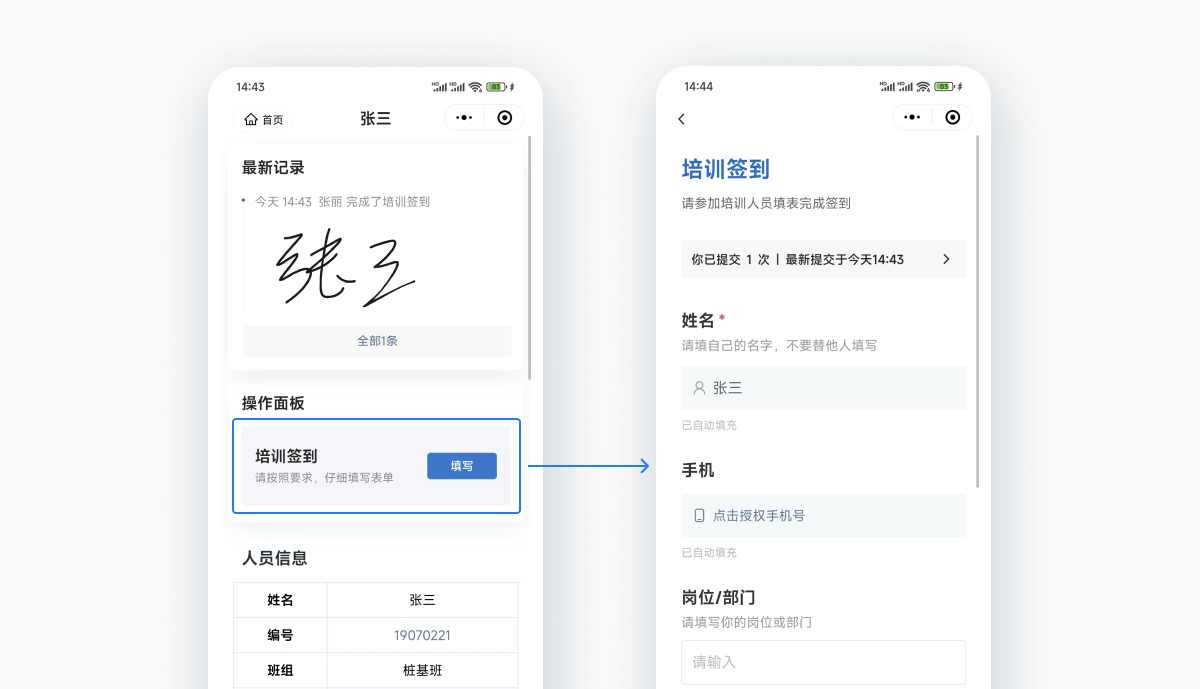
Using the forms feature, attendance records and training logs can be documented. Additionally, workers' safety education records should be linked to the real-name system, ensuring every worker has completed relevant safety training and is certified for their role. On-site staff can quickly access and update worker information by scanning the QR code, achieving "one person, one code, one file." By scanning the code, managers can verify whether each worker has completed safety education and is qualified for their job.
5. Regular Verification and Information Updates
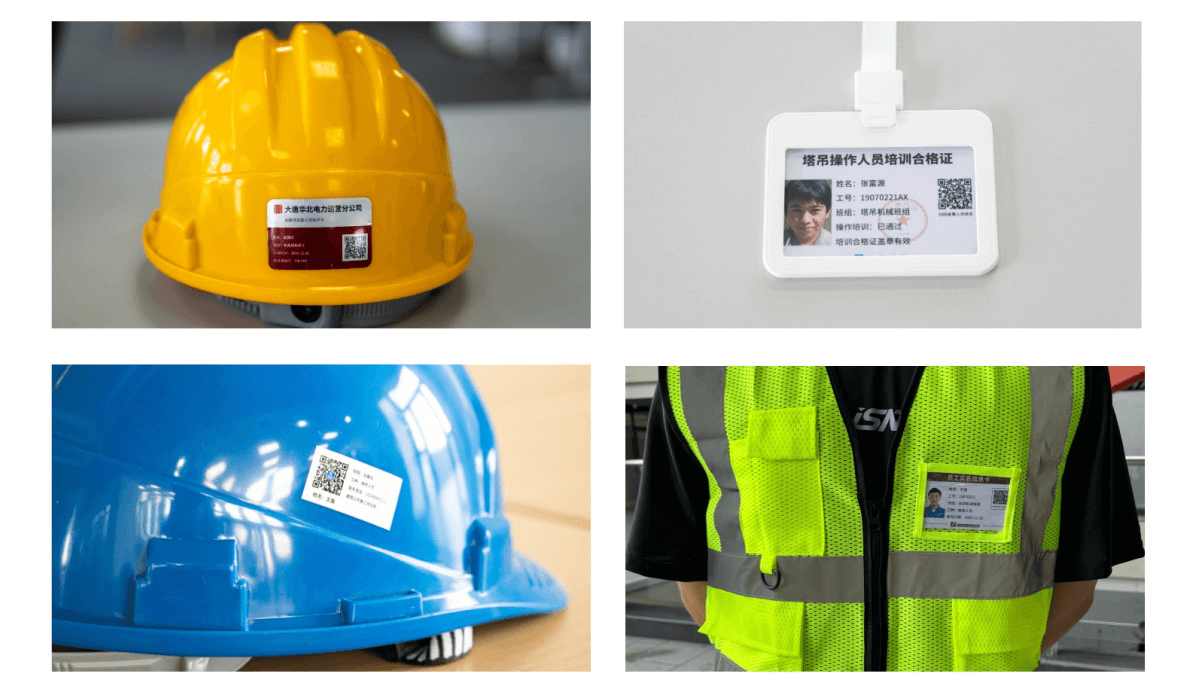
The real-name management system should undergo regular data verification and updates to ensure information accuracy. If a worker leaves, changes positions, or other information needs updating, the system should automatically synchronize the latest data. The QR code pattern does not need reprinting; updated information will be displayed when scanned, avoiding the cost of repeatedly printing QR codes and cards. Whether the QR code is affixed to a worker's helmet or distributed to other personnel, the latest worker information can be viewed upon scanning.
3. How QR Codes Enhance Real-Name Management Efficiency
Creating a dedicated identity QR code for each worker not only contains basic information but can also store important details like safety training records and trade certificates. The QR code itself does not need replacement; any updates are automatically synchronized.
As a no-code platform, CaoLiao QR Codes enables low-cost creation of labor personnel information QR codes:
- Efficient Bulk QR Code Generation: By bulk uploading Excel spreadsheets, companies can quickly generate QR codes for each worker, suitable for construction sites of various scales.
- Real-Time Information Updates: After QR code information is updated, the original code does not need replacement. Managers can still access the latest worker data by scanning, avoiding risks associated with outdated information.
- Free to Use: Unlimited number of QR codes can be created for personnel. Generated QR codes are permanently valid, with no restrictions on uploading images, files, or other content within the QR codes.
4. Summary
Real-name management is not only the foundation of safety management on construction sites but also a vital means to enhance corporate management efficiency and protect employee rights. By implementing real-name management, companies can standardize labor employment, improve safety management levels, boost work efficiency, and even facilitate government oversight. As an efficient and low-cost digital management tool, QR codes help companies achieve precise management and real-time updates of worker information, significantly enhancing work efficiency and safety assurance.