Top 5 Free Event Registration Tools for 2025
Original: https://cli.im/article/detail/2318
In daily work and life, various events are organized. To improve efficiency, people often use event registration tools. This article provides an in-depth comparison of five platforms: CaoLiao QR Code, HuDongBa, EventBank, QunBaoShu, and BaiGe Event, analyzing their pros, cons, pricing, and application scenarios to help you choose the right event registration tool.
1. CaoLiao QR Code
CaoLiao QR Code is a no-code platform for building business platforms using QR codes as entry points. It supports full-process management for event registration, suitable for scenarios like event sign-ups, registration approval, and on-site check-ins. It offers high flexibility, allowing users to create registration forms by combining components like text fields, single-select options, and location inputs based on their needs. QR codes can be embedded into event posters, enabling participants to scan and fill in information, while the backend provides real-time statistics and data export capabilities.

Pros
- Free to Use: The free version has no limits on the number of QR codes created, number of scanners, or number of registration submissions.
- Real-time Content Updates: Dynamic QR codes support real-time updates when content is modified, avoiding the need for reprinting.
- Real-time Data Aggregation: Organizers can view and analyze registration statistics at any time. It also supports APIs for integration with tools like WeCom and Tencent Docs, and connection to CRM systems.
- Quick Deployment: QR codes can be printed using a standard printer and A4 paper.
Cons
- Lacks paid event features, such as creating ticketed events.
- Does not support private deployment.
Suitable Scenarios
Event registration for SMEs and community activities, as well as exhibition check-ins, course enrollment, and volunteer recruitment.
2. Cloud Registration Tool
A WeChat Mini Program application suitable for event reservations, registration statistics, information collection, payment management, and group buying. It supports automatic data statistics and export, online payment collection and refunds, and publishing audio, video, and graphic content.

Pros
- Free to create basic events; the paid version costs several hundred RMB per year.
- Supports online payment collection via WeChat Pay merchants, with funds automatically frozen until the event ends and transparent withdrawal rules.
Cons
- Does not support multi-level approval or conditional trigger workflows; complex events require additional tools.
- Mobile-only interface, making event description editing inconvenient.
- Only verified users can upload videos, with limited capacity (videos under 10MB, files under 5MB).
Suitable Scenarios
Gatherings, training sessions, group purchases, etc.
3. EventBank
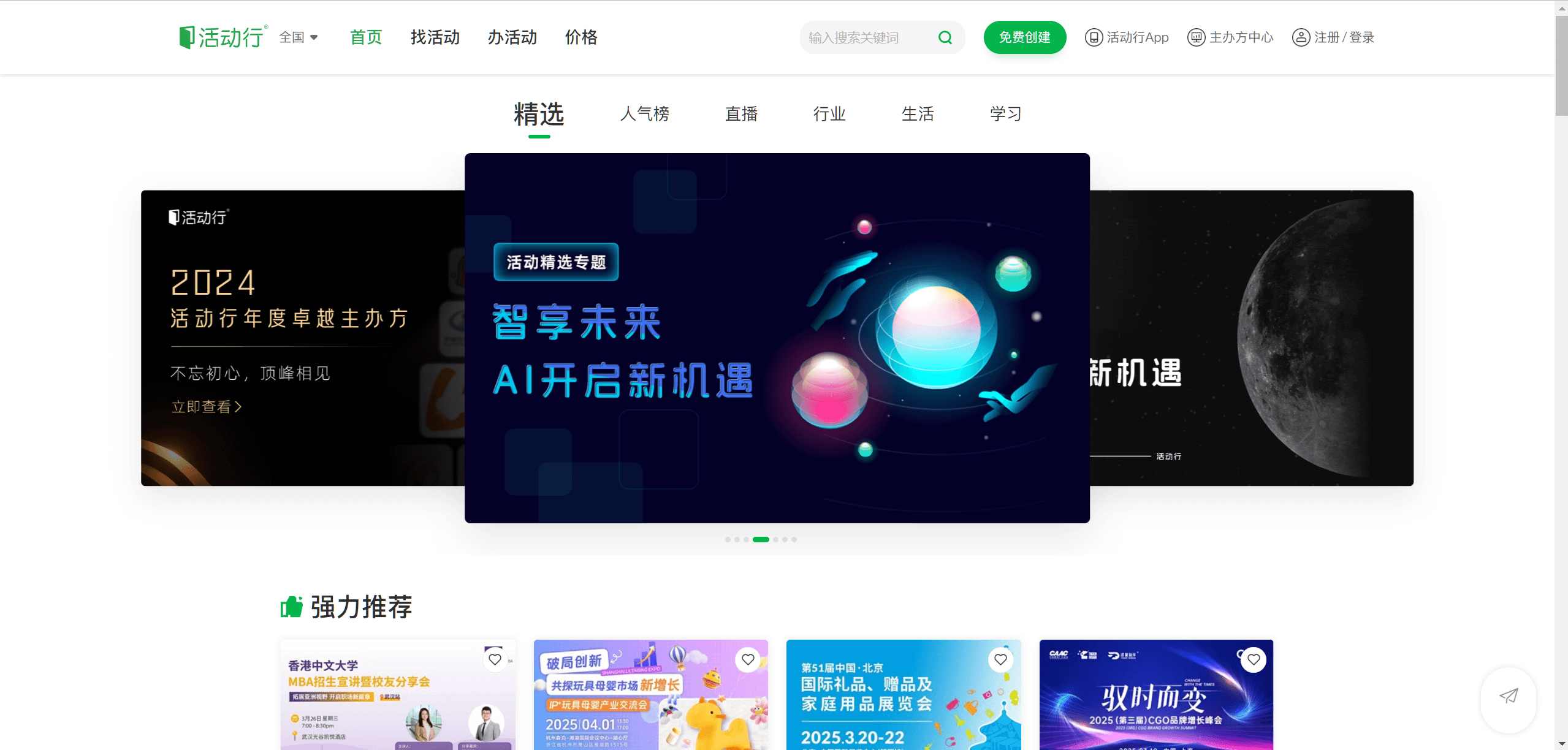
EventBank focuses on online ticketing and registration management, offering ticket verification features suitable for industry conferences, gatherings, and other standardized events. It has a low learning curve but lacks dynamic data tracking capabilities, making it difficult to meet complex workflow needs.
Pros
- Professional online ticketing and verification management.
- Provides event marketing to increase event exposure.
Cons
- Lacks dynamic data tracking and cannot meet personalized needs (e.g., breakout session selection).
- Higher pricing: certification fee of 300 RMB/year, paid versions ranging from 4788 to 15800 RMB/year.
Suitable Scenarios
Industry summits, offline gatherings, performance events, etc.
4. QunBaoShu
Based on the WeChat ecosystem, QunBaoShu focuses on quick statistics and templated registration tools, with built-in templates for holiday activities (e.g., Women's Day check-ins). Its advantage lies in being a lightweight application, but its features are limited, making it more suitable for personal use rather than enterprise applications.

Pros
- Lightweight Operation: Directly usable within the WeChat ecosystem, no app installation required; forms can be created in 60 seconds.
- Anti-Cheating Features: Photos automatically include time/location watermarks, suitable for attendance check-ins.
- Comprehensive Free Features: The basic version supports preset lists and data export, ideal for zero-budget scenarios.
Cons
- Limited functionality: Cannot handle complex processes (e.g., multi-level approvals).
- Data privacy risks: The free version only offers 100MB of high-definition image viewing capacity.
Suitable Scenarios
Assigning homework, reading check-ins, intention statistics chains, etc., for personal or student/teacher use.
5. BaiGe Event
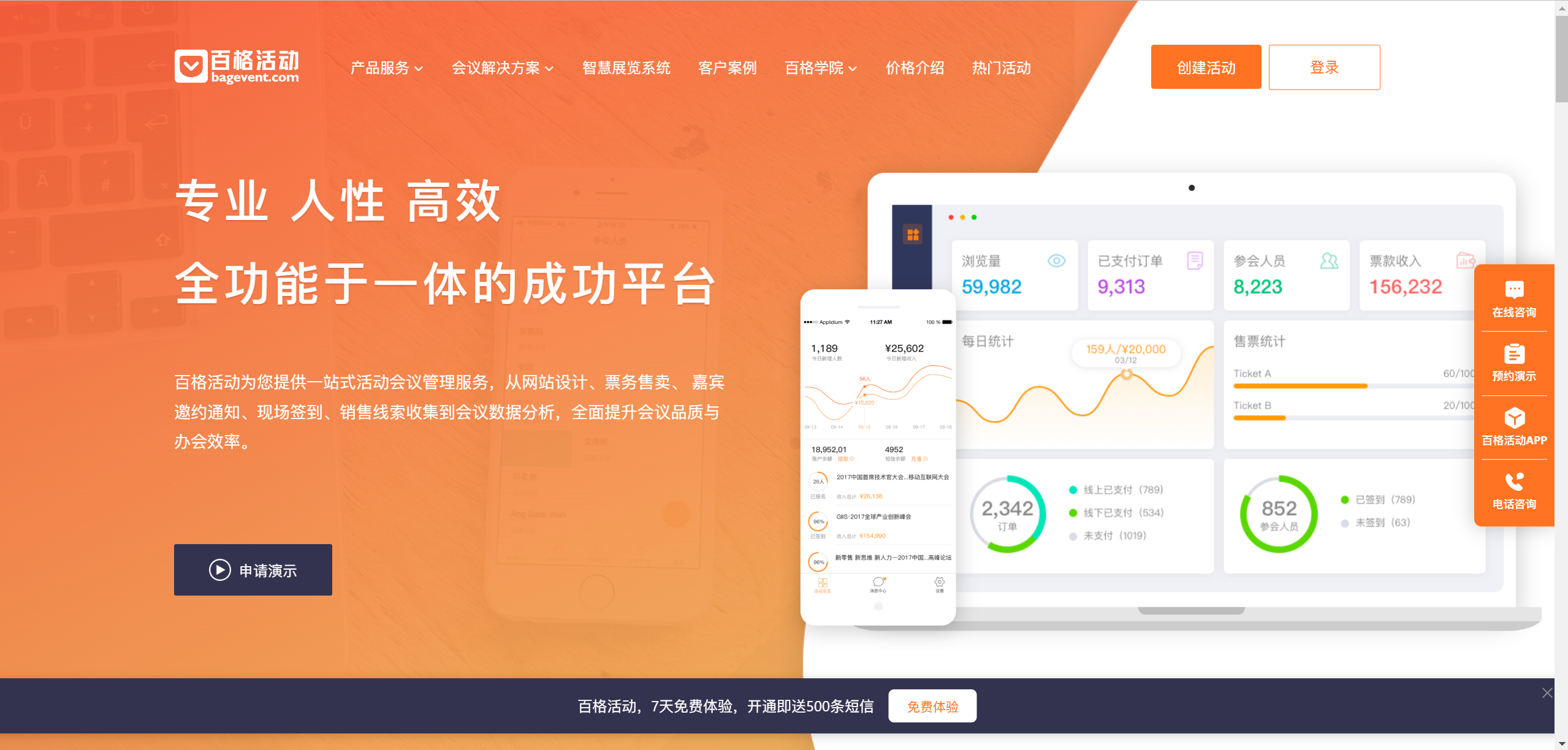
Built on a SaaS system, BaiGe Event provides one-stop event and conference management services, supporting microsite creation, ticket sales, guest invitations, on-site check-ins, and sales lead collection. It is suitable for large conference management but comes with high costs and feature redundancy for small to medium-sized events.
Pros
- Covers full-process management from microsite creation to post-event statistics.
- Offers offline equipment rental and training support, suitable for high-standard events.
Cons
- High pricing: Entry version at 4999 RMB/year, academic conference version over 37,000 RMB/year.
- Requires professional team maintenance, with a high learning curve for SMEs.
Suitable Scenarios
International academic forums, industry expos, and events requiring strict compliance management like bidding meetings and press conferences.
6. Summary
For most SMEs and community organizations hosting free events, CaoLiao QR Code is recommended for its comprehensive features, free usage, stability, and ability to create aesthetically pleasing event introduction pages. For events requiring ticket sales and verification, such as concerts or local book clubs, EventBank is a good choice. For large-scale industry expos or academic forums with sufficient budget, BaiGe Event is worth considering. For teachers needing to organize chains or collect homework in class groups, QunBaoShu is simple and efficient.