How to Implement Construction Site Attendance Management, Free Tool Recommendations
Original: https://cli.im/article/detail/2322
High personnel turnover on construction sites makes it difficult for traditional paper sign-ins or fixed equipment attendance systems to provide adequate coverage. Attendance tracking has always been a headache. Issues like chaotic attendance records, frequent buddy punching, and delayed data statistics mean traditional attendance methods are not only inefficient but also prone to labor disputes. This article will delve into the pain points of construction site attendance, analyze the pros and cons of various mainstream attendance tools, and help you find a "zero-cost, high-efficiency" attendance management solution.
1. Why Do Traditional Attendance Methods Frequently "Fail"?
Interviews with management personnel from multiple project departments reveal that while construction site attendance seems simple, it hides four common pain points:
Inaccurate Attendance Records
Paper sign-in sheets are easily lost and difficult to preserve; proxy sign-ins and retroactive sign-ins are common despite prohibitions. Fingerprint scanners frequently malfunction in the dusty environment of a construction site, and fingerprint recognition accuracy for workers is low. For large-scale projects with dispersed sites and high worker mobility, management often cannot register workers' fingerprints in real time. When reconciling accounts at month-end, discrepancies between attendance data and actual worker attendance often lead to disputes.
Delayed Data Statistics
Data from traditional attendance machines requires manual export and consolidation, a cumbersome process, especially for cross-regional projects where the statistical cycle can take several days. One project manager lamented: "Every payday, we always find a few missed or miscalculated entries. Once, after we had already paid all the workers, we discovered that the attendance sheet for one team was short by 3 person-days, and I had to cover the cost out of my own pocket." This delay not only affects management efficiency but also adds extra cost burdens.
High Equipment Maintenance Costs
Purchasing fingerprint scanners or facial recognition equipment can cost thousands, with additional costs for specialized maintenance later. For small sites with limited budgets, this is a significant expense. Consequently, many sites continue to use inefficient manual recording.
Data Disputes
Manual records are error-prone, and attendance records lack transparency. When workers question their work hours, there is no traceable electronic evidence to provide.
2. Comparison of Four Types of Attendance Tools
Attendance tools on the market can be roughly divided into four categories. Below is a detailed comparison of these four types of attendance tools to help you find the most suitable solution for construction site attendance.
1. QR Code Check-in
QR code solutions, led by CaoLiao QR Code, offer the best value for construction site attendance and labor management.
Advantages:
- No Hardware Investment: Workers only need to scan the code with WeChat to check-in; no other apps or additional equipment are needed, making the cost almost zero.
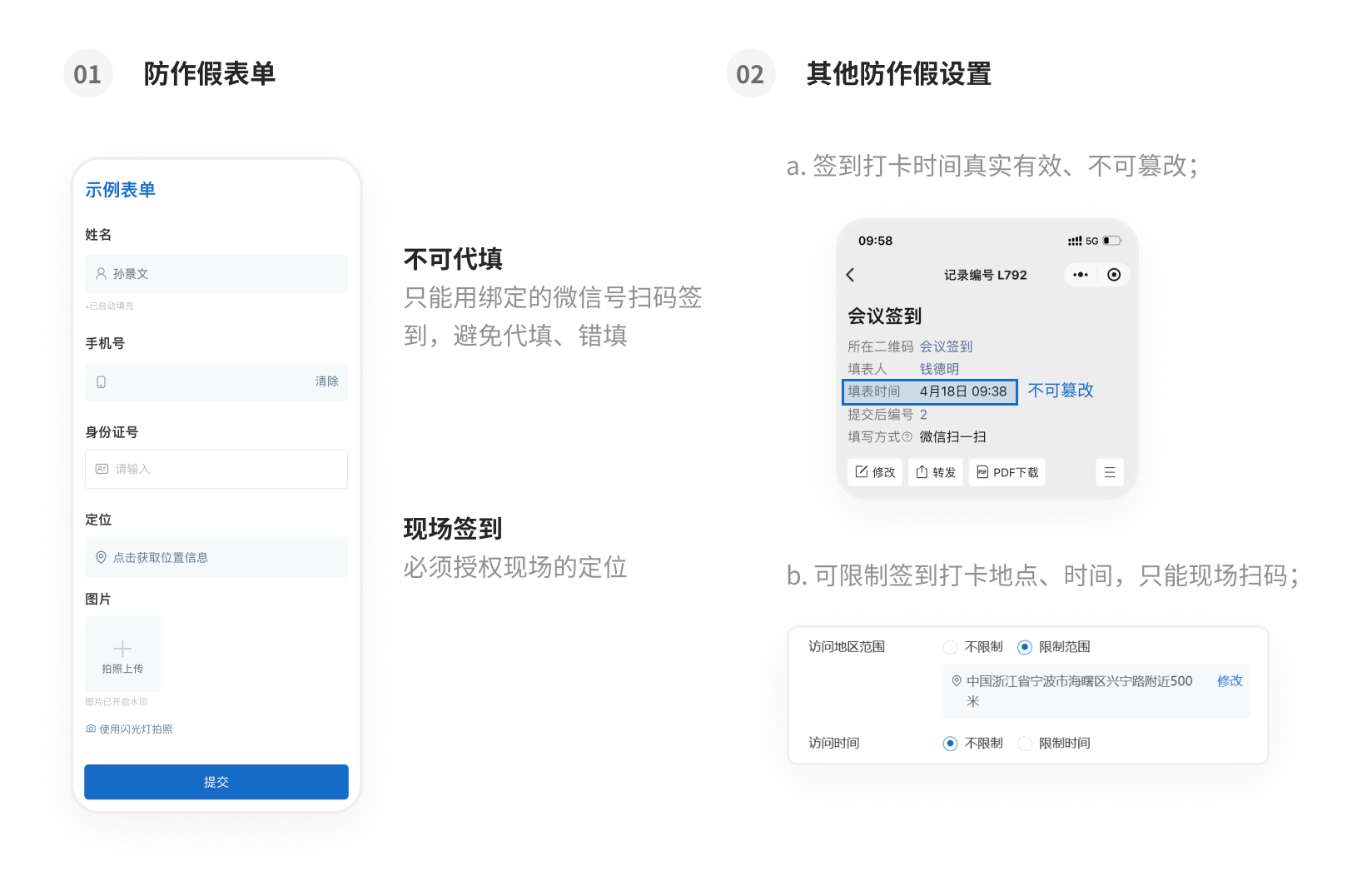
- Effective Anti-Cheating: Supports GPS location + on-site photo verification. Can be set to require workers to check-in at specified locations, effectively preventing remote proxy check-ins.
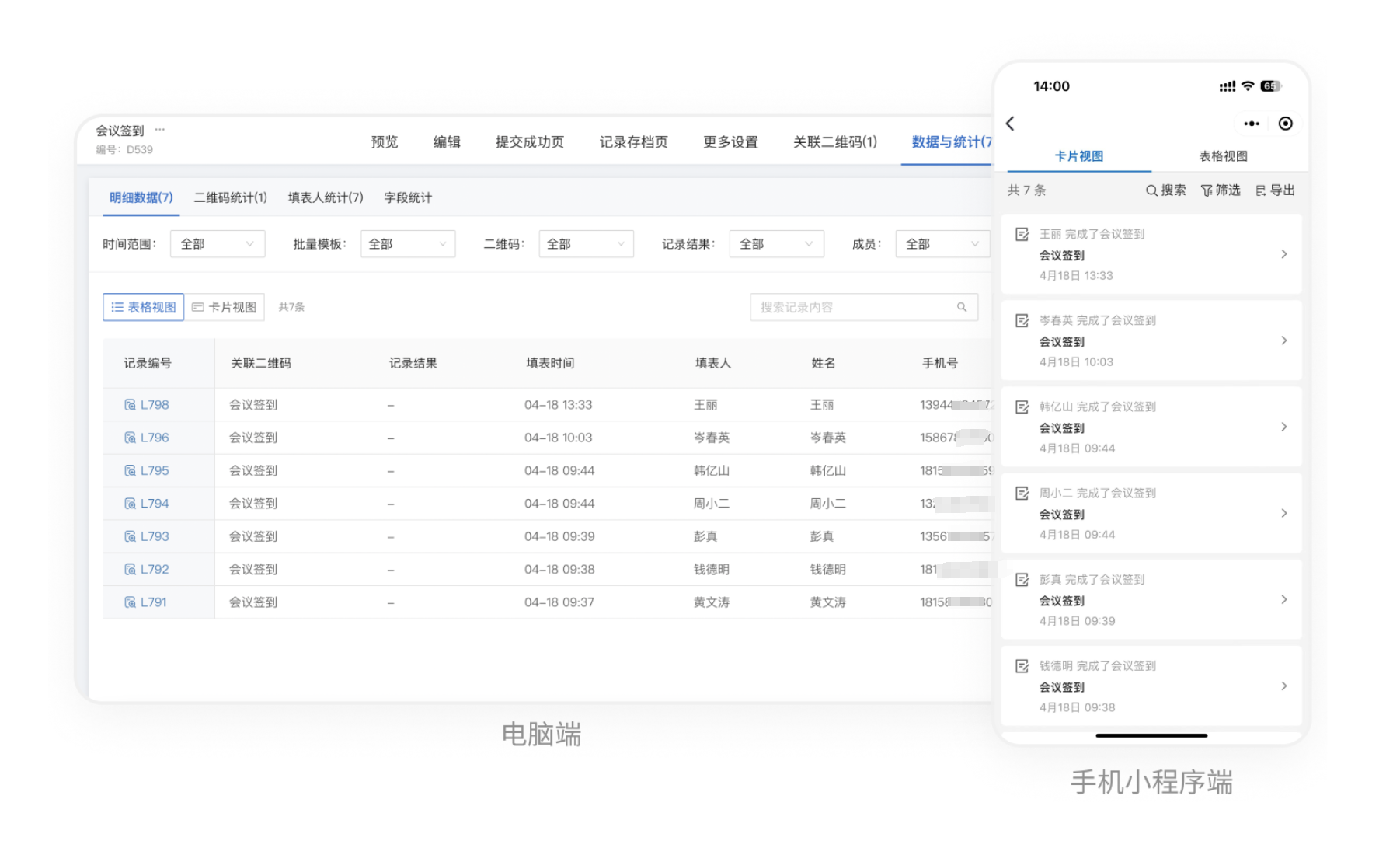
- Real-time Data Sync: Administrators can view check-in records anytime on mobile or computer, and export statistical reports, saving time and effort.
Limitations:
Requires network environment support; check-ins may fail in remote sites with poor signal.
2. Attendance Clocking Machines
As the most common traditional attendance method, attendance clocking machines are suitable for enclosed construction sites with a relatively stable workforce.
Advantages:
- Simple operation; workers just need to swipe a card or use fingerprint recognition on the machine to check-in.
- Mature fingerprint or IC card recognition technology with many options available.
Major Drawbacks:
- High purchase and maintenance costs for the equipment. Harsh site conditions lead to high failure rates; if the machine breaks down, it disrupts attendance tracking.
- High failure rate for recognition due to workers' rough hands or dusty site conditions.
3. Facial Recognition Check-in
Facial recognition check-in is suitable for construction sites with high security requirements. The system automatically identifies workers and records their check-in time as they enter the site.
Advantages:
Accurately identifies workers, eliminating proxy check-ins.
Deterrents:
- High cost of facial recognition equipment. Operation depends on the equipment and network.
- Each personnel change requires adding or deleting worker information, increasing the workload for management staff.
4. Comprehensive OA Systems like WeCom/DingTalk
Comprehensive office software like WeCom and DingTalk offer features including attendance check-in, leave requests, and overtime applications. Suitable for enterprises already integrated into the respective ecosystem.
Advantages:
Integrates functions for attendance, approvals, and internal collaboration/communication.
Implementation Challenges:
- Requires the company/group to be already integrated into the WeCom or DingTalk ecosystem.
- Workers need to install the app on their phones, posing a learning curve for older workers.
Summary
From the perspectives of cost-effectiveness and applicability, QR code check-in is undoubtedly the preferred choice for small and medium-sized construction sites. It is not only low-cost but also flexible enough to handle scenarios with frequent personnel changes and variable environments. For large enterprises or enclosed projects with sufficient budget, facial recognition systems can be chosen.
3. Building a Free Construction Site Attendance Management System
Construction site attendance management should prioritize practicality and cost-effectiveness, ensuring every management cost is spent wisely. For temporary or small-to-medium-sized sites, you can quickly set up an efficient attendance system using free tools like CaoLiao QR Code. Here are the specific steps:
1. Visit the CaoLiao QR Code Official Website
Access the CaoLiao QR Code official website on a computer, register for a free account, and log in. CaoLiao's interface is clean and straightforward, and creating QR codes is very simple.

2. Create Using a Template
Select the [Attendance Check-in] template from the template library. You can modify the template content according to site needs, such as adding fields for team name, trade classification, etc., to ensure comprehensive information.

3. Enable Anti-Fraud Features
To ensure the authenticity of sign-ins, enable the "Anti-Fraud" feature. Workers can only check-in by scanning the code with their bound WeChat account, and they must be at the designated check-in location, preventing proxy check-ins or sign-ins from the wrong location.
4. Generate and Deploy the QR Code
Click to generate the attendance QR code, print it out, and post it at the construction site entrance. It's recommended to print and post multiple copies for workers' convenience.
5. Data Management and Export
Administrators can scan the check-in code to view all check-in records. They can also log in to the CaoLiao computer backend to export workers' check-in records, including the person, location, etc.
At month-end, simply export the report with one click to easily complete work hour statistics. CaoLiao QR Code also offers API functionality, allowing integration with data analysis tools for automatic work hour statistics and chart generation.