Item Storage Registration
Use QR codes for item storage. Users scan the QR code, fill in storage information and take photos for records. After submitting the storage registration, they receive a storage code. When retrieving items, users scan the code again to display the storage code. Staff return the items and scan the code to verify and close the storage code.
Basic Information
- Monthly Installations: 594
- Monthly Visits: 4400
- Source: https://cli.im/template/detail/121463470
Case Label Image

Instructions
I. Usage Effect
Place or post QR codes at storage locations, suitable for various public places requiring temporary item storage such as hotels, campuses, residential complexes, office buildings, subway stations, train stations, airports, convention centers, stadiums, shopping malls, libraries, etc. The usage effect is as follows:
II. Problems Solved
1. Quick Registration: Quickly fill in storage information by scanning a QR code with a mobile phone, reducing handwritten registration time and improving storage efficiency.
2. Accurate Information: The QR code form automatically retrieves the submitter's name and phone number, reducing manual entry errors and improving record accuracy.
3. Convenient Retrieval: No need to remember storage numbers or carry paper receipts; return to the storage point, scan the code to access receipt information, facilitating item retrieval.
4. Item Security: Take photos of items before storage for records. If items are damaged, responsibility can be determined based on the photos, enhancing security.
5. Data Management: Automatically record and store storage data. Administrators can filter form data in the workbench to view all pending and retrieved records, grasp the storage situation in real-time, and facilitate management.
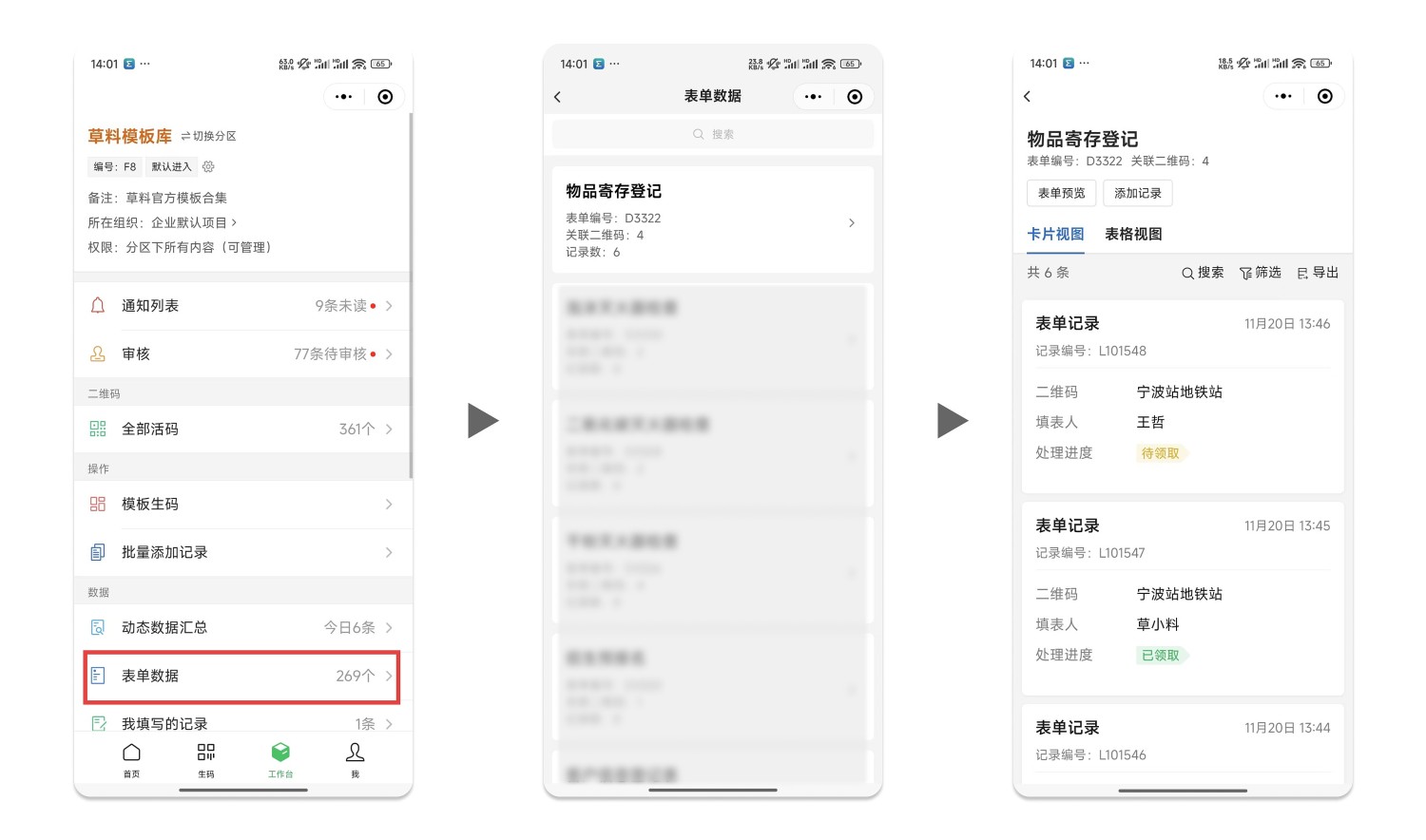
6. Reduced Contact: Minimize person-to-person contact, reducing the risk of cross-infection during public health events.
III. Usage Process
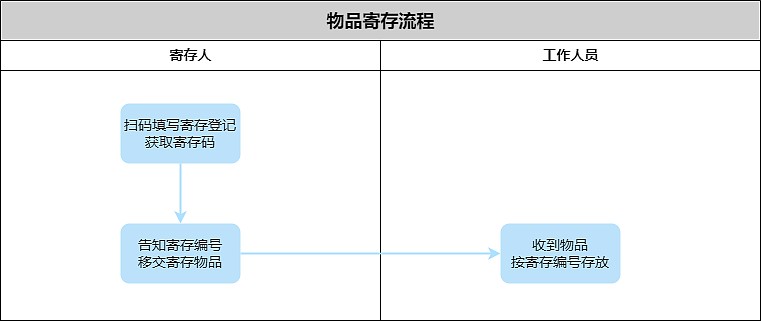

IV. Core Features
- Receipt Verification: Use the form's verification function to manage both item storage and retrieval with a single code.
- Automatic Numbering: Storage receipts support automatically generated numbers based on submission order, reset daily, eliminating the need for manual assignment by staff.
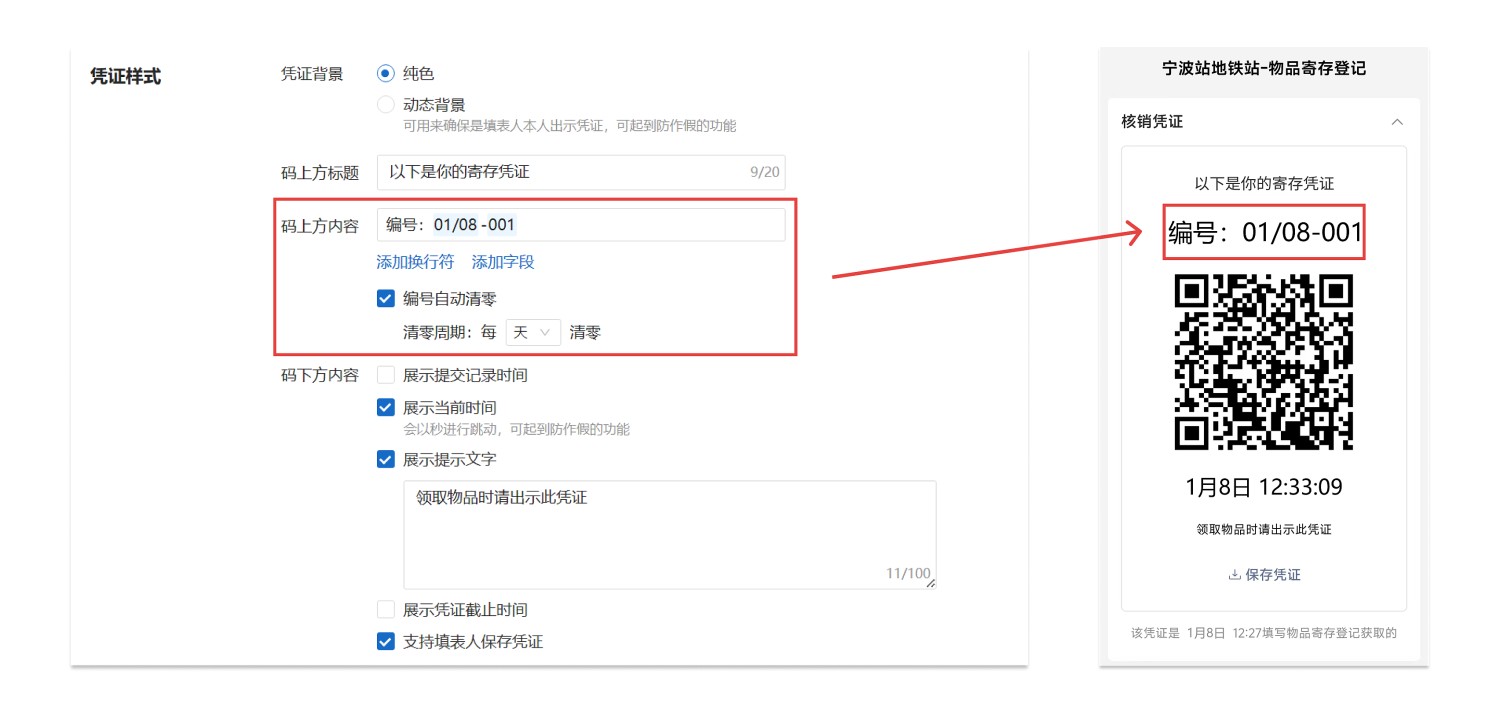
V. Usage Recommendations
- QR Code Printing: The template pre-sets the QR code label style. After generating the QR code, you can directly download and print it for use. View label download and printing tutorial
VI. Advanced Applications
- Data Export: Supports exporting item storage records, which can be printed as paper copies for archiving. View detailed tutorial

VII. Frequently Asked Questions
1. Can I avoid using the system's automatic numbering?
Answer: Yes. If your organization already uses numbered storage lockers or has its own numbering rules and wishes to continue using the existing storage numbers, you can delete the automatic counter field in the receipt style and add an entry field in the form for users to manually enter the storage number. You can also choose to display the user-manually entered storage number in the receipt style.
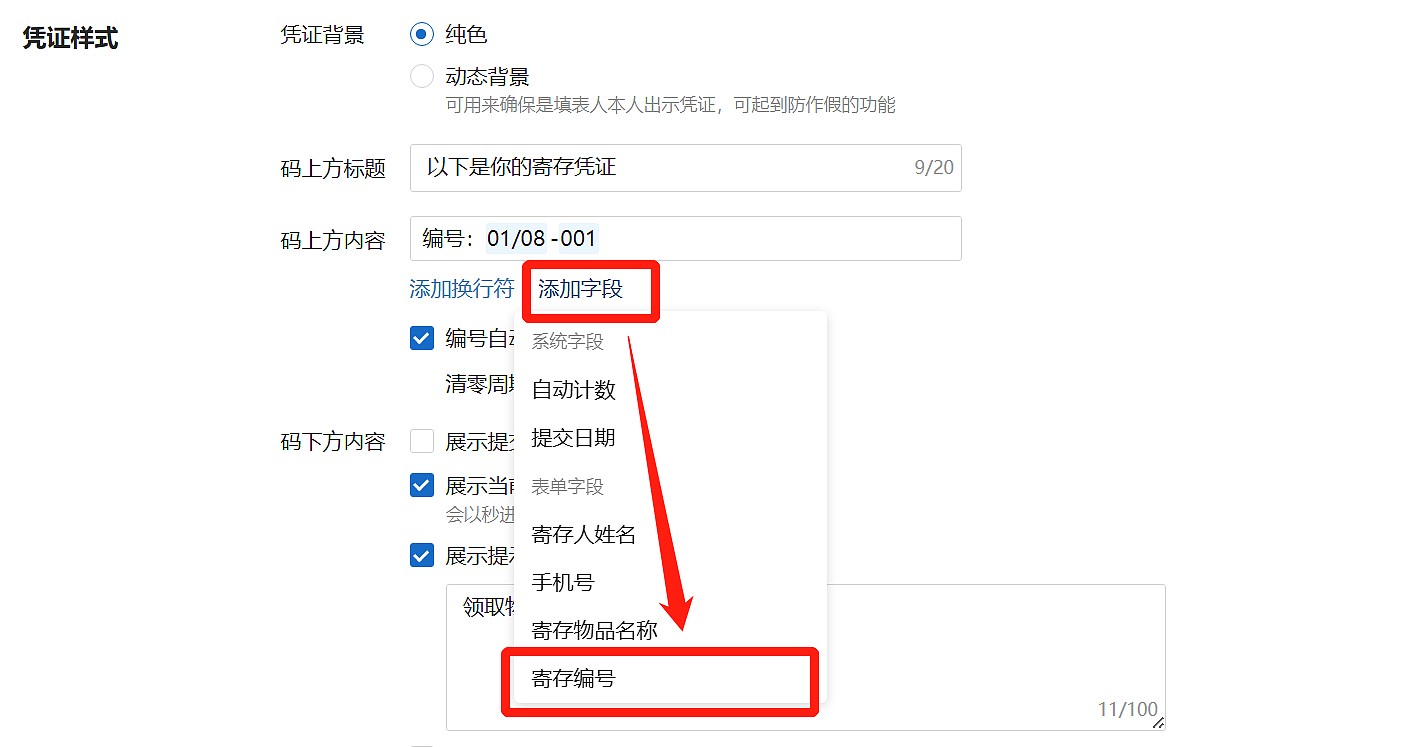
VIII. Related Templates
Satisfaction Survey: Create a satisfaction survey QR code. Users can scan to fill it out, replacing the original paper method; all evaluations are summarized in the workbench and can be exported for statistics to understand overall service quality.
Office Supplies Receipt Registration: Use QR codes to help businesses simply and cost-effectively manage items and supplies: For low-value consumables, place QR codes in the storage room for employees to scan and register upon receipt; For borrowing and returning non-consumable items, create dedicated QR codes for items to scan and register borrowing and return information.
Item Borrow/Return Registration: Create one-code-per-item for instruments, equipment, and tools. Scan the code to view basic tool information, update borrowing and return statuses, and add reasons for borrowing/returning; Administrators can also view and export borrowing/return records in real-time in the workbench. When multiple items need to be borrowed/returned simultaneously, use the batch add record function on the mobile end to add borrowing or return records for this batch of items at once, completing the borrow/return operation.