How Small and Medium-Sized Property Management Companies Can Quickly Digitize Patrol Inspections Using QR Codes
Original: https://cli.im/article/detail/2335
As the wave of digitalization continues to penetrate the property management industry, many small and medium-sized property management companies are beginning to explore more economical and practical patrol inspection systems. Compared to traditional patrol wands, Bluetooth inspection devices, or patrol apps, QR code-based patrol systems are increasingly favored by property managers due to their low cost and ease of deployment.
This article shares a lightweight, low-cost patrol solution based on practical experience, helping small and medium-sized property management companies quickly set up a digital patrol system.
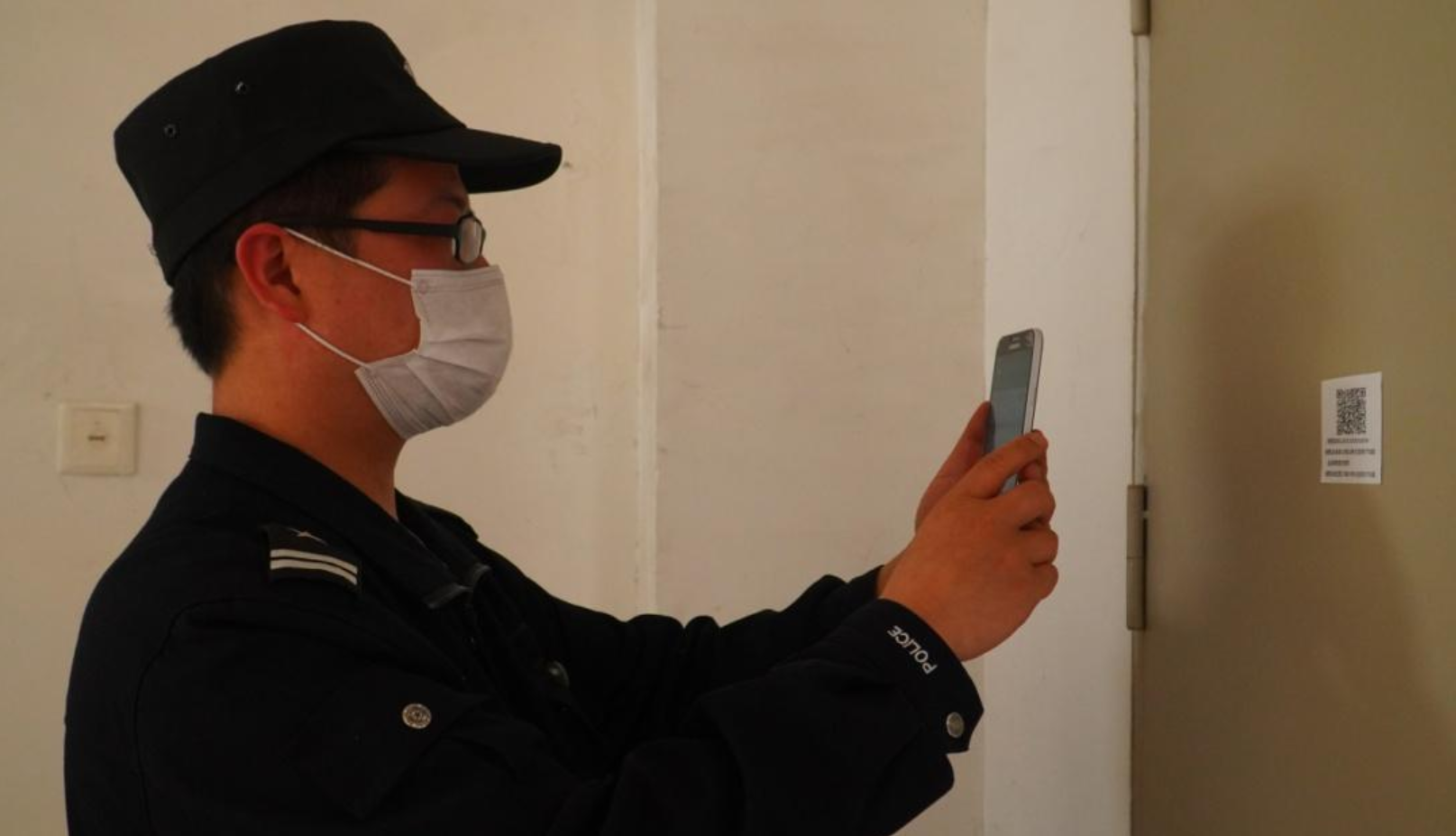
1. Common Pain Points in Patrol Inspections for Small and Medium-Sized Property Management
In practical property management, traditional patrol methods often present several distinct pain points:
- Difficulty Managing Paper Patrol Records: Using paper sign-in sheets or logbooks for daily patrols is not only cumbersome to manage but also prone to loss and falsification, making post-event retrieval highly inefficient.
- High Equipment Investment Costs: Professional patrol equipment is often expensive, with high procurement and maintenance costs, increasing the operational burden on property management companies.
- Low Management Efficiency: The inability to receive real-time status feedback on inspections means managers lack timely and effective oversight to ensure patrol staff are on duty punctually and performing inspections diligently.
Consequently, there is a strong market need for a low-cost, lightweight patrol solution that also meets digital requirements.
2. Advantages of the QR Code Patrol Solution
The QR code patrol solution is essentially a combined application of "QR codes + electronic forms." Simply put, it involves placing QR code labels at inspection points. Patrol personnel scan these codes with their mobile phones via WeChat and fill out a patrol record form, including information such as patrol time, location, and on-site photos.
This solution offers several advantages:
- Low Cost: The QR code patrol system requires no specialized equipment purchases. Only QR code labels need to be produced, enabling patrol check-ins via WeChat scanning on a mobile phone.
- Easy Deployment: Inspection point QR codes can be easily printed and posted, making deployment and updates very convenient. The system can often be set up and operational within just a few hours.
- No Training Required: The system is simple to use. Inspection personnel simply open WeChat to scan and use the codes, with no need to download additional apps. The interface is straightforward, making it easy to understand and use even for security personnel in their 60s.
- Real-Time Monitoring: Managers can monitor the patrol status in real-time through the workbench, including inspection times, locations, personnel information, and photos, significantly improving supervision efficiency.
3. Practical Deployment Methods for QR Code Patrols
Using CaoLiao QR Code as an example, here is a detailed guide to setting up a patrol QR code system.
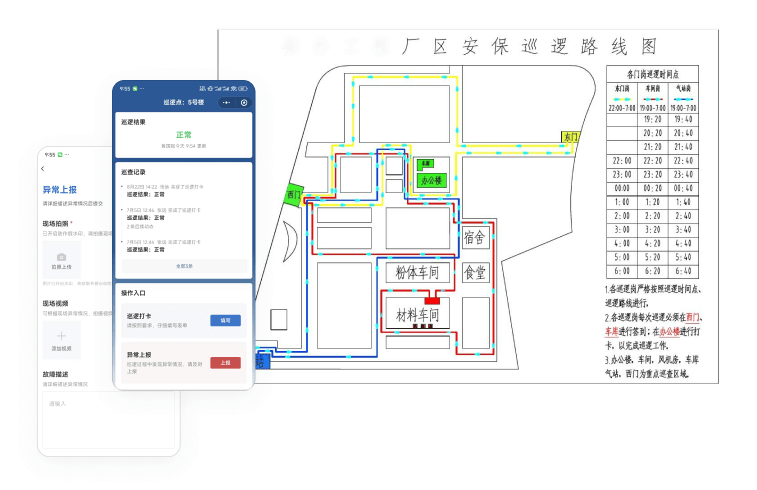
Step 1: Plan Patrol Routes and Inspection Points
First, based on the actual property inspection needs, determine the patrol route and the location of each inspection point. Assign clear identification numbers and location descriptions for each point.
Step 2: Modify the Template Content
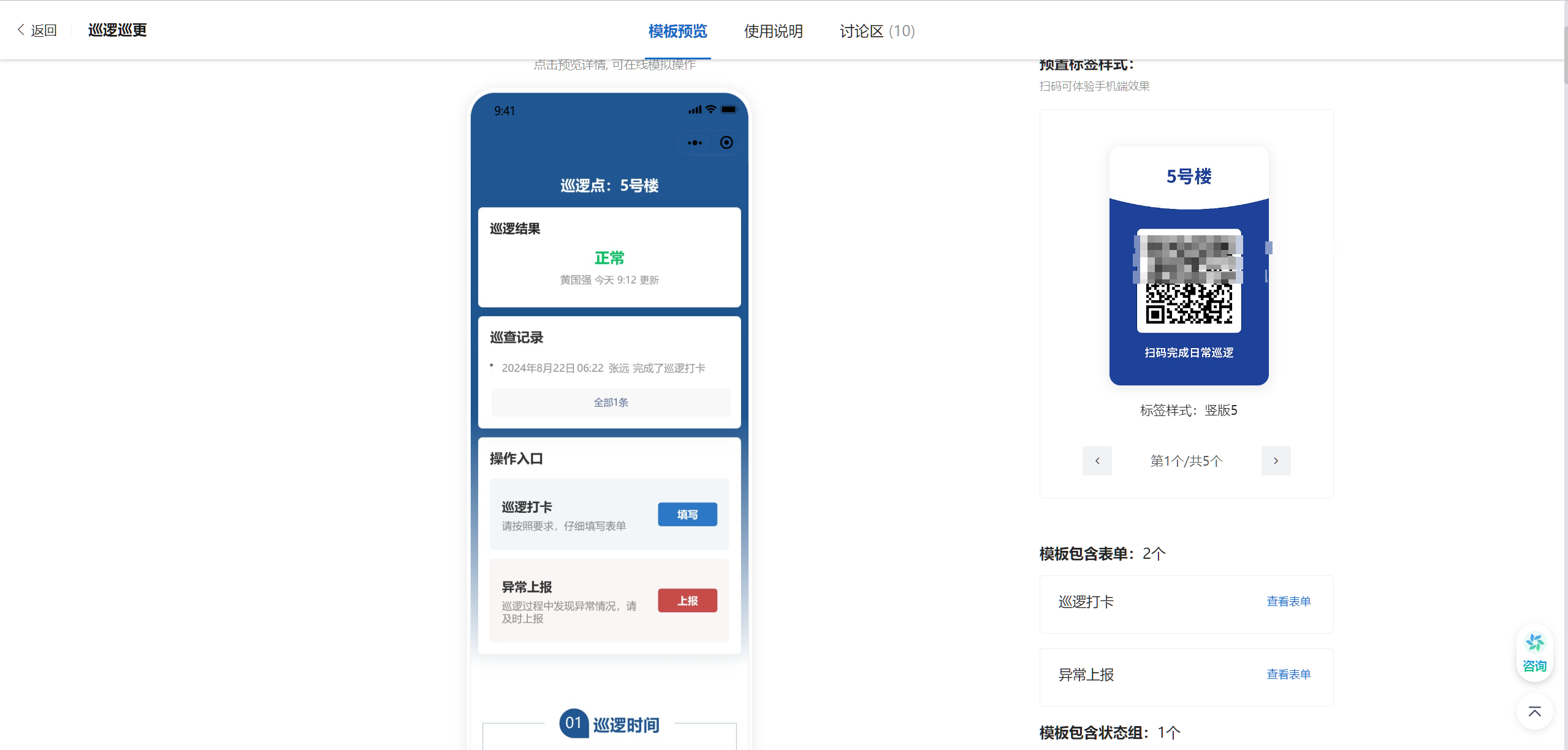
CaoLiao QR Code's official website provides QR code templates for patrol inspections, available for free use. Navigate to the template library on the CaoLiao QR Code website, select the [Patrol Inspection] template, and click [Use Template to Generate Code]. Since there are typically many inspection points, using the bulk QR codes generation method is recommended.
You can modify the content within the template according to your specific requirements, adjusting patrol times, inspection content, and routes to fit your property's needs. The content within the [Patrol Check-in] form can also be modified; the forms functionality in CaoLiao QR Code is available for free.
Form content generally includes:
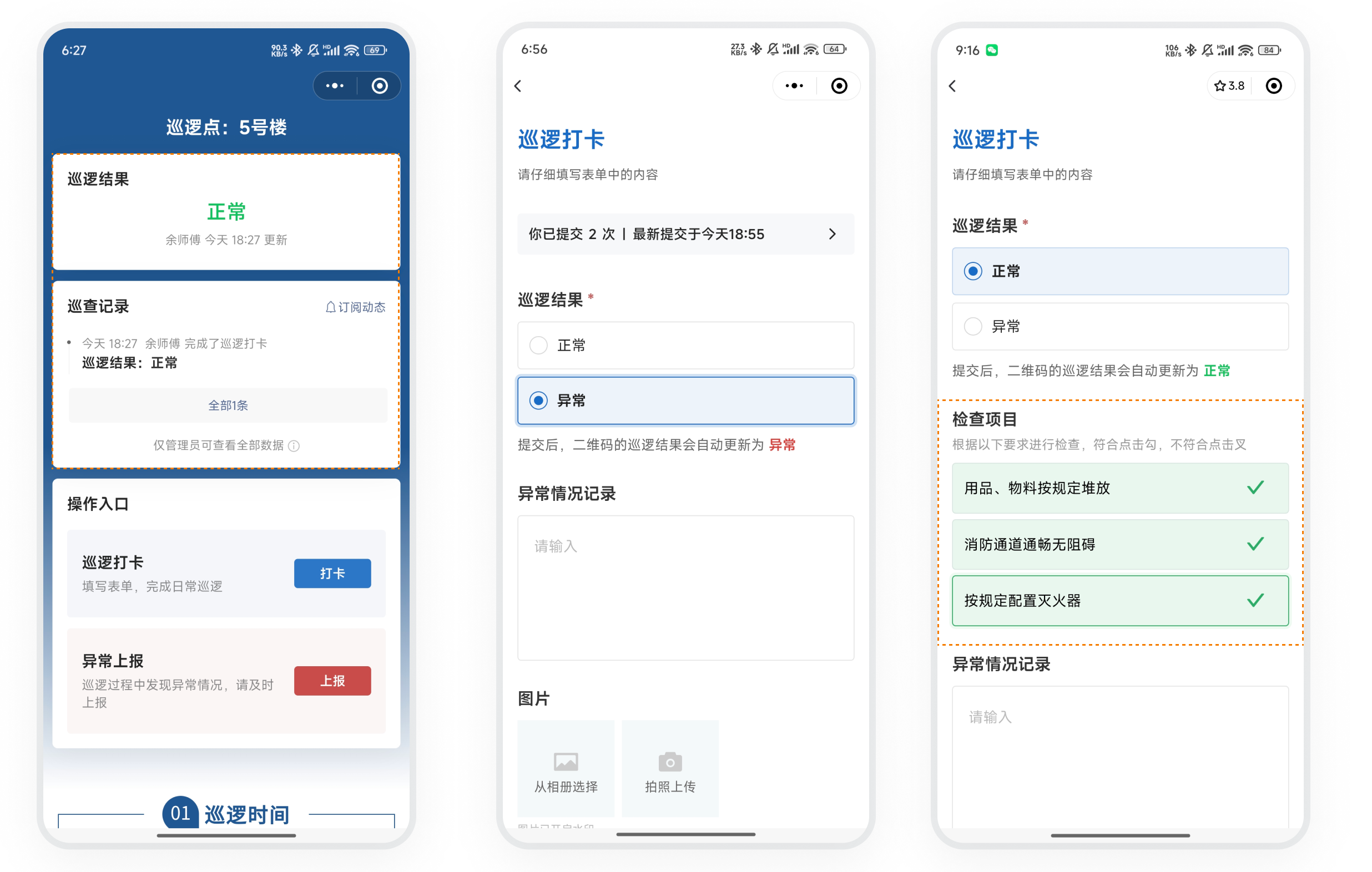
- Patrol Result: Normal or Abnormal
- Patrol Personnel Name
- Patrol Personnel Handwritten Signature (can be added based on actual needs)
- Automatically Recorded Patrol Time
- Automatically Retrieved Inspection Point Location
- Capture Inspection Photos (AI recognition can be enabled to automatically check if photos meet requirements)
- Fill in Remarks (e.g., for recording abnormal situations)
If there are requirements to prevent falsification, you can enable [Upload Photos Only] and [Anti-Falsification Watermark]. This prevents inspection personnel from selecting images from their gallery, requiring them to take photos on-site. You can also enable the [Blockchain Notarization] service, which uses Ant Group's blockchain technology to automatically notarize each inspection record. Combined with the handwritten signature component, this can replace pen-and-paper signatures, ensuring the authenticity of inspection data, making it tamper-proof, fully traceable, and usable as court-admissible electronic evidence. These features effectively prevent patrol personnel from falsifying inspections.
Step 3: Generate QR Codes in Bulk
After modifying the template, import the names of each patrol point to generate QR codes for all inspection points. Further settings can be configured, such as whether to send notifications when an inspection result is abnormal, or whether only managers can view the inspection records.
Step 4: Print and Deploy the QR Codes
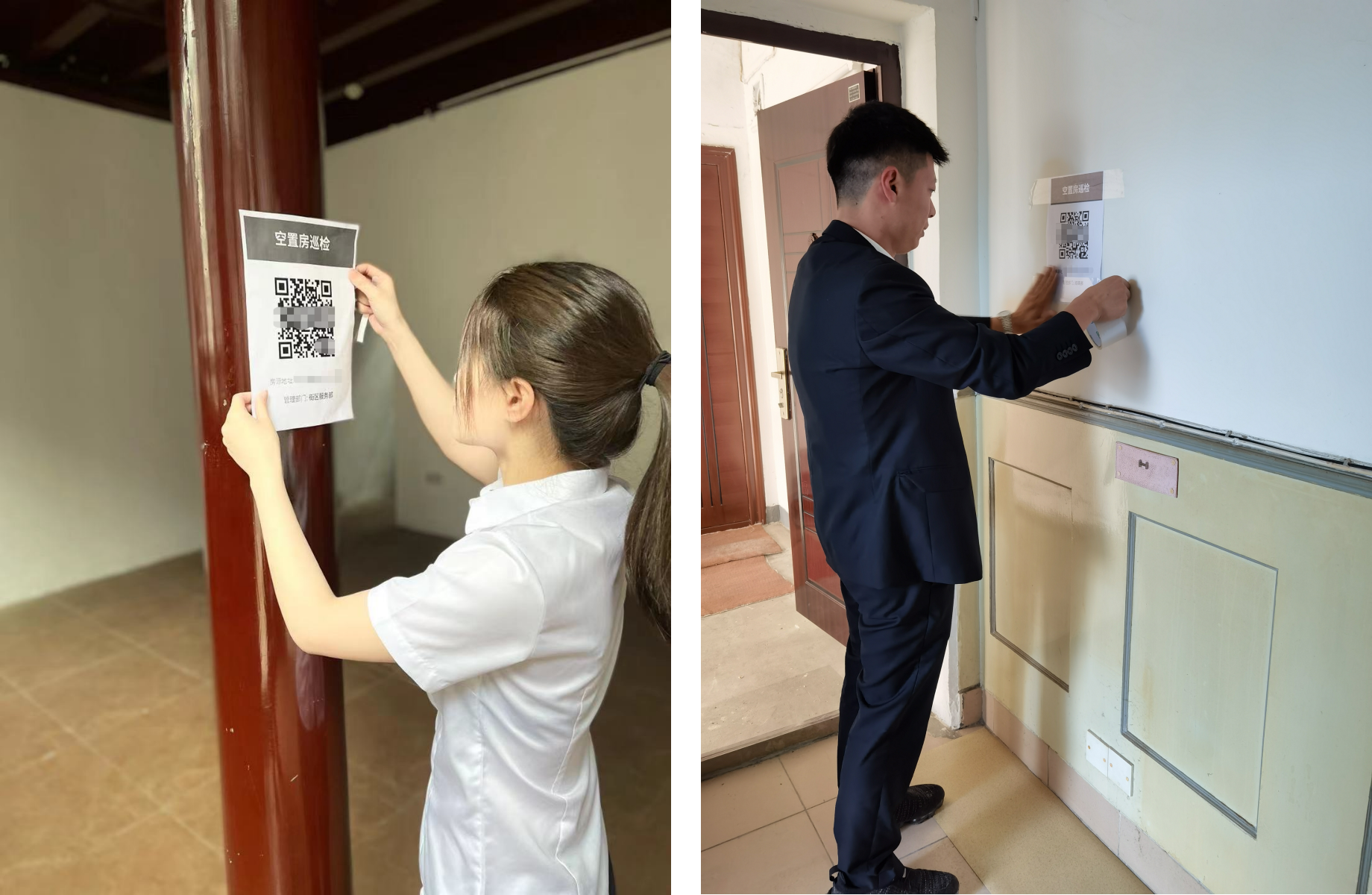
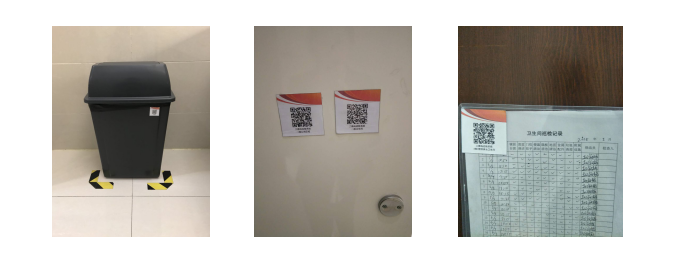
Once the QR codes are generated, print them directly using an A4 printer. Post the printed QR codes at the predetermined locations—one QR code label per patrol point—and the system is ready for use.
For formal deployment, it is recommended to use waterproof and sun-resistant QR code label materials to prevent outdoor environmental conditions from affecting the scannability of the codes.
Step 5: Patrol Personnel Scanning Operation
When patrol personnel reach a designated location during their rounds, they use their mobile phone's WeChat app to scan the QR code, which opens the patrol form. They record the inspection result, take photos, fill in any remarks, and submit the form to complete the patrol check-in.
Step 6: View Data in the Management Workbench
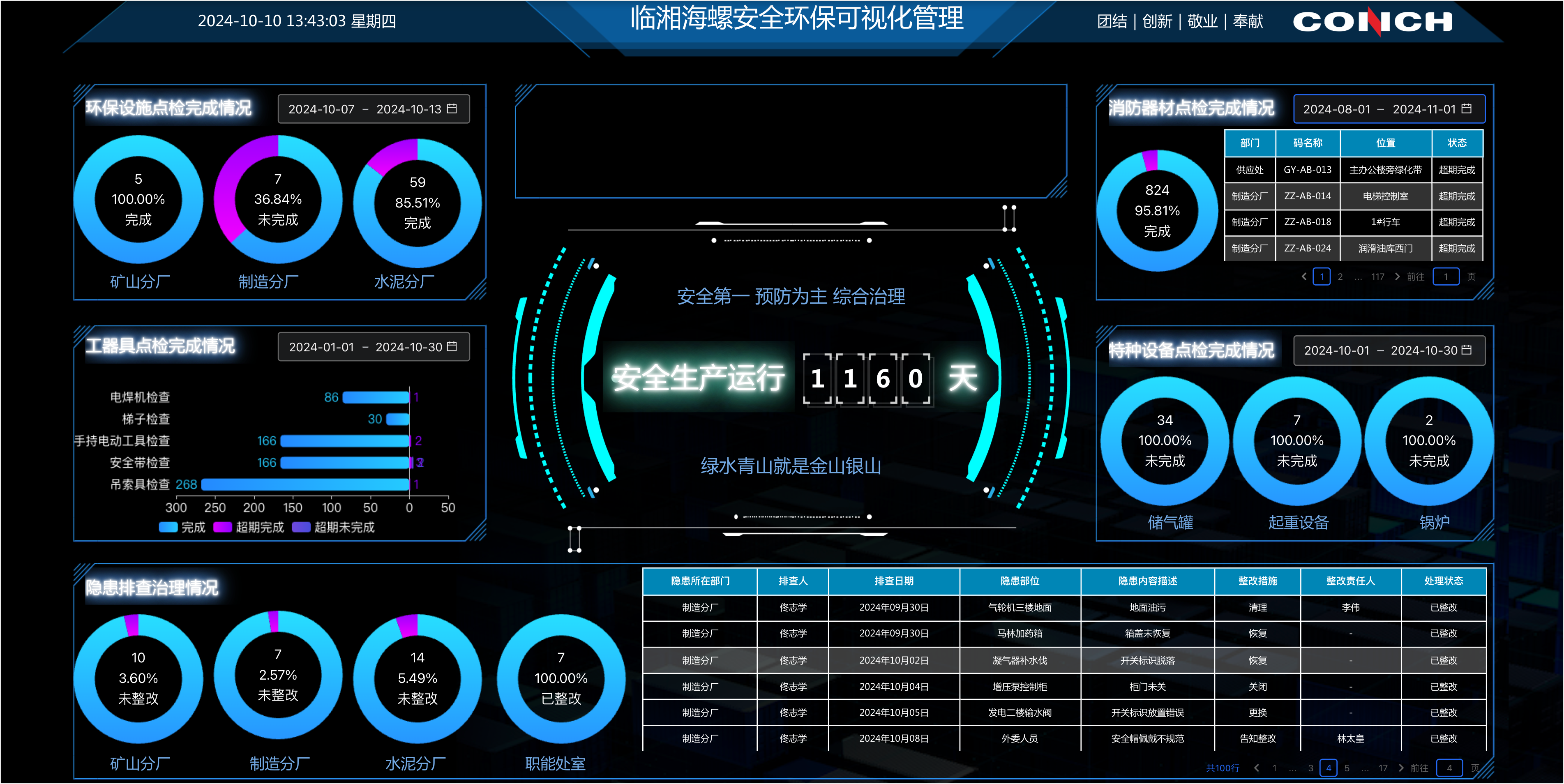
Property managers can view patrol records at any time in the workbench system. This includes patrol times, personnel who checked in, locations, on-site photos, remarks, etc., enabling real-time monitoring of patrol status and historical data tracing.
The API functionality can also be used to integrate with data analysis tools, generating visual dashboards to display inspection status in real-time.
4. Real-World Application Case Study
COFCO Property (Joy Servicing) previously used a patrol wand tap-in system, which incurred relatively high actual costs and faced issues like the inability to statistically analyze data in real-time. After switching to the QR code patrol solution, costs were significantly reduced. Creating a QR code for each patrol point and printing it as a waterproof sticker sufficed to replace electronic patrol points. The specific results after implementation:
- The patrol check-in rate increased to over 98%, markedly improving management effectiveness.
- Managers gained the ability to monitor patrol activities in real-time via the workbench, avoiding issues of missed posts and inadequate inspections.
- The total cost was nearly zero, substantially reducing operational expenses.
5. Summary
For small and medium-sized property management companies, the QR code patrol solution indeed represents an ideal inspection system. It enables the rapid digital upgrade of property patrols at a low cost, eliminating the hassles of hardware investment and system maintenance, while greatly enhancing management efficiency.
We hope the experience shared in this article provides reference and inspiration for fellow property management professionals, assisting you in achieving a more efficient digital transformation for your property management operations.