In-Depth Comparison of Six Electronic Form Tools: Choose the Right Form Tool to Say Goodbye to Inefficiency
Original: https://cli.im/article/detail/2342
For small and medium-sized enterprises (SMEs), there is an urgent need to reduce costs, increase efficiency, optimize processes, and respond quickly to the market. As a fundamental tool for enterprise digitalization, electronic form tools bear the important tasks of information collection and process-driven operations. However, the wide array of choices in the market often leaves decision-makers confused. This article provides an in-depth analysis and comparison of electronic form tools like JinShuJu, Tencent Questionnaire, and CaoLiao QR Code, focusing on their features, application scenarios, strengths, and weaknesses. It aims to offer a more valuable reference guide for SMEs at the critical juncture of digital transformation.
1. The Digitalization Dilemma for SMEs
Many SMEs struggle in their digitalization practices due to limited resources, especially in basic data collection and business process areas, often facing the following management challenges:
- Efficiency Bottlenecks: Paper-based records or manual data entry are time-consuming, labor-intensive, and prone to errors, making it difficult to quickly summarize and analyze data. For example, property inspections and production logs require real-time feedback, but traditional methods often lead to information delays.
- Inconvenient On-Site Operations: Tasks like equipment inspections in manufacturing or on-site services in the service industry require employees to quickly record information on-site. Traditional PC-based tools or forms not optimized for mobile use are inconvenient for on-site operations, directly impacting work efficiency.
- Delayed Data Tracking and Analysis: After business data is generated, it needs to be statistically analyzed, tracked, and traced. However, data collected through traditional methods often lacks uniform formatting and a unified platform, leading to difficulties in analysis and delayed decision-making.
- Inefficient Collaboration: Many enterprise processes (such as reimbursement, leave requests, purchase applications, task assignments, work order routing) involve collaboration across multiple departments and personnel. Traditional tools often lack flexible permission allocation and automation support.
Faced with these pain points, choosing a suitable electronic form tool becomes a crucial step for SMEs to move towards digitalization and enhance their core competitiveness.
2. Comparison of Mainstream Electronic Form Tools
Mainstream electronic form tools in the market include CaoLiao QR Code, JinShuJu, Tencent Questionnaire, MikeCRM, FormMaster, and WenJuanXing. Each has its own characteristics, covering various needs from information collection to data analysis. Below is a brief analysis of their core features and applicable scenarios:
1. CaoLiao QR Code
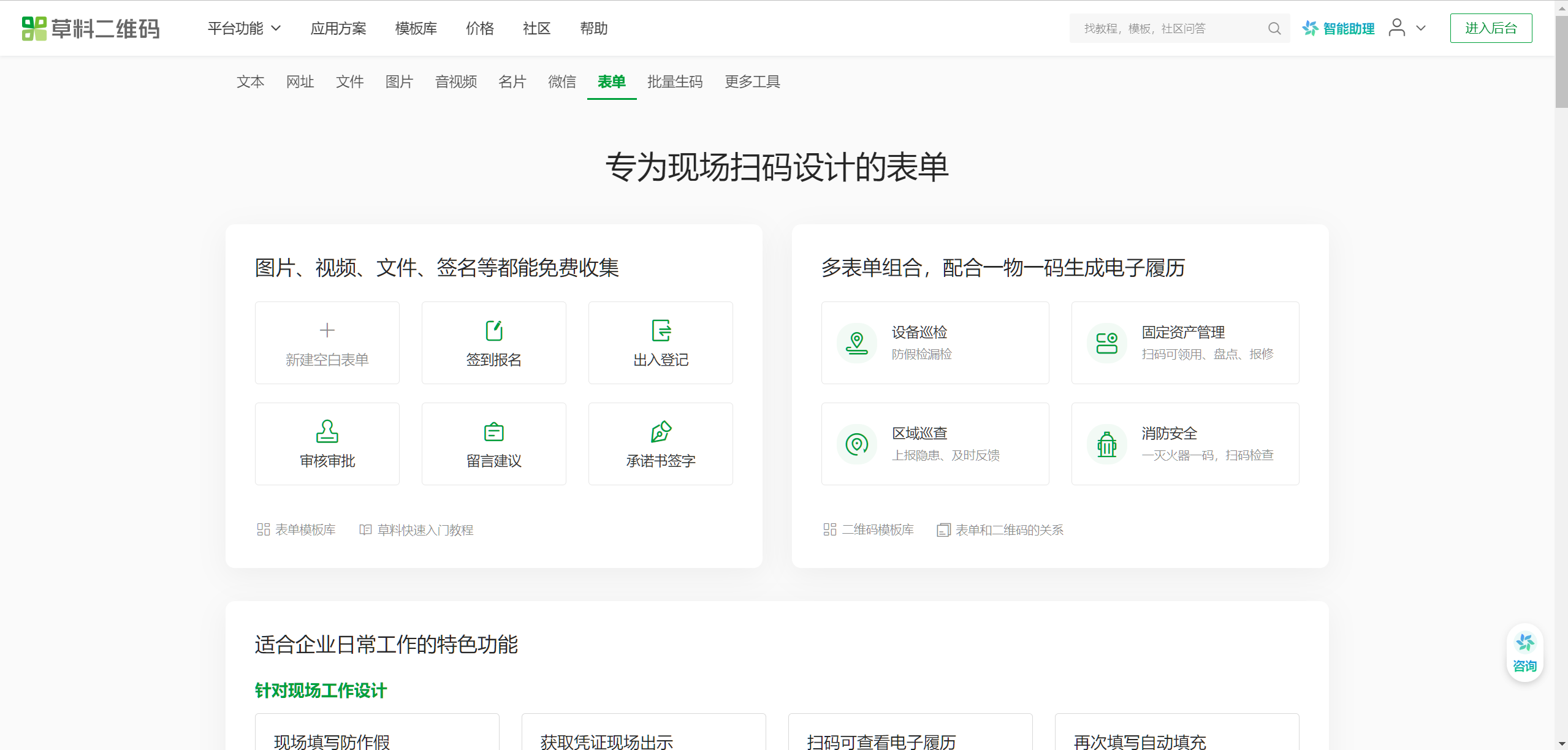
CaoLiao QR Code is not merely a standalone form tool that simply uses QR codes as form entry points. Instead, it uses QR codes as "keys" connecting physical objects, personnel, and digital information, building a workflow centered around "scanning codes." It generates unique QR codes for each piece of equipment, asset, product, person, or work task. Through the concept of one code per object, person, or task, employees can scan the dedicated QR code via WeChat to directly trigger corresponding actions like form filling, information queries, or status updates.
- Characteristics: Can be combined with features like content display and bulk operations to enable more online and offline application scenarios. Besides basic information collection (e.g., meeting check-ins, event registrations, attendance clock-ins, feedback collection), it is particularly suitable for scenarios like item file display and record tracking, such as equipment inspections and asset management.
- Disadvantages: Lacks features like logic jumps and test scoring, making it unsuitable for online exams and in-depth questionnaire surveys.
2. JinShuJu
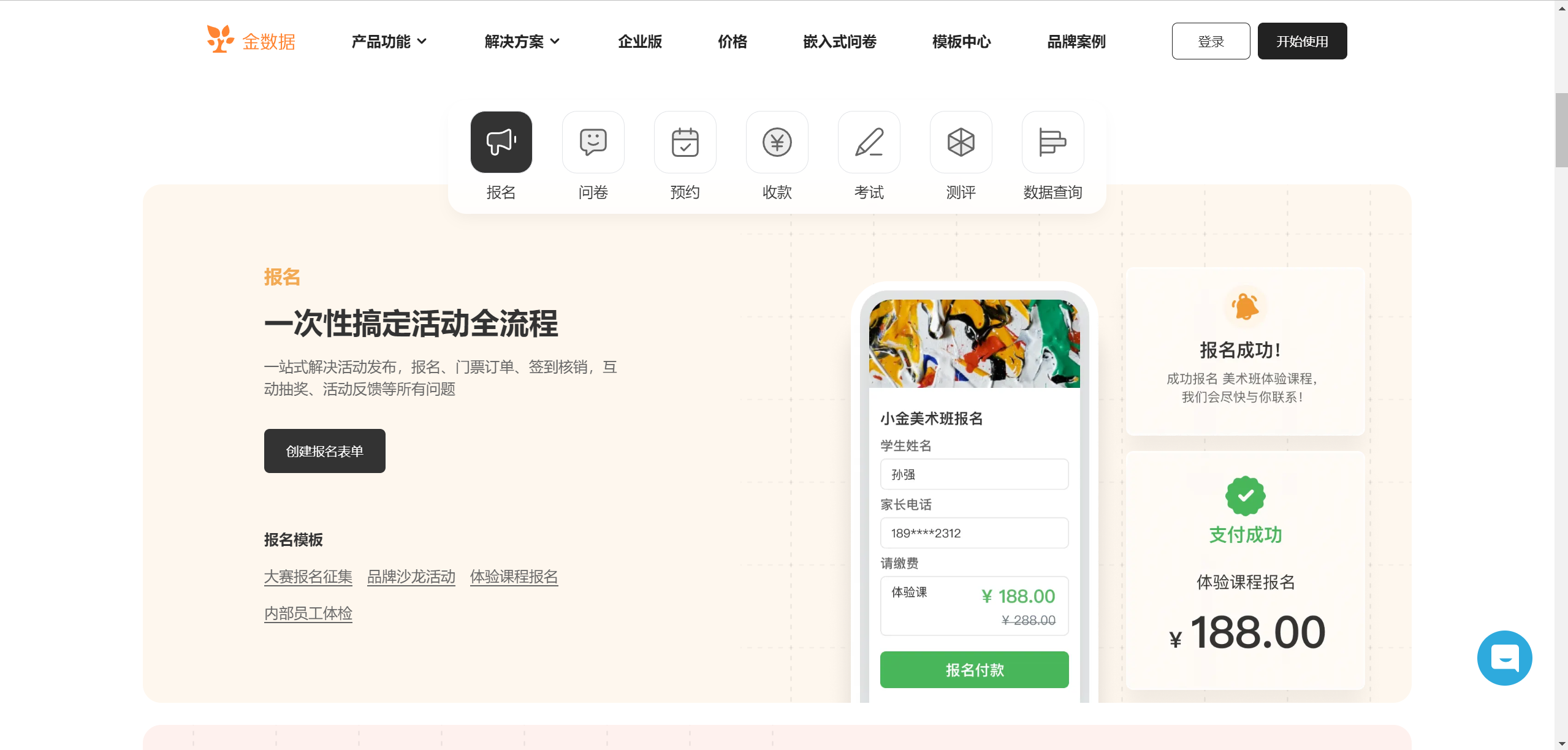
A versatile online form tool supporting various field types (e.g., text, multiple-choice, image upload), offering advanced features like data validation, conditional logic, and payment integration. Supports form filling via web and mobile, with built-in real-time data visualization and export functions.
- Characteristics: Features online payment collection, enabling online cashier systems, online payments, and custom styling. Suitable for e-commerce and service industries. Ideal for event registration, online orders, feedback collection, quizzes, and scenarios requiring flexible form design.
- Disadvantages: The free version has a collection limit of 50,000 entries per month; exceeding this renders it unusable. Basic components like jump buttons, ID card fields, e-signatures, multi-level dropdowns, and tables require a paid premium version.
3. Tencent Questionnaire
Focuses on survey questionnaire design, supporting various question types (e.g., single choice, multiple choice, rating), logic jumps and branching. Can be distributed via links or QR codes, with built-in data analysis tools.
- Characteristics: A product under Tencent, capable of integrating with the Tencent ecosystem. Suitable for survey-based needs like 360-degree evaluations, market research, customer satisfaction surveys, academic research.
- Disadvantages: Focused primarily on surveys, offering less flexibility for general forms. The free version allows creating up to 30 questionnaires per day and includes advertisements.

4. MikeCRM
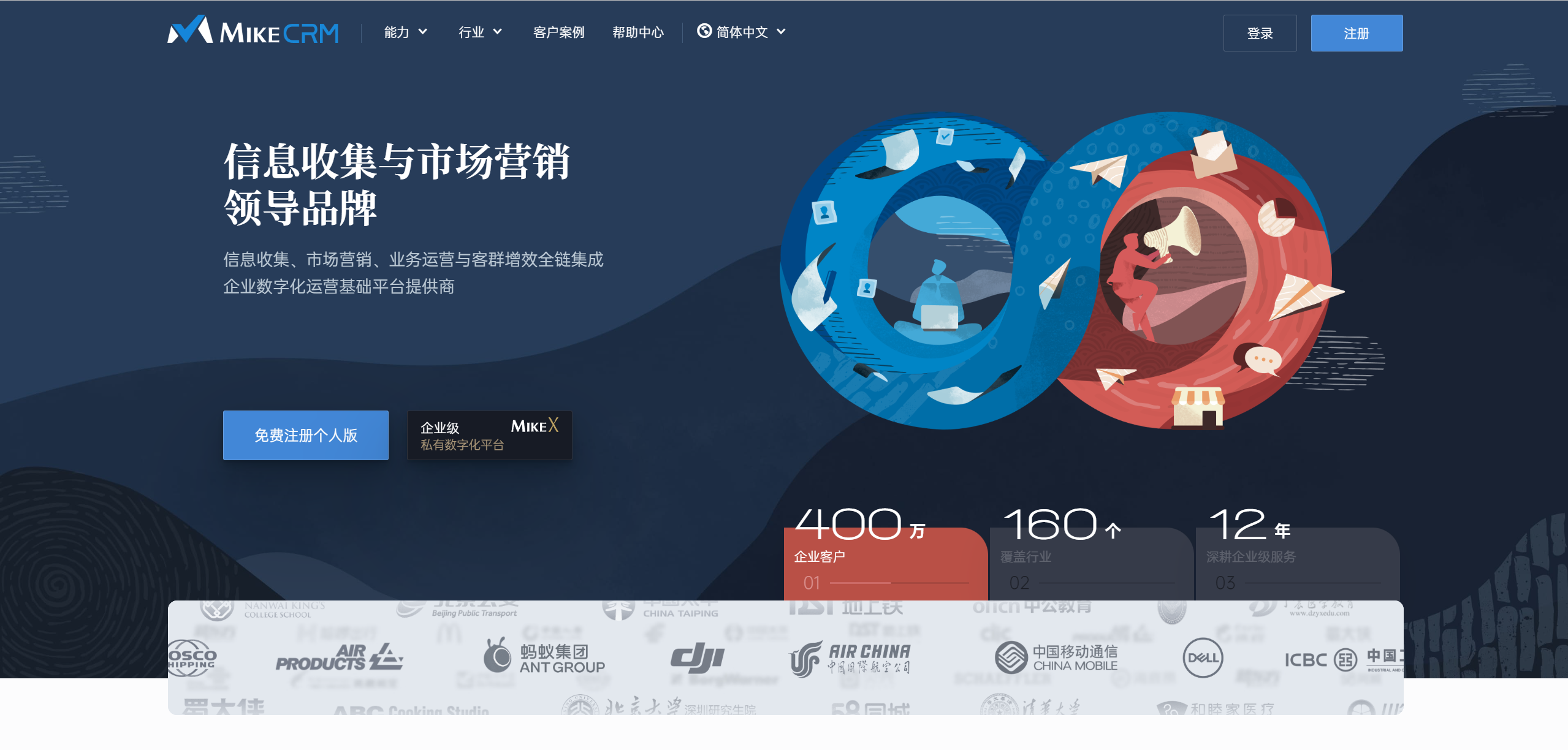
A customer relationship management (CRM) platform integrating form creation, lead capture, email marketing, and customer data management. Forms are primarily used for lead generation and feedback collection.
- Characteristics: Form functionality serves CRM needs, including lead capture, customer follow-up, marketing automation. Suitable for businesses focusing on customer relationship management.
- Disadvantages: Relatively high price. Can be overly complex for simple form requirements.
5. FormMaster
A straightforward form builder supporting basic field types, logic, and calculations, providing simple data analysis functions.
- Characteristics: Lightweight, easy to use, with relatively basic features. Suitable for simple registrations, basic feedback collection, and lightweight form needs.
- Disadvantages: Limited features. The free version allows submitting 5,000 data entries per month.

6. WenJuanXing
A professional survey and online exam platform supporting complex question types, logic branching, and in-depth data analysis. Suitable for scenarios requiring advanced survey design.
- Characteristics: Powerful survey design and analysis capabilities, leaning towards professional use, suitable for professional research scenarios.
- Disadvantages: High cost, with the lowest paid plan starting at 2999 RMB. The free version allows publishing 10 questionnaires per day.

3. Price Comparison
| Tool | Free Version Limitations | Paid Version Price |
|---|---|---|
| CaoLiao QR Code | Almost no limitations | 780 - 2680 RMB/year |
| JinShuJu | Monthly data collection limit of 50,000 entries; limited form features | 599 - 7399 RMB/year |
| Tencent Questionnaire | 30 questionnaires per day; includes ads | Starting from 2499 RMB/year |
| MikeCRM | Limited basic CRM features | 899 - 3299 RMB/year |
| FormMaster | 10 forms; 5000 records | 588 RMB/year - Starting from 6800 RMB/year |
| WenJuanXing | 10 questionnaires per day | 2999 - 29800 RMB/year |
- Most Economical: CaoLiao QR Code. The free version basically meets the needs of most users. It offers unlimited form creation, unlimited collection entries, unlimited respondents, and free use of components that are often paid in other form tools (e.g., e-signatures, jump buttons, multi-level dropdowns, tables, ID number validation).
- Mid-Range Pricing: JinShuJu, FormMaster, MikeCRM.
- Higher Priced: Tencent Questionnaire, WenJuanXing.
4. How SMEs Should Choose
So, how should SMEs make their choice? It requires comprehensive consideration of industry characteristics, business needs, and budget constraints. Is your need for complex questionnaire surveys and market research, or for on-site operational efficiency and physical asset management? The former might be better suited for survey-focused form tools, while the latter showcases the advantages of the CaoLiao QR Code platform. Here are specific reference suggestions:
- CaoLiao QR Code: Suitable for simple feedback, check-ins/registrations, as well as one-code-per-object scenarios like equipment inspection, fault reporting, asset management. Can be chosen by property management and manufacturing industries to enhance management efficiency.
- JinShuJu: Supports online payments and personalized styling, suitable for e-commerce and paid services.
- Tencent Questionnaire: Free large-sample collection, suitable for market research.
- MikeCRM: Customer follow-up and marketing, suitable for sales teams.
- FormMaster: Low-cost and practical, supports facial recognition, suitable for budget-conscious enterprises.
- WenJuanXing: Online exams and assessments, suitable for education and training scenarios.