Why MES and ERP Systems Fail to Reach the Frontlines in Manufacturing Enterprises
Original: https://cli.im/article/detail/2444
In recent years, "digital transformation" has become a buzzword in the manufacturing industry. Whether it's large equipment manufacturing groups or small and medium-sized component factories, everyone is discussing how to "move to the cloud" and "use systems." ERP (Enterprise Resource Planning) and MES (Manufacturing Execution System) were once considered essential tools. From financial management to production scheduling, these systems have indeed brought clearer data and more standardized processes to the management level. However, during implementation, many manufacturing enterprises face an awkward reality: while the systems run smoothly in the office, they struggle to function effectively on the shop floor.
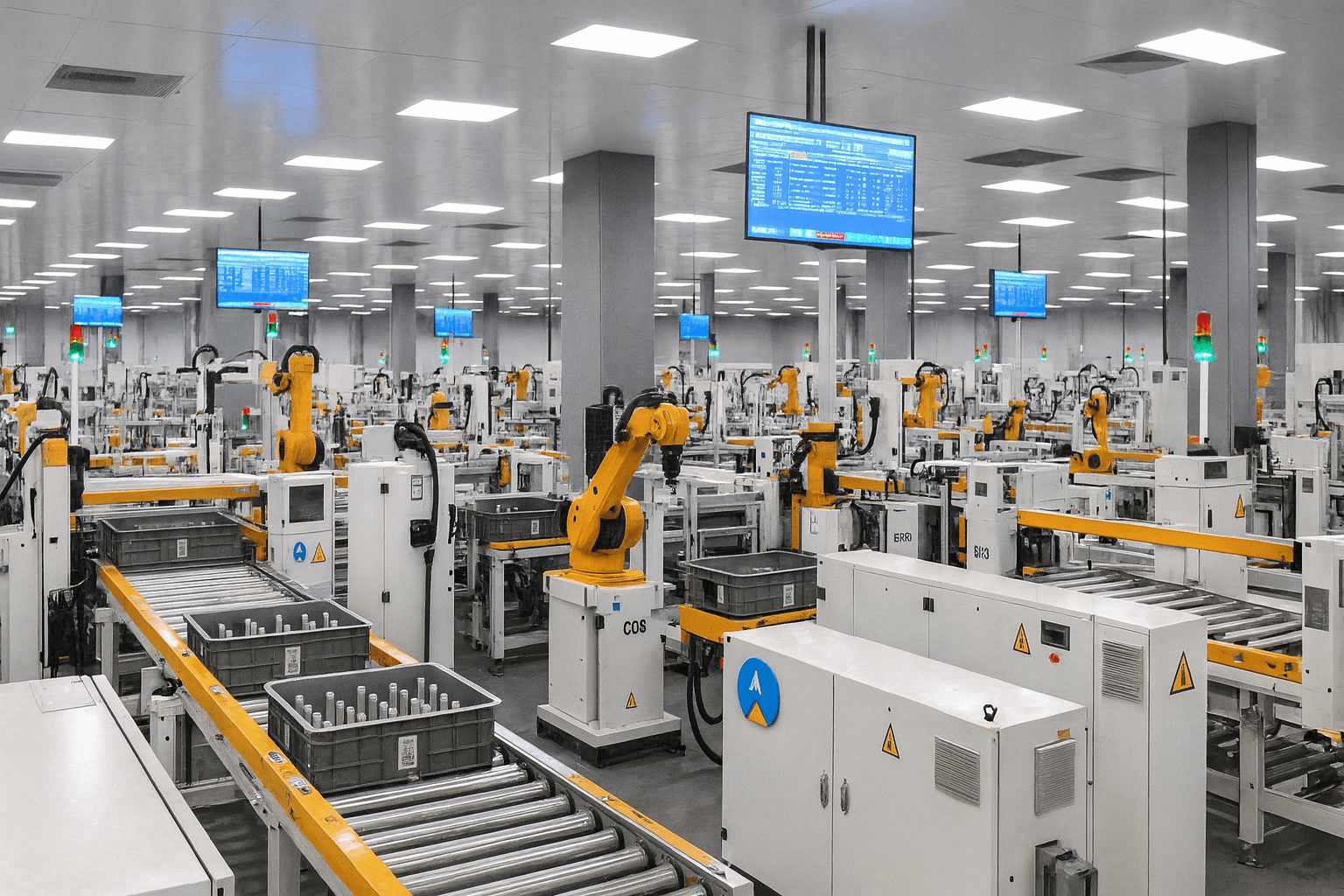
1. Why Do Workers Resist Using Seemingly Perfect Systems?
"The system has been purchased, but frontline employees either don’t know how to use it or are unwilling to." This is a common sentiment among production supervisors.
In many factories, the procurement and implementation of ERP/MES systems consume significant time and funds, with training materials piling up. Yet, when it comes to the shop floor, workers still prefer using paper documents and verbal communication for daily operations. The reasons mainly include:
- Complex Interfaces: ERP and MES systems are often designed for management, featuring numerous functions and rigorous logic. However, for frontline operators, these interfaces are complex, processes are lengthy, and the learning curve is steep.
- High Staff Turnover: The turnover rate among frontline workers in manufacturing is generally high. Just as one group completes training, a new batch arrives. Repeated multi-day training sessions are costly.
- Work Environment Constraints: Workshops are noisy, dusty, and workers often have greasy hands, making it impractical to constantly operate computers. Even providing tablets often leads to maintenance difficulties and high wear and tear.
- Worker Habits and Culture: Many frontline workers are accustomed to intuitive and simple operations. Compared to computer systems, they prefer "tangible" paper and labels.
Thus, despite their powerful features, these systems struggle to penetrate the actual workflows of the production frontlines, becoming "all show and no go."
2. The Dilemma Caused by the Disconnect Between Systems and the Frontline
When informatization is disconnected from the frontline, the consequences extend beyond "nobody uses the system" and directly impact operational quality.
- Data Delays: Frontline production data cannot be entered in real-time, forcing management to rely on manual reports. By the time data is entered into the system, it's often delayed by hours or even days.
- Missing Records: Inspections, maintenance, and process progress lack effective records, making problem tracing extremely difficult when issues occur.
- "Dual Record-Keeping" Phenomenon: The frontline continues using paper records, while the backend system relies on manual re-entry. This leads to data duplication, high error rates, and management's persistent difficulty in gaining a clear view of the situation on the ground.
- Resource Waste: Huge investments in system construction fail to deliver their intended value, becoming a "sunk cost" for the enterprise.
This is why many senior executives wonder during project reviews: "We spent hundreds of thousands, even millions, so why are frontline employees still using pens and paper forms?"
3. The Misalignment Between Large Systems and Frontline Needs
The design of ERP and MES systems essentially aims to solve strategic and process issues at the enterprise level. They emphasize resource integration, cross-departmental collaboration, and production efficiency analysis. While necessary for management, these systems often feel "over-engineered" for frontline employees.
They don't need extensive functionalities but tools that allow quick information entry and reduce their burden. In other words, ERP and MES are the brain of the enterprise, while the frontline needs flexible "hands and feet." No matter how smart the brain is, if it cannot drive the limbs into action, the value of transformation remains unrealized.
4. The Emergence of Lightweight Tools
It is against this backdrop that lightweight tools are gaining attention. Being "lightweight" doesn't deny the value of systems but emphasizes a more flexible, lower-barrier approach to help the frontline complete the "final step" of informatization. The advantages of lightweight solutions include:
- Flexible Deployment: Can be adjusted according to the enterprise's scale and stage.
- Controllable Costs: Costs are less than one-tenth of an MES system investment, compared to spending hundreds of thousands on system modifications.
- Low Learning Curve: Often use mobile phones for scanning operations, requiring almost no extra training.
- Suitable for Complementing Existing Systems: Rather than replacing them.
Among various attempts, QR codes are undoubtedly one of the most popular and fastest-implementing methods. By placing QR codes on materials, equipment, and workstations on-site, frontline employees can use their familiar mobile phones to directly complete information collection and queries. In contrast, this requires no extra equipment, doesn't disrupt existing work rhythms, and is easy to promote in complex factory environments.
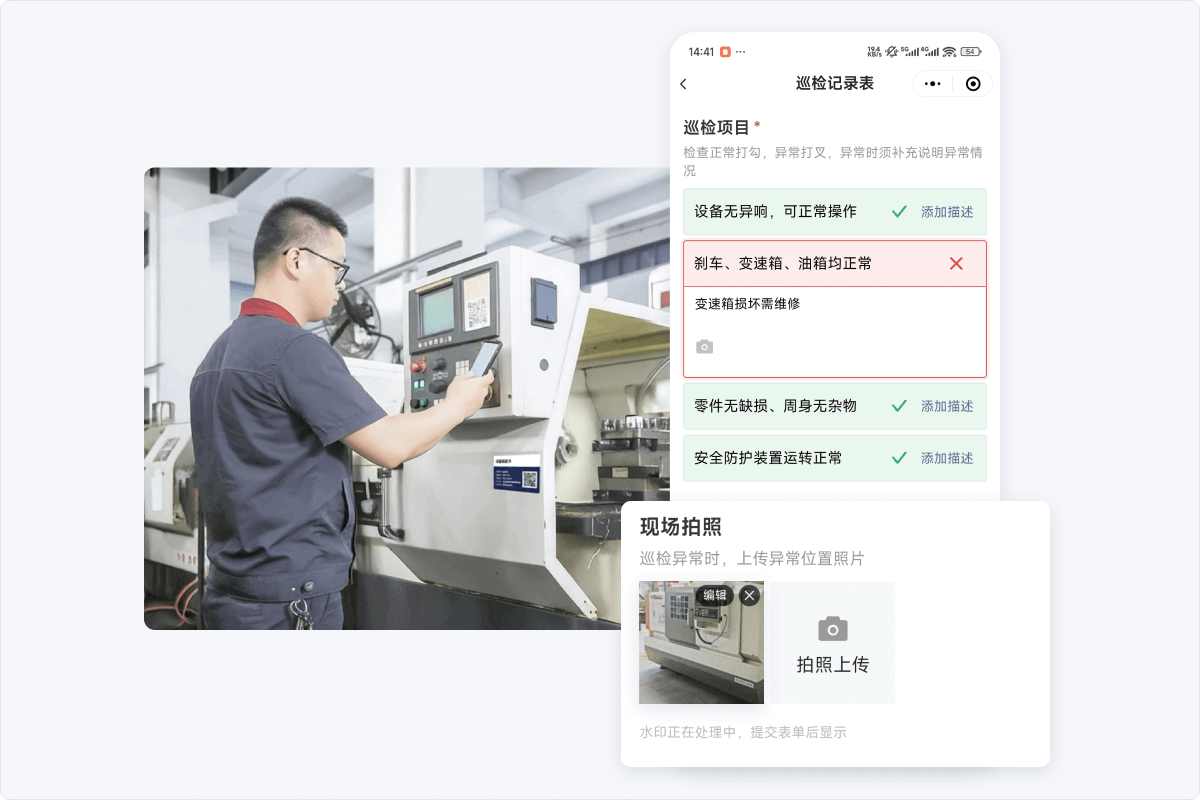
In fact, many manufacturing enterprises have already used tools like CaoLiao QR Code to digitize scenarios such as equipment management, team management, and fire safety. Its significance isn't about replacing large systems but covering the frontline with digitalization in a low-cost, rapidly deployable manner, acting as a "gap-filling" tool between enterprise systems and the frontline.
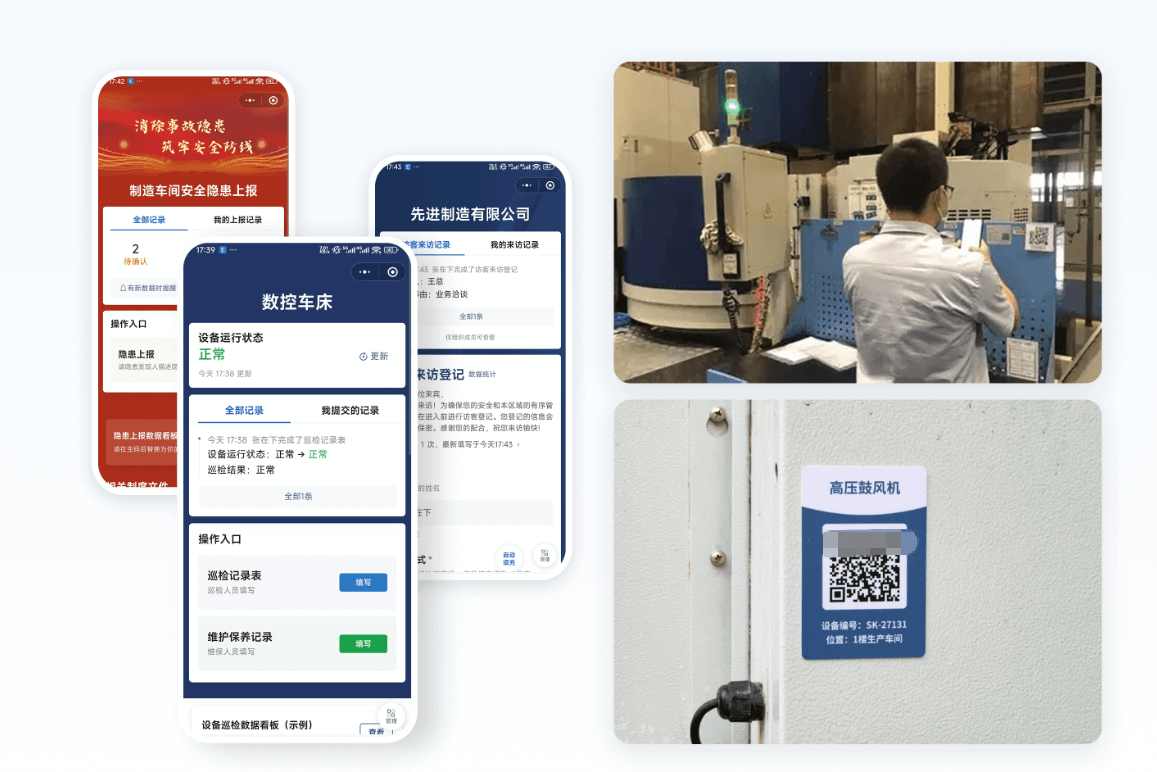
Take Snow Beer Company as an example. Previously, the company often faced inefficiencies in safety valve inspection and installation due to disjointed personnel collaboration. After introducing CaoLiao QR Code, each safety valve was labeled with a unique code. Workers scan the code to fill in disassembly/installation information, and management can monitor equipment status and inspection progress in real-time. This not only reduced communication costs but also shifted safety management from "relying on experience" to "having records and being traceable."
5. The Future: Coexistence of Heavy Systems and Light Tools
It's important to emphasize that QR codes are not meant to replace ERP or MES but to complement them.
- ERP/MES: Continue to act as the "brain" for enterprise strategy and resource scheduling.
- Lightweight tools like CaoLiao QR Code: Become the "nerve endings" for the frontline execution layer, ensuring the brain's commands are truly implemented.
This combination of "heavy + light" might be a more pragmatic direction for the future of manufacturing digitalization. Large systems handle the overall picture, while light tools ensure implementation, creating a virtuous cycle.
Digital transformation is not an overnight grand project but a process of gradually "tightening the screws." For most small and medium-sized manufacturing enterprises, taking the first lightweight step to bring frontline records and feedback into the digital track might be more realistic than blindly pursuing "large and comprehensive" systems.
Ultimately, enterprises that can simplify complex problems and transform high costs into low barriers are more likely to stand firmer and go further in the fierce competition of the manufacturing industry.