How to Make Hospital Visitor Registration More Efficient?
Original: https://cli.im/article/detail/2347
Friends who have worked in hospitals have probably had this experience: during visiting hours, outpatient halls and ward entrances become congested, especially in strictly controlled departments like ICUs, surgical areas, and pediatric wards, where visitors must register their information one by one. When it's crowded, errors, missed registrations, and even conflicts can easily occur.
For hospital administrators, visitor registration is not as simple as "just taking down names." It involves medical safety, infection prevention, traceable and exportable information, and whether the burden on departmental medical staff can be reduced. These issues are almost unsolvable with traditional paper-based registration methods. However, I recently observed practices in some hospitals that offer a low-cost, quick-to-implement solution—using QR codes for visitor registration. Many hospitals have already replaced their original paper records with this method, with surprisingly good results.
Today, I want to discuss how this method works and what aspects are worth learning from.
1. What Are the Issues with Paper-Based Registration?
Many hospitals, especially key departments like intensive care units and neonatal wards in tertiary hospitals, still rely on manual registration: phone reservations first, followed by visitors handwriting their names, phone numbers, visitation subjects, and times. Nurses or security guards are responsible for "supervising" the registration, and some places require ID cards to be shown or copies to be left behind. While this method seems simple, it has several issues:
- Inefficiency: Queues for registration during peak hours can cause entrance congestion.
- Incomplete/Inaccurate Information: Some people scribble their details or even intentionally provide false names.
- Difficulty in Retrieving Records: Flipping through paper notebooks is extremely inconvenient.
- Inability to Analyze Data: For example, it's impossible to determine how many people visited on a certain day or whether a time slot was fully booked.
- Difficulty in Assigning Responsibility: When problems arise, it's hard to quickly identify the responsible party.
2. How Is a Digital Visitor Registration System Implemented?
The core of a digital visitor registration system is using QR codes as the registration entry point, electronic forms to collect information, and a backend to automatically manage and analyze data. Here are the implementation steps:
1. Create a QR Code with a Registration Form
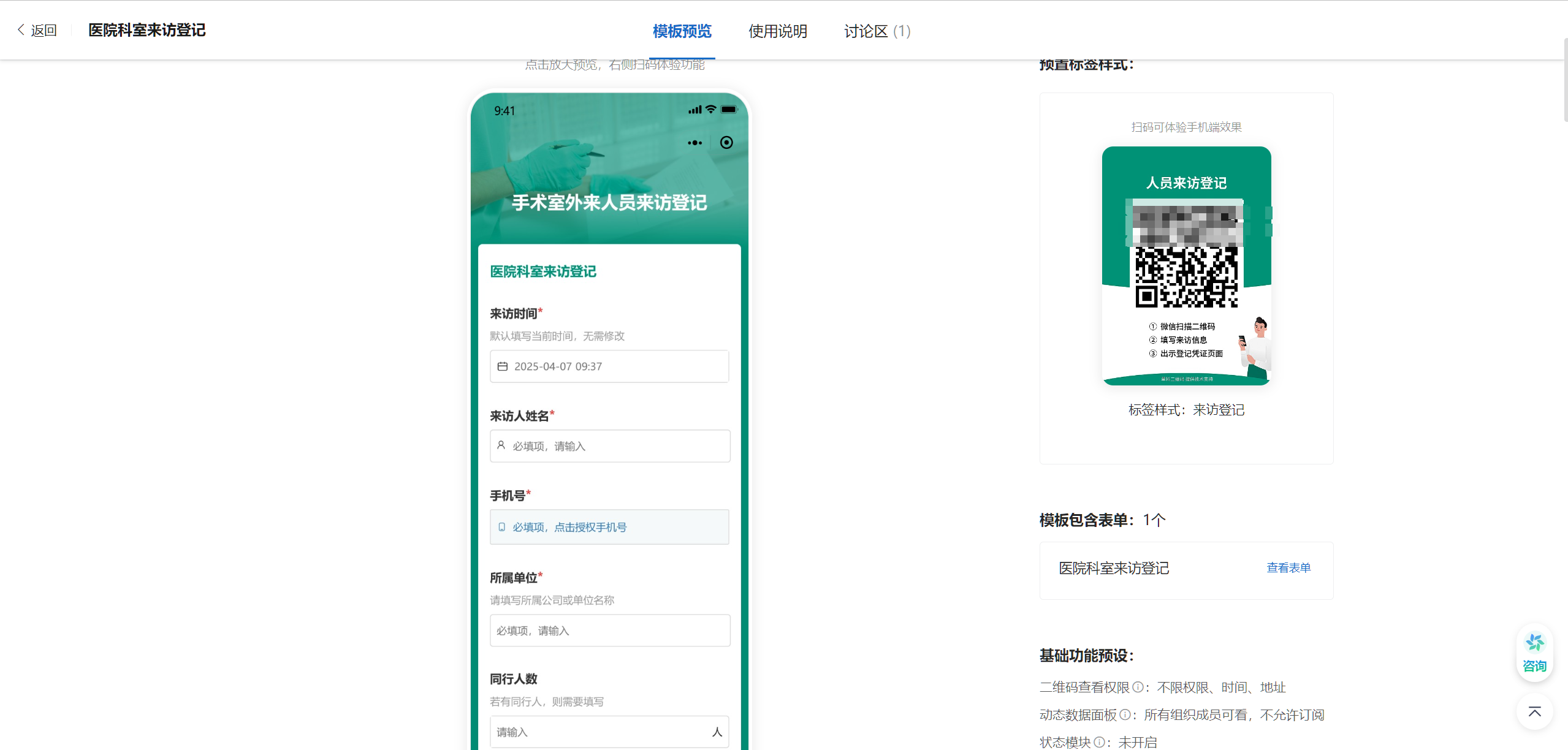
For tools, you can choose CaoLiao QR Code, which is free to use and directly provides a "Hospital Department Visitor Registration" QR code template. Simply modify the template to complete the QR code creation.
Based on your hospital's requirements, modify the form content in the template. Fields generally include: visitor name, phone number, visitation subject or department, visit time, purpose of visit, etc. For high-control areas, you can add fields such as the visitor's ID number and on-site photos.
2. Generate and Place the QR Code
After modifying the form, click "Generate QR Code" to complete the creation. Print the QR code and place it in corresponding locations, such as department entrances or nursing stations. Visitors only need to take out their phones, scan the code with WeChat, and enter the filling page to complete the registration. The QR code can also be embedded in the hospital's WeChat Public Account menu. After following the hospital's public account, visitors can make advance reservation registrations.

3. Backend Data Management
Hospital staff can use the CaoLiao QR Code backend to view visitor information in real time, monitor who has visited and what they filled out, filter data by time, department, etc., and export data to Excel. They can also control data viewing permissions, such as allowing only personnel from the specific department to view corresponding records.
3. What Are the Advantages of This Solution?
Research shows that digital visitor registration significantly improves hospital management. According to a 2024 industry survey, hospitals implementing digital registration saw a 58% year-on-year decrease in medical disputes and a 23 percentage point increase in patient satisfaction. Compared to traditional methods, QR code + form-based digital registration offers the following advantages:
- Low Cost and Quick Implementation: No need to purchase specialized equipment or install specific apps. Simply print and place the QR code, and with an internet-connected phone, deployment costs are almost zero, and it can be launched in 30 minutes.
- Secure and Compliant: Supports data encryption, permission management, and operation log recording, fully meeting hospital requirements for information security and compliance.
- Clear and Traceable Data: Each record has a timestamp and submitter information, automatically stored, making subsequent searches or accountability much easier.
- Flexible and Expandable Features: Beyond basic visitor information registration, you can add "Visitation Guidelines" to the QR code, or even have visitors sign electronic commitment forms, combined with handwritten signatures and blockchain notarization, serving as electronic evidence.
The benefit of this solution is that it requires no additional hardware investment or integration with complex hospital information systems. QR codes can be created on the CaoLiao QR Code platform, scanning only requires WeChat, and both QR code generation and usage are free, with no restrictions on the number of registrations or visits. It is particularly suitable for rapid deployment and small-scale pilot programs.
4. Which Hospitals or Departments Are Suitable for Piloting?
Key departments involving critically ill patient care or patients with compromised immune systems that require restricted personnel flow and visitation frequency, such as ICUs, pediatrics, and surgical areas. Administrative areas seeking to improve registration efficiency and reduce manual burdens, or hospital information departments and hazardous material storage areas requiring personnel and equipment safety and data traceability, can all try using QR codes for registration management.
5. More Applications
1. Visitor Appointment Verification
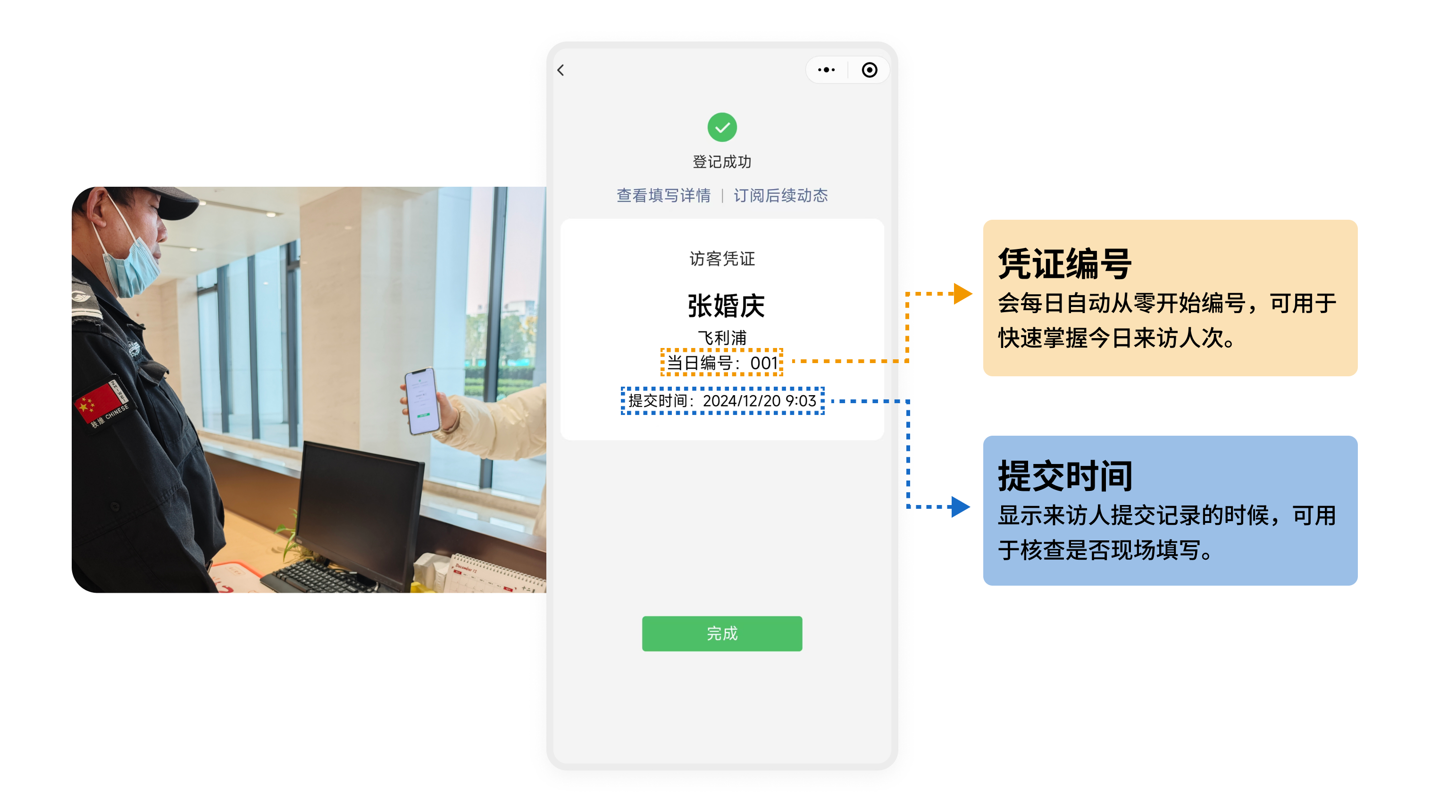
To better control visitations, restrictions can be implemented through appointment-based registration, with verification enabled. This achieves process control: "Visitor makes advance appointment - On-site verification - Entry to the ward."
2. Health Education
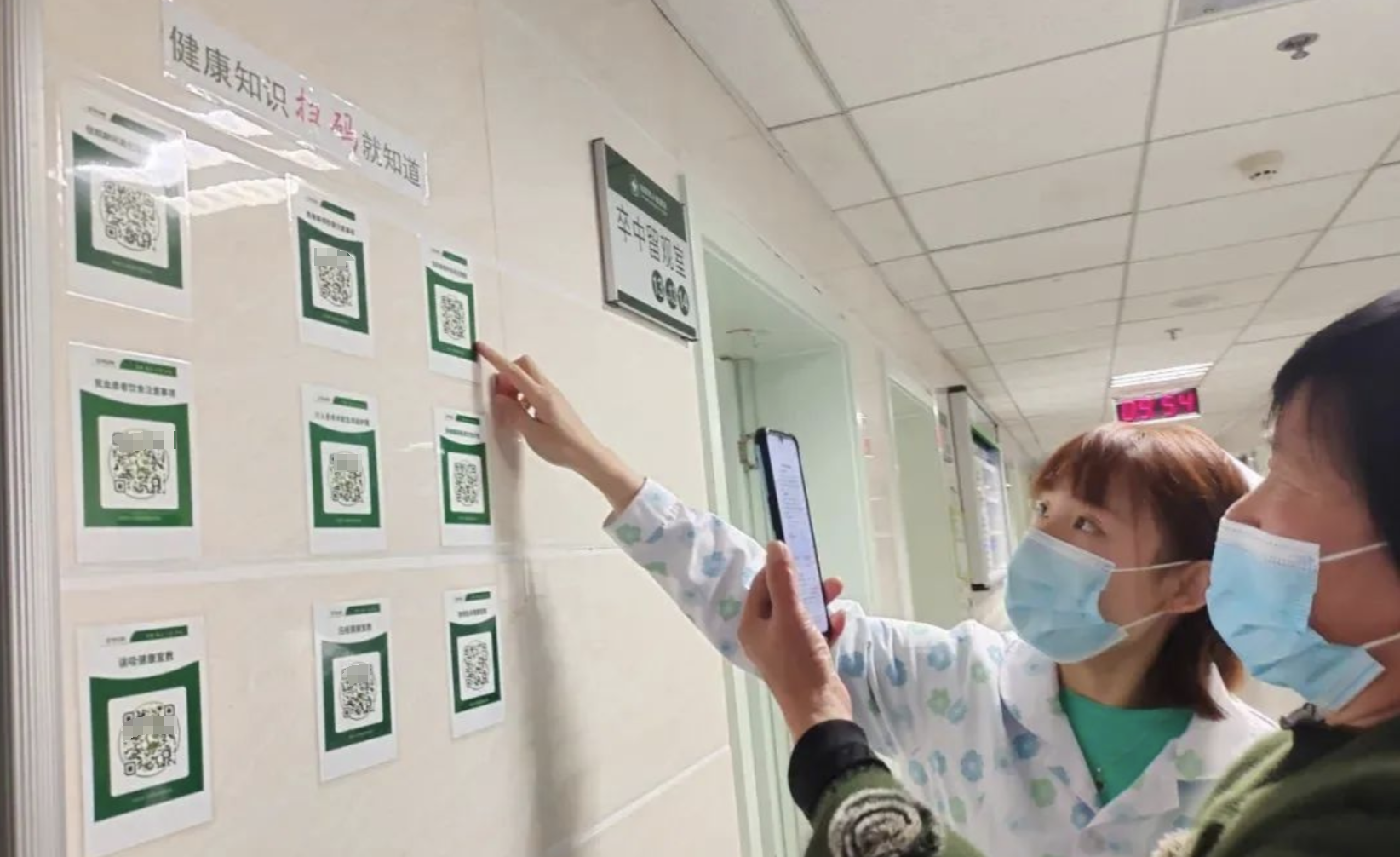
To help patients and their families in departments understand the departmental environment and related disease knowledge, departmental information and health education materials can be made into QR codes. Patients and families only need to scan the QR code to access the health education materials they need.
6. Summary
Ultimately, hospital visitor registration should not just be a procedural requirement but an "invisible line of defense" ensuring patient safety and improving service efficiency. Digital methods like QR codes + forms make this line of defense smarter, more efficient, and easier to implement.