Too Much Information in QR Codes Making Lookup Slow? AI Interpretation Provides QR Codes with a Dedicated AI Assistant
Original: https://cli.im/article/detail/2439
In scenarios such as product promotion, solution presentation, and information dissemination, companies commonly face a practical challenge: large content volume, complex information hierarchies, and diverse user needs, while information delivery still relies on static documents, repeated verbal explanations, or the method of "scanning the code and clicking through layers." These methods are increasingly proving inefficient in today's mobile-first information environment.
Especially for product introduction content, traditional digital tools struggle to meet users' expectations for "quickly accessing key information." Take product catalogs as an example: even if the content is converted into online graphics and text and a QR code is generated, users still need to browse lengthy pages and navigate through multiple links to find the information they need after scanning. This lookup path is not only time-consuming but also highly likely to cause user drop-off.
This article will combine the recently launched AI interpretation optimization capability by CaoLiao QR Code to explore a more feasible information delivery path for scenarios like product introductions and material releases. Based on actual usage feedback, it will analyze the specific role of AI-assisted interpretation in enhancing content accessibility and optimizing user experience.
Three Common Formats of QR Code Content for Product Introductions
In practice, the QR code product introduction methods adopted by different companies can be broadly categorized into three types:
Single Code
The most basic approach is to create a single page of graphics and text containing the information for one product or solution, generate a QR code for it, and post it on display stands, packaging, or the product itself. This method suits scenarios with clear content structure and small information volume. However, once the content increases, the page becomes lengthy, requiring users to scroll frequently, which can easily lead to fatigue.
Directory Summary Code
For situations requiring the display of multiple product models or multiple solutions, many companies create separate QR code pages for each piece of content and then consolidate them into a "summary page" with a directory. Users scan the code to enter a "navigation homepage" and then click to jump as needed. The structure built by directory components and jump links enhances the clarity of content organization but introduces a new problem: "long click paths and low lookup efficiency."
Document Code
Some companies choose to compile product information into documents, upload them, and generate file codes. This method is suitable for information-heavy, well-structured material packs. However, the mobile viewing experience still suffers from inconvenient positioning and browsing difficulties. Among these three methods, QR codes have become a common tool for corporate digital display. But regardless of the structure, common issues persist during actual user lookup:
- Users "cannot find the entry point" or "cannot find specific content"
- Require manual explanation for assistance
- Lack of feedback on user lookup behavior, preventing operators from understanding points of interest
The root of these problems lies not in the QR code itself but in whether the information structure and interaction mechanism align with user lookup habits. This is precisely where AI interpretation can intervene.
AI Interpretation Mechanism: Shifting from "Displaying Content" to "Providing Answers"
The AI interpretation feature of CaoLiao QR Code is essentially a structured interaction mechanism based on content understanding and dialogue generation. Its fundamental logic is not about rewriting an FAQ document but allowing users to "converse" directly with the content by asking questions after scanning the code. The AI automatically generates responses based on the page or file content.
Users no longer need to click through directory layers to find product parameters, model comparisons, or solution descriptions. Instead, they can ask questions directly, such as:
- "What is the operating temperature range of this product?"
- "Is there a smaller model suitable for home use?"
- "Does your company support customization services?"
The AI extracts answers from the original page or summarized content and returns concise, intuitive text information. This "Q&A acquisition" mode is closer to "instant search" for users, significantly reducing the cost of content lookup.
This Optimization: Enables Intelligent Interpretation of Directory-based Content
The recently upgraded AI interpretation capability in CaoLiao QR Code specifically addresses a previous issue: AI could only analyze the main page content and could not interpret the content of directory summary codes.
In directory structures like product catalogs or solution collections, the main page is merely a navigation entry point; the truly useful information resides in the specific subpages accessed via jump links. If the AI couldn't access the jump content when users asked questions, it couldn't provide accurate answers.
After this update, AI interpretation now supports analyzing the content of multiple pages linked within a summary code.
For example, a directory code containing ten product pages can now be read entirely by the AI. When a user scans the code and asks about a specific model or function, the AI will search across pages for the answer, no longer limited to the information on the navigation page.
This expansion of capability enables AI interpretation, for the first time, to cover "complex structured content," providing practical support for usage scenarios involving collection-type QR codes. 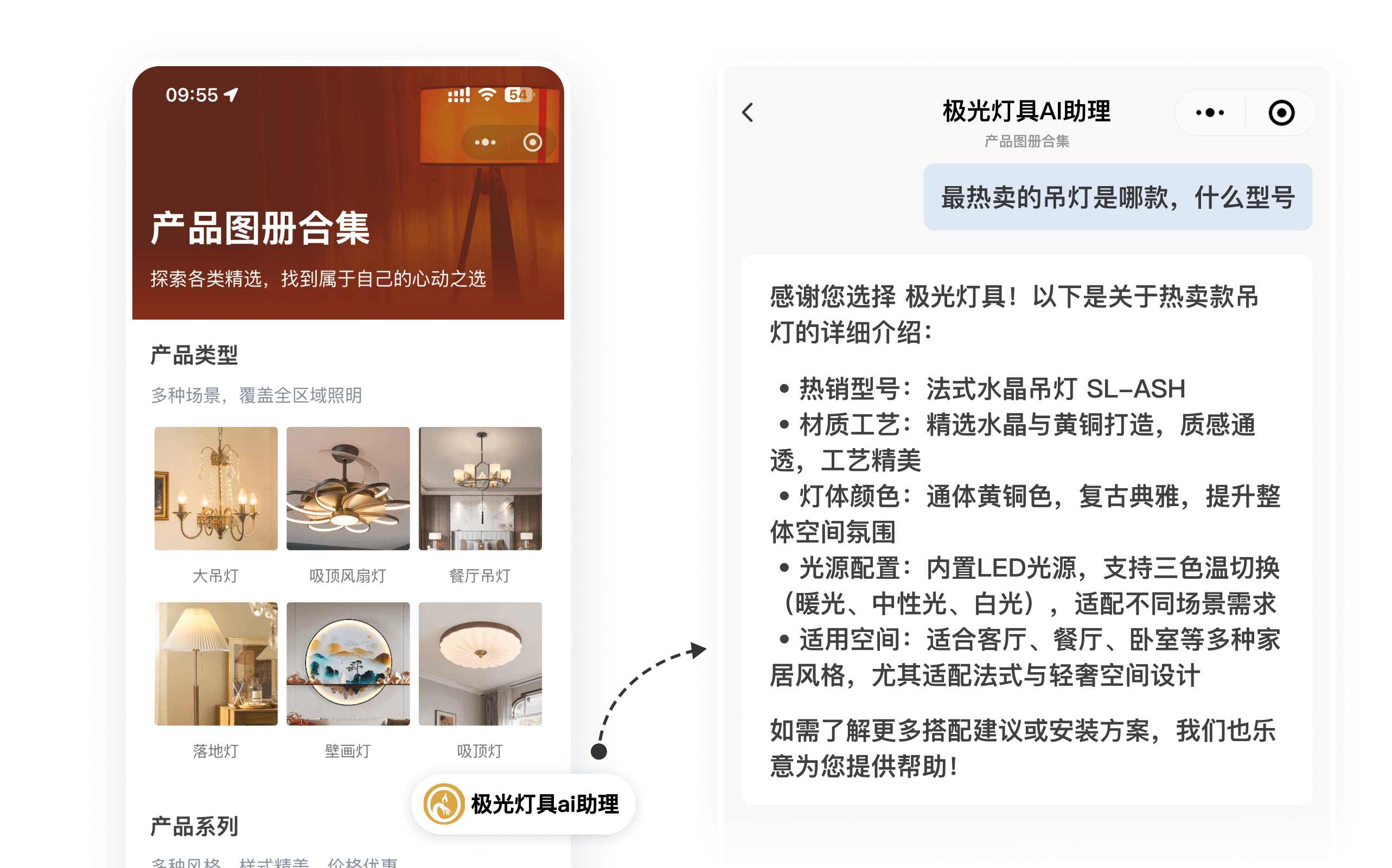
Data Feedback Mechanism: Understanding What Users Really Care About
AI interpretation is not just a "user-side feature"; it also possesses powerful "feedback data collection capabilities."
This update introduces a new AI interpretation data panel in the workbench, including the following dimensions:
- Number of users using AI interpretation per code
- Number of dialogues and Q&A sessions
- Details of questions raised by users
- Content of system responses
These data metrics not only help content maintainers understand whether users are utilizing AI interpretation but, more importantly, reveal a long-overlooked blind spot in content maintenance—what are users truly concerned about?
Previously, it was difficult for companies to know which pages users browsed or whether they found the needed information. With this question data, they can precisely identify:
- Which pages have unclear information expression
- Which common questions are not covered
- Which content is truly important to users
This "content optimization feedback mechanism based on user behavior" provides valuable decision-making references for content operators. Especially in companies with complex product lines and diverse solution types, the common problem of "information overload + unclear focus" can potentially be improved.
Observed Practical Application Effects and Suitable Scenarios
Based on feedback from some companies that have adopted CaoLiao's AI interpretation directory optimization feature, its applicability is mainly reflected in the following types of content scenarios:
- Product Introduction Summary Codes: Suitable for exhibition display pages, product technical parameter packs; users can quickly locate specific product questions after scanning.
- Solution Collection Codes: For example, industry solution sets, application case packs displayed via directory summaries; AI can help users identify suitable solutions.
- Material Sharing Codes: Such as service guides, training materials, operation manuals, etc.; users can quickly locate needs by asking questions.
These usage scenarios indicate that AI interpretation is not limited to the role of "content display" but is a core component of the "information delivery mechanism" in product introductions. 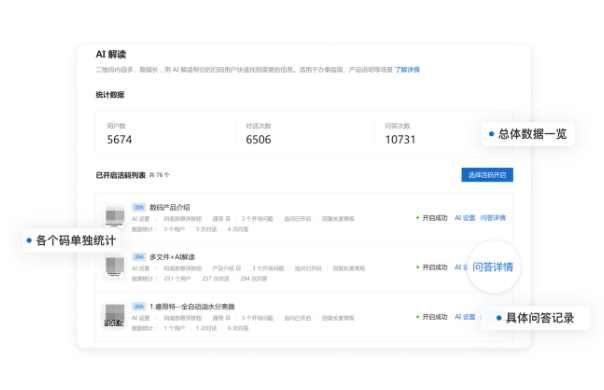
Summary: The Key to Tool Evolution Lies Not in Display, But in Understanding
QR codes are essentially an "entry-point tool." Whether they can help users smoothly find the information they want depends on the content organization method and interaction mechanism behind the QR code.
The AI interpretation optimization by CaoLiao QR Code offers a way to transition from "displaying documents" to "providing answers," especially in scenarios with complex directory structures and multiple content layers. This Q&A-style interaction can significantly reduce the user's lookup burden.
From a longer-term perspective, the value of such tools is no longer just "helping companies display products" but "making it easier for users to understand products." This is the truly worthwhile goal in information delivery.
For companies aiming to achieve more efficient information delivery during exhibitions, sales, and promotions, how to organize content structure, choose suitable tools, and introduce intelligent interaction mechanisms is becoming a fundamental skill in digital content operations. The gradual maturation of AI interpretation capabilities is a key piece in this trend.