Comparison of 5 User-Friendly and Cost-Effective Fixed Asset Management Systems
Original: https://cli.im/article/detail/2403
In the past, many companies managed fixed assets using paper records or Excel spreadsheets. Procurement information, usage records, and maintenance logs were scattered across different departments, leading to data inconsistencies and chaotic management. As asset scales expanded, the inefficiency and lack of transparency in manual management became increasingly problematic:
- Not knowing where assets are;
- Relying on rough estimates for inventory checks, resulting in discrepancies every year;
- Duplicate purchases and idle assets going unused;
- Chaotic disposal processes, leading to inflated asset values on the books.
With the widespread adoption of QR code scanning technology and the maturity of the SaaS model, fixed asset management has become more lightweight and easier to deploy. Companies no longer need to develop systems from scratch; they can simply choose a suitable tool to digitize the entire process from入库 to inventory checks, repairs, and disposal.
1. What to Consider Before Choosing a System
Before selecting a system, companies should consider these three questions:
- Asset Quantity and Management Complexity: Do you have hundreds or thousands of assets? Are they distributed across multiple locations? This determines whether you need a lightweight tool or a comprehensive platform with permissions and process controls.
- Existing QR Code Labeling Infrastructure: If your company already uses QR code labels, choosing a system compatible with existing QR codes can significantly reduce transition costs.
- Future Scalability Considerations: Will asset management need to integrate with financial systems? Do you want employees to complete tasks like reporting repairs or conducting inventory checks via WeChat, WeCom, or DingTalk? These factors influence the choice of platform.
2. Comparison of Five Mainstream SaaS Asset Management Systems
1. Yidian Yidong
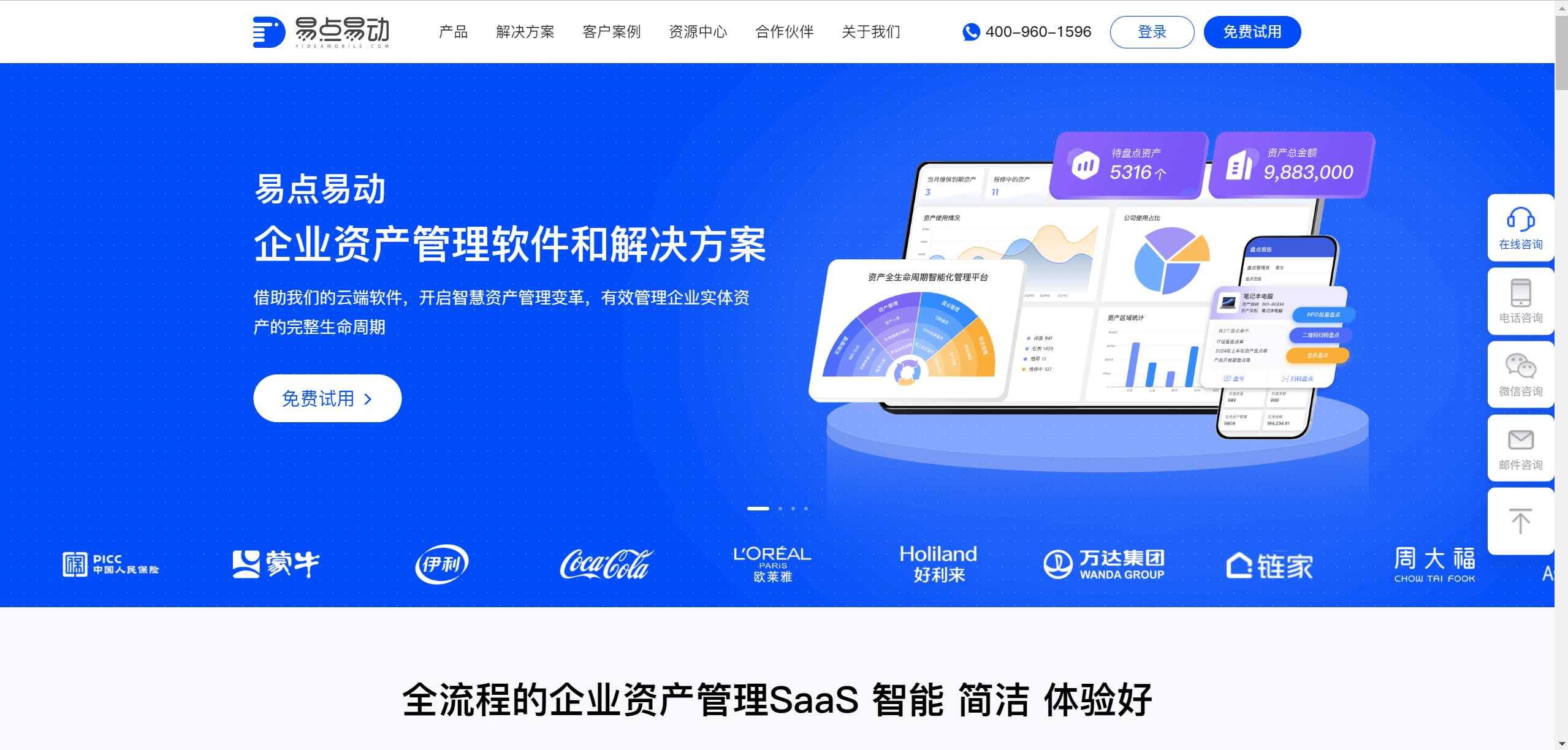
This system covers multiple modules including fixed assets, inventory consumables, procurement processes, and financial reconciliation, making it a relatively complete enterprise asset operation platform. It supports APP/RFID scanning and mobile operation. However, advanced features like RFID batch recognition require additional hardware investment.
Disadvantages: Limited functionality in the financial module; the mobile APP interface is not intuitive for complex tasks (e.g., repair work order assignment), requiring training for new employees. Multi-system integration requires IT support, which may pose implementation challenges for companies lacking dedicated operations teams.
Pricing: The basic version starts at approximately 9,999 RMB per year, with costs increasing based on the number of modules and users. Suitable for large enterprises with certain IT capabilities and sufficient budgets.
2. Gongbei Assets
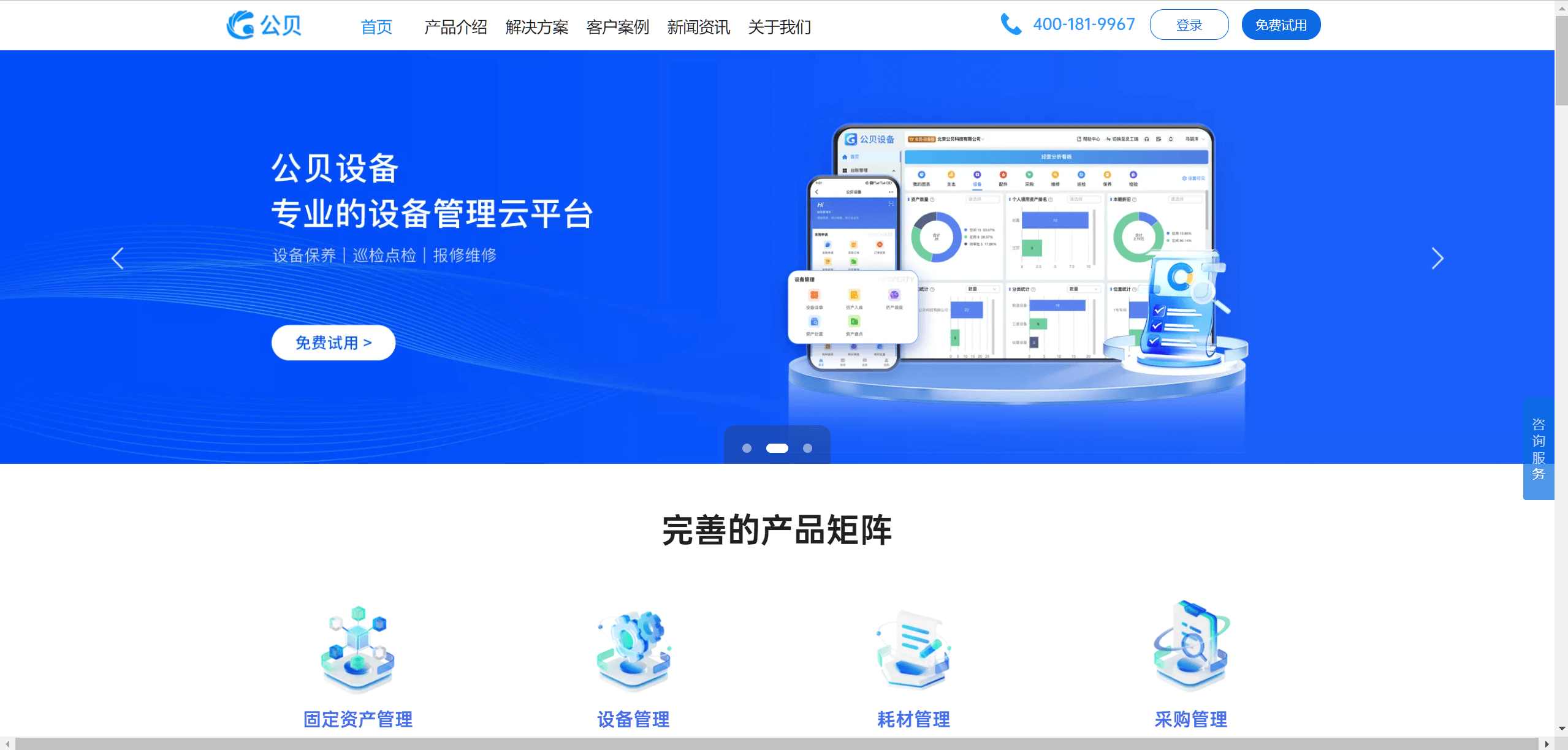
Gongbei Assets emphasizes detailed permissions and cross-departmental collaboration, supporting multi-organizational structure settings. It is suitable for large enterprises, government agencies, educational institutions, etc. Features like scan-based inventory checks, asset history, and multi-user collaboration are comprehensive. Ideal for organizations with large asset volumes and strict management systems.
Pricing: Relatively high, priced based on asset quantity, starting at around 4,000 RMB. Suitable for units with ample budgets.
3. CaoLiao QR Code
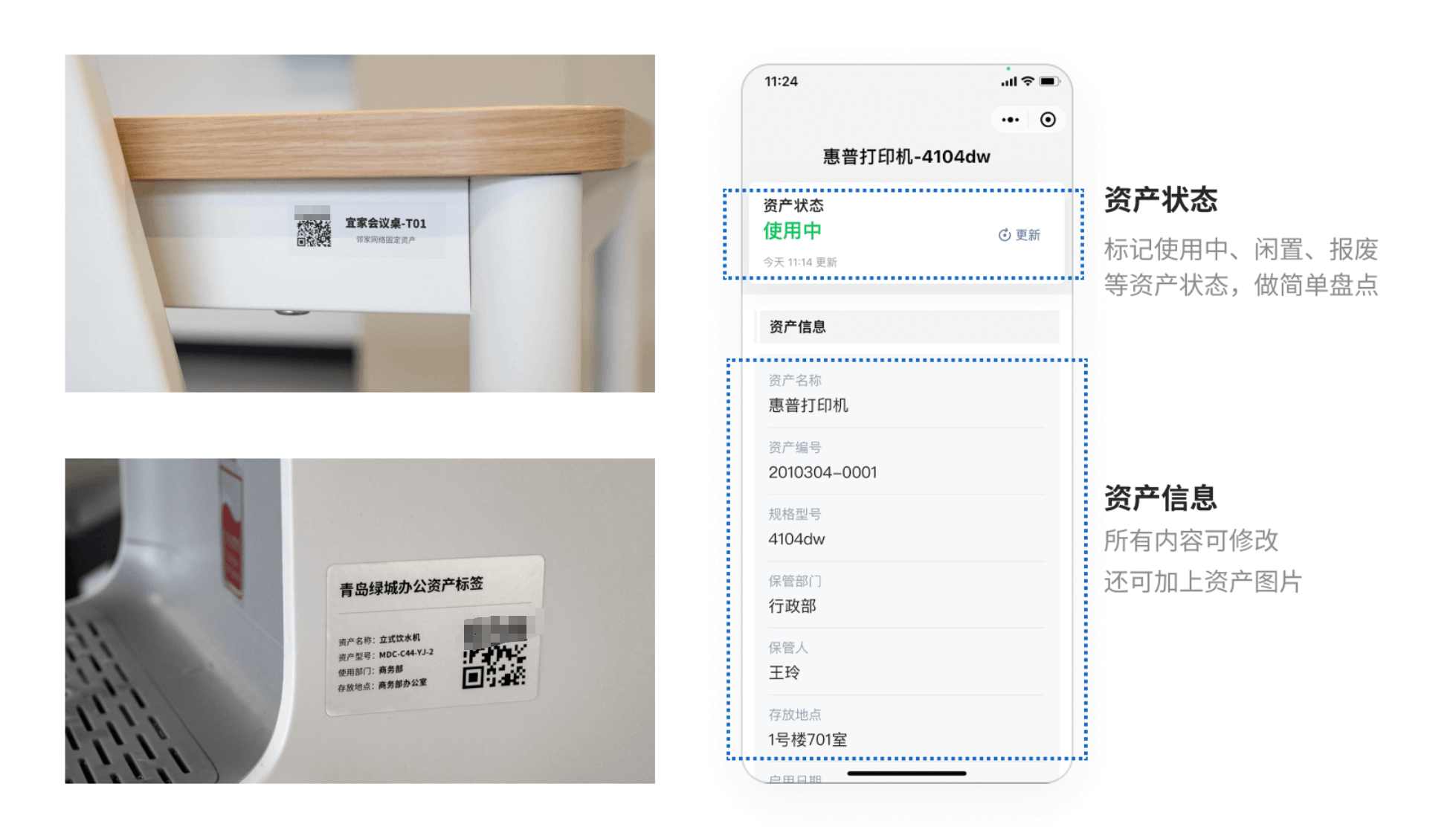
If a company only needs simple asset identification, scanning QR codes to view asset information, recording issuance, and basic inventory functions, CaoLiao QR Code is an excellent choice. It supports batch generation of fixed asset QR code labels using a one-item-one-code approach. These can be attached to corresponding fixed assets, allowing users to view, update, register issuance information, and report repairs via WeChat scan. The backend supports exporting asset ledgers.
Pricing: Free to generate QR codes, with no limits on the number of assets, QR codes generated, number of scans, or modification/fill-in times. It can be deployed quickly without technical support, making it suitable for small and medium-sized enterprises with fewer assets and flexible management methods to quickly start asset management and asset label management.
4. Yi PanDian
Yi PanDian can basically meet the needs of asset-light startups for basic fixed asset management. Deeply integrated with DingTalk, it includes four modules: asset management, consumables management, system management, and approval center. It supports scan-based inventory checks, employee self-service operations, and automatic report generation. It is easy to use and quick to learn. There is a limit on the number of assets; the annual fee for up to 100 assets is 699 RMB.
Applicable Scenarios: Preferred for DingTalk users, suitable for store-based businesses or logistics companies where assets are dispersed and require frequent inventory checks.

5. Kingdee
For medium and large enterprises already using Kingdee's financial system, there is no need to purchase a dedicated fixed asset management system. The fixed asset management module, as a sub-module of Kingdee ERP, can be directly purchased as a supplement. Its fixed asset management module can meet the company's needs for fixed asset depreciation and simple management functions, but its functional depth is not as comprehensive as standalone systems. The price is relatively high, starting from 19,800 RMB.

3. How Different Types of Enterprises Can Make Suitable Choices
- Small and Micro Enterprises / Startup Teams: Prioritize CaoLiao QR Code. It's free to start, quick to deploy, and low cost.
- Manufacturing / Engineering Project-Based Enterprises: Focus on repair, transfer, and spare parts management. Yidian Yidong is recommended. For enterprises already using DingTalk, Yi PanDian is recommended.
- Chain Stores / Multi-Branch Enterprises: Value collaboration and permission management. Gongbei Assets can be considered.
- Large Enterprises with Ample Budgets: Most already use software like Kingdee or Yonyou. They can directly add the corresponding modules without purchasing a separate system.
4. Choose a System That "Fits"
When selecting an asset management system, companies often fall into the trap of thinking "the more features, the better." However, the opposite is true. A truly effective system should precisely meet your current processes and budget while allowing for smooth future upgrades.
Starting with one-item-one-code QR code labels to complete the first step of asset digitization at minimal cost is a common consensus among many small and medium-sized enterprises. Building on this foundation to gradually optimize inventory processes, repair registrations, and financial integration is a more stable and lower-risk path to cloud adoption.
If you are preparing to select an asset management system, start by clarifying your needs. Begin small and iterate boldly. Choosing the right system ensures that fixed assets don't become "dead entries" on the books but instead help you unlock efficiency and manage value.