2025 Equipment Inspection System Evaluation: From Pen and Paper to AI, An In-Depth Comparison of Six Solutions
Original: https://cli.im/article/detail/2430
In equipment-intensive environments like factories, campuses, or properties, a 10-minute production line stoppage or a 30-minute elevator outage can lead to production losses or customer complaints. The traditional inspection method relying on pen-and-paper records and verbal reports can no longer meet the dual requirements for efficiency and compliance.
Catering to the varying management needs and budgetary capacities of different enterprises, equipment inspection systems on the market can be categorized into these six types based on their technical principles, functional characteristics, and application scenarios: Paper-based Records, QR Code Systems, RFID Tags, IoT Monitoring, AI Visual Recognition, and Mobile Work Order Collaboration. This article provides an in-depth evaluation of these six categories focusing on "Ease of Use," "Cost Investment," "Suitable Scenarios," and "Representative Products" to help you find the right solution.
1. Paper-Based Inspection: Low Cost, Low Efficiency
Traditional paper-based inspection relies on manual entry of equipment status onto forms, which are then compiled and entered into a computer by data clerks. This method requires almost zero investment—sometimes just printing an Excel sheet is enough to start inspections—but it suffers from low efficiency, high error rates, and poor data traceability.
Suitable Scenarios: Few pieces of equipment, low management pressure, such as community facilities, temporary project sites.
Advantages:
- Lowest cost
- No training required
Disadvantages:
- High rate of missed inspections
- Difficult data traceability
- Cannot support predictive maintenance
- Suitable for "occasional use," difficult to scale
Nowadays, paper-based inspection is more suitable for transitional periods or as a backup plan before digitalization.
2. QR Code Inspection: The Mainstream Choice for Lightweight Systems
QR code inspection systems generate a unique QR code for each piece of equipment. Maintenance personnel scan the code to fill out inspection forms, upload photos, locations, and other information. Data is uploaded to the cloud in real-time and automatically organized and archived in the backend. This is a common solution for small and medium-sized enterprises promoting inspection digitalization.
Representative Products: CaoLiao QR Code, DingTalk YiDa, JianDaoYun, etc. Suitable Scenarios: Manufacturing production lines, property facilities, school laboratories, etc.—small and medium-sized teams with "human-machine混合" scenarios and limited budgets.
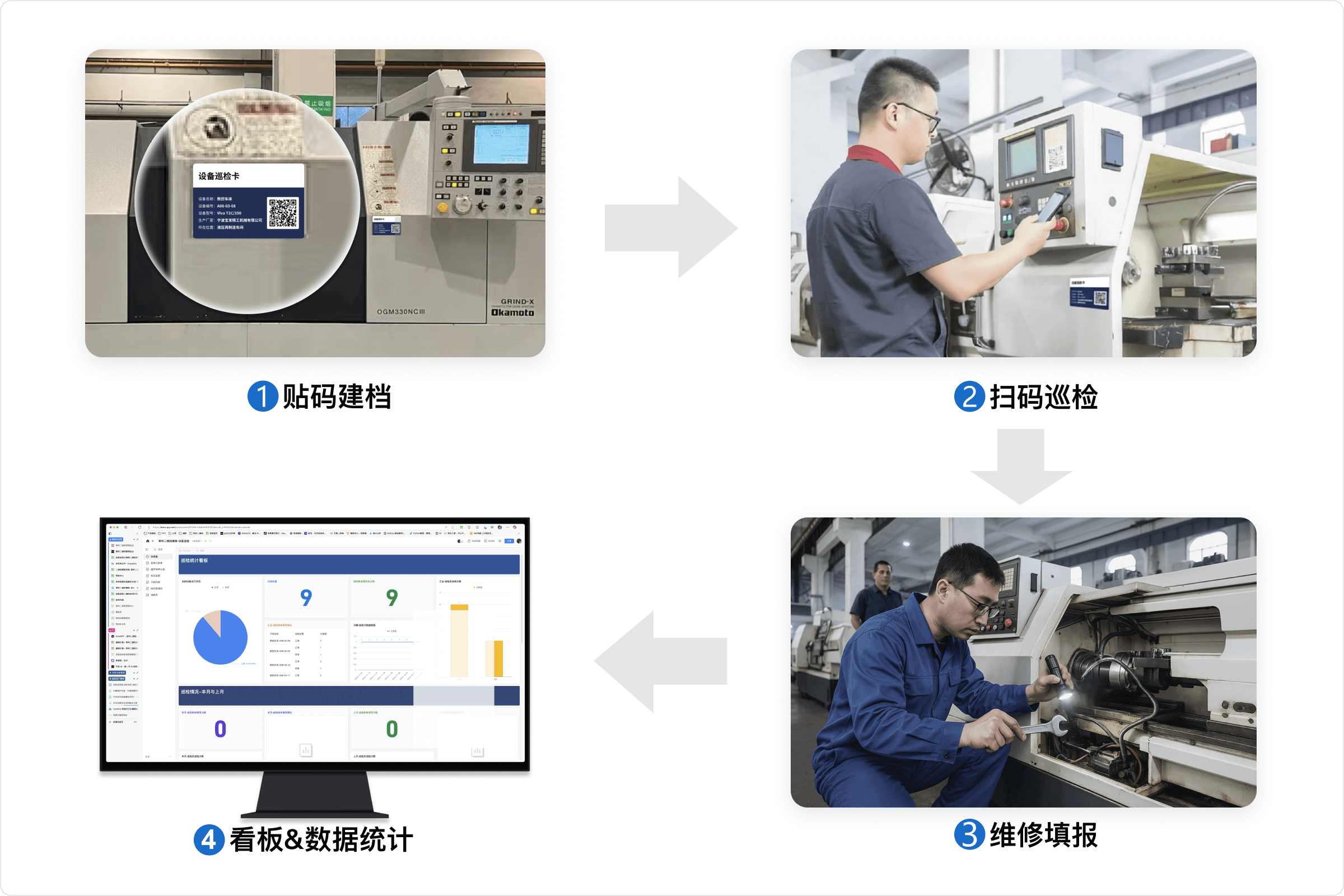
1. CaoLiao QR Code: Fast Deployment, Simple Operation
Generate unique QR codes for equipment using CaoLiao QR Code. Scanning the code allows viewing equipment files, filling out inspection records, or reporting faults. Supports GPS location, watermarked photos, and other anti-proxy signing features.
- Cost: Free basic version; Flagship version 2680 RMB/year
- Advantages:
- Set up the system in 30 minutes
- Scan with WeChat, no training needed
- Low investment cost
- Disadvantages:
- Does not support on-premises deployment
- Cannot operate offline Summary: Highly cost-effective for lightweight scenarios like equipment spot checks and maintenance, especially suitable for small and medium-sized enterprises with weak IT capabilities.
2. DingTalk YiDa: Suitable for Enterprises within the DingTalk Ecosystem
As a no-code tool within DingTalk, YiDa integrates naturally with the enterprise organizational structure.
- Advantages:
- Tasks automatically assigned to responsible persons
- Supports approval/reports/custom workflows
- Disadvantages:
- High barrier for non-DingTalk users
- Advanced features require payment

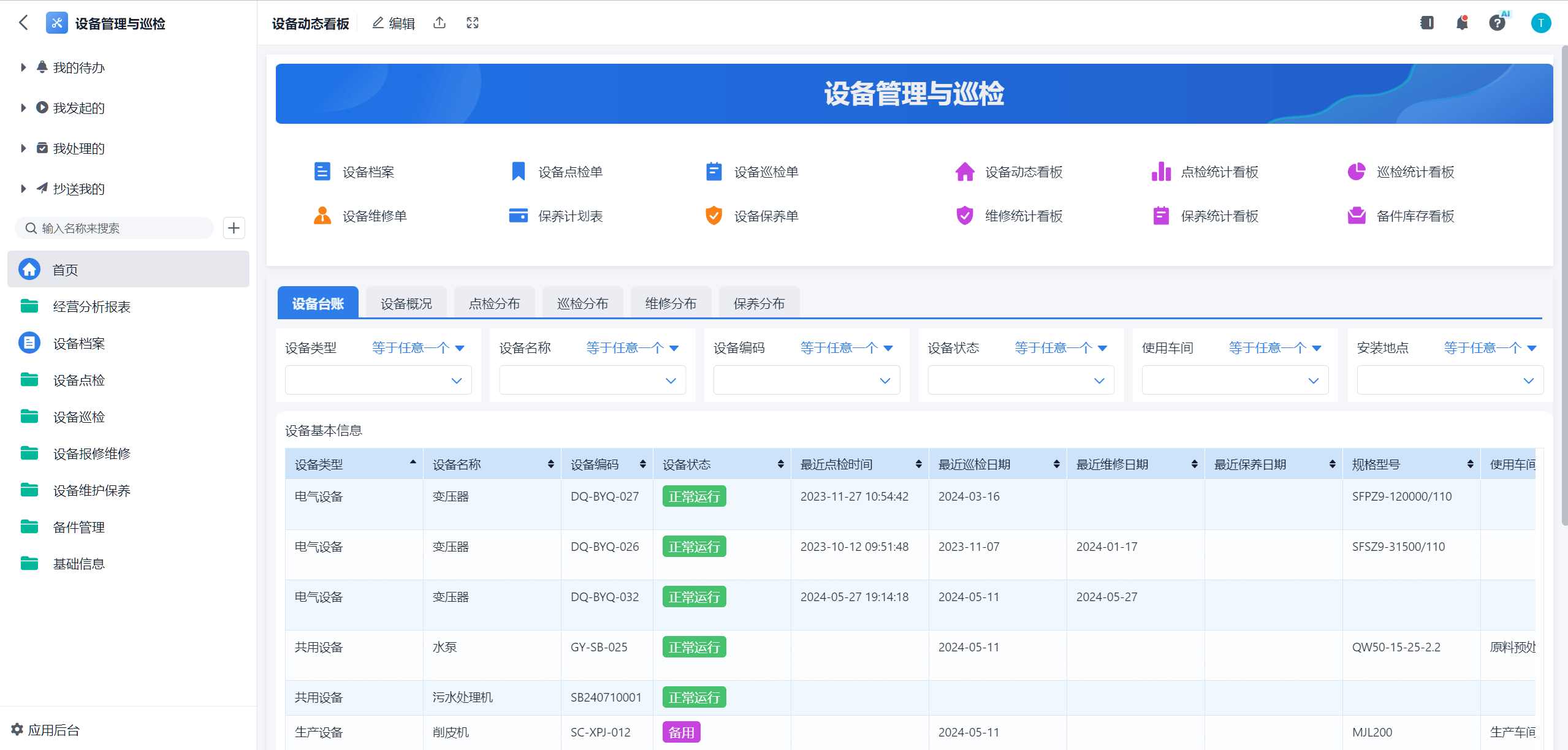
3. JianDaoYun: Comprehensive Features but Steeper Learning Curve
Suitable for medium and large enterprises managing the entire equipment lifecycle.
- Cost: Enterprise version starts at 5040 RMB/year
- Advantages:
- Supports the entire process: equipment files/inspection/maintenance/alerts
- Binds equipment codes with inspection points
- Disadvantages:
- Complex operation requires IT foundation
- Requires a separate app for operation
3. RFID Inspection: Better for Harsh Environments, but Higher Investment
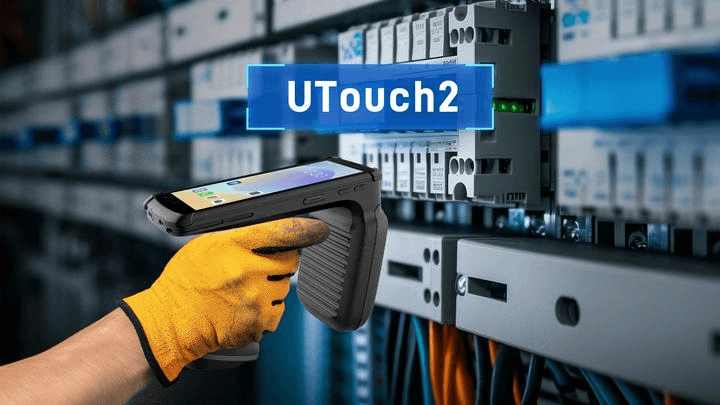
RFID inspection uses radio frequency tags to automatically identify equipment without requiring line-of-sight contact. Representative Products: Honeywell Mobile RFID Solutions, E-Bao Wang EAM RFID Module. Suitable Scenarios: Extreme outdoor environments like oil fields, power transmission lines, bridge cables. Ease of Use/Cost: Requires thousand-RMB level readers + industrial-grade RFID tags; high initial investment.
Advantages:
- High identification efficiency
- Can work offline
Disadvantages:
- High hardware depreciation rate
- Complex system integration
- High后期 maintenance costs
4. IoT Inspection: Real-Time Monitoring & Predictive Maintenance
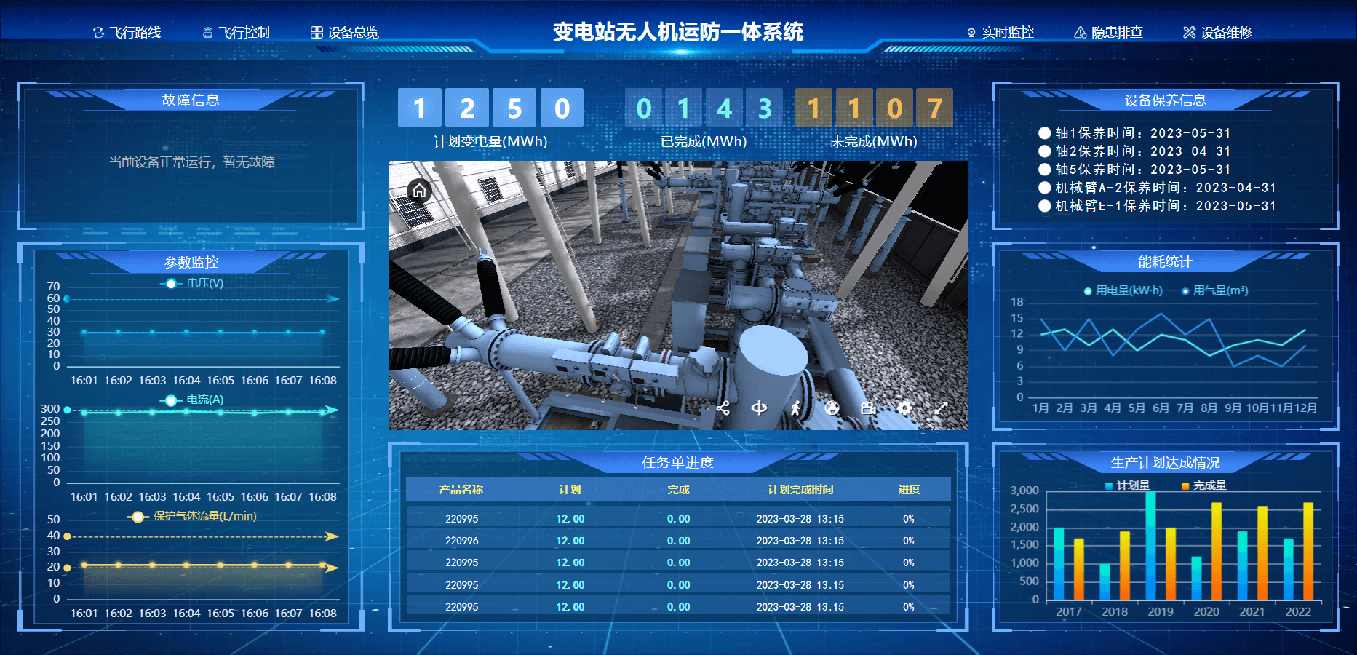
Uses sensors to collect equipment data in real-time, with algorithms automatically judging anomalies. Representative Products: YiDian YiDong IoT Equipment Management, IBM Maximo Application Suite. Suitable Scenarios: Large factories, energy enterprises, and other 24/7 operating environments. Ease of Use and Cost:
- YiDian YiDong: Medium to high budget
- IBM Maximo: Exclusive for large groups, deployment cycle 12+ months
Advantages:
- Real-time monitoring and alerts
- Supports predictive maintenance
Disadvantages:
- Triple investment in hardware + network + cloud platform
- High demand on enterprise IT infrastructure

5. AI Visual Inspection: Using Image Recognition for Anomalies
Uses industrial cameras + AI algorithms to automatically detect equipment abnormalities. Representative Products: ServiceNow AI Operations, Hikvision Industrial Visual Inspection All-in-One Machine. Ease of Use and Cost: Model training + high-power GPU; Proof of Concept (PoC) often costs hundreds of thousands RMB. Suitable Scenarios: High-risk workshops, data centers, dense electrical cabinets.
Advantages:
- Replaces humans in dangerous environments
- High recognition accuracy
Disadvantages:
- High ongoing cost for algorithm optimization
- Difficult system integration
6. Mobile Collaborative Inspection: Field Collaboration Centered on Work Orders
Manages the entire work order process through an App. Representative Products: Feishu Work Orders, YunWeiBao, DingTalk Inspection Suite. Ease of Use and Cost: Subscription per account (monthly fee from tens to hundreds of RMB per person). Suitable Scenarios: Decentralized tasks like security, municipal roads, communication base stations.
Advantages:
- Deep integration with IM/calendars
Disadvantages:
- Advanced features require secondary development
Equipment Inspection System Selection Guide
| Enterprise/Scenario | Preferred Technology | Key Considerations |
|---|---|---|
| Small businesses, limited budget | QR Code Inspection | Fast deployment, low annual fee, no IT needed |
| Medium factories, outdoor equipment | RFID + QR Code Hybrid | Interference resistance + cost balance |
| Large-scale continuous production | IoT / AI | Predictive maintenance, cost of downtime |
| High-risk or dispersed locations | RFID or Mobile Collaboration | Environmental tolerance or real-time dispatch |
Recommendation: Enterprises new to digitalization can start with a QR code system as a pilot tool. After successfully running the "people + equipment + tasks" closed loop, they can gradually upgrade.
No One-Size-Fits-All Solution for Equipment Inspection Digitalization
On the path to digital inspection, there is no "perfect solution" that fits all needs immediately. The key to selection is not about piling on features, but about truly solving the most urgent current problems:
- Rapid deployment + ease of use for staff → CaoLiao QR Code
- Complex assets + algorithmic foundation → AI/IoT Solutions
We hope this evaluation serves as a reference map for you to filter through equipment inspection tools. Choosing the right direction is the key to achieving twice the result with half the effort.