Digital Equipment Inspection Solution Selection Guide for Manufacturing: Finding the Right Fit for Businesses of Different Scales
Original: https://cli.im/article/detail/2450
The first challenge companies face when advancing inspection digitalization is—which solution to choose? This article will outline the current situations and pain points for businesses of different scales, compare the pros and cons of mainstream digital inspection solutions, and provide targeted selection advice.
1. Current Inspection Status Across Different Enterprises
Companies can generally be categorized into three groups regarding their progress in inspection digitalization:
1. No System: Reliance on Pen, Paper, and Manual Processes, Highlighting the Most Issues
Many enterprises, especially small and micro businesses, still rely on paper-based logs and manual signatures for inspection records. Once forms are lost, they become untraceable; the authenticity of records is hard to guarantee, easily becoming "pro forma documents"; in the event of equipment failure or safety incidents, companies struggle to provide evidence.
This approach is almost zero-cost but is increasingly inadequate for meeting regulatory requirements and the practical needs of production management.
2. Large-Scale Systems: Complex Functionality, High Usage Costs
Some large manufacturing enterprises and group companies have implemented comprehensive information systems like ERP, MES, or CMMS. These systems focus more on asset management and production scheduling, with equipment inspection embedded as a module. Such systems require significant investment and long implementation cycles. Often, frontline staff find them "too complicated to operate," leading to strong resistance; management receives limited reports, resulting in an awkward situation where the "system exists but isn't used."
In other words, large systems aren't ineffective, but they are difficult to implement and come with high usage costs.
3. Exploration Phase: Experimenting with E-forms or Low-Code Platforms
Many companies are beginning to try "lightweight exploration," using electronic form tools or introducing low-code platforms to replace paper with digital records. While applications can be built quickly, the barriers to development and maintenance remain relatively high, making it difficult for average administrators to sustain long-term.
These explorations indicate that companies are actively seeking solutions, but the biggest issues are: data isolation and inconvenient implementation. Tools cannot be integrated, ultimately failing to support regulatory traceability and daily management.
2. Where Are the Common Pain Points?
Regardless of their current state, companies share several common pain points in inspection management:
- Missing or Incomplete Logs: Unable to retrieve complete historical records when issues arise, leading to unclear responsibilities.
- Records Become Mere Formality: Forms are filled out just to pass inspections, making authenticity hard to ensure.
- Unclear Responsibilities: When equipment downtime or accidents occur, it's impossible to quickly trace back to specific steps and responsible persons.
- Information Silos: Inspection data doesn't integrate into the enterprise management loop, preventing its use for predictive maintenance or optimization.
This explains why many managers say: "We perform inspections daily, but when something goes wrong, we still can't account for it."
3. Comparison of Common Solutions
1. Large-Scale Information Systems
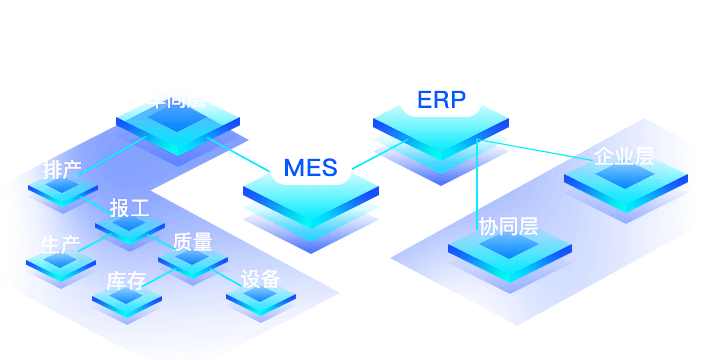
Representative products include SAP EAM, IBM Maximo, Infor EAM, and some domestic MES systems with built-in inspection modules.
- Suitable For: Large group factories with dedicated IT teams for implementation.
- Characteristics: Comprehensive functionality, typically covering the entire asset lifecycle management, maintenance, procurement, spare parts inventory, etc. Inspection is just one module and can integrate with production scheduling and maintenance work orders.
- Cost: Implementation cycle of 3–6 months, system costs ranging from hundreds of thousands to millions.
- Advantages
- Centralized data, supports predictive maintenance, IoT integration.
- Seamless integration with ERP, MES.
- Disadvantages
- High investment, unaffordable for small and medium-sized enterprises (SMEs).
- Complex processes, long implementation cycles, high risk.
2. Electronic Form Tools
Representative products include JinShuJu, WPS, Tencent Docs, etc.
- Suitable Scenarios: Temporary information collection, quickly replacing paper forms, e.g., for equipment information, single inspection records.
- Characteristics: Use online forms instead of paper records, support basic data collection, but lack professional features like equipment log management and bulk generation.
- Advantages
- Fast deployment (can go live within 1 day), low cost or even free.
- Administrators can build quickly.
- Disadvantages
- Lack professional equipment log and bulk generation features.
- Data is scattered, unable to form dynamic archival records, difficult to support traceability and analysis.
3. QR Code Inspection Tools

Representative product: CaoLiao QR Codes
- Suitable Scenarios: Small and medium manufacturing, property management, fire safety, grassroots units; edge scenarios in large enterprises.
- Characteristics: Bulk generation of one-code-per-device. QR codes serve as electronic IDs for equipment, recording static information (equipment parameters, photos, etc.) and dynamic information (inspection records, maintenance records, etc.). Forms filled via scanning automatically generate logs; includes GPS location, photo watermarks for fraud prevention.
- Cost: Free for small-scale use, annual fee for large-scale applications under 3000 RMB.
- Advantages
- Ready for use after printing and pasting QR codes; can be implemented in as little as 30 minutes.
- No additional hardware or staff training needed; employees can use via WeChat scan.
- Supports bulk generation; import equipment logs to generate thousands of QR codes for scalable application.
- Disadvantages
- Cannot fill forms without network signal.
- Does not support on-premises deployment.
- Case Data: CaoLiao QR Codes has served 16 million users, including Bull, Snow Beer, LiteAir, etc. For example, after Luoyang Molybdenum Group implemented QR codes for equipment inspection, equipment operation rate increased to 98.7%.
4. High-End Smart Solutions (AR/Robot Inspection)
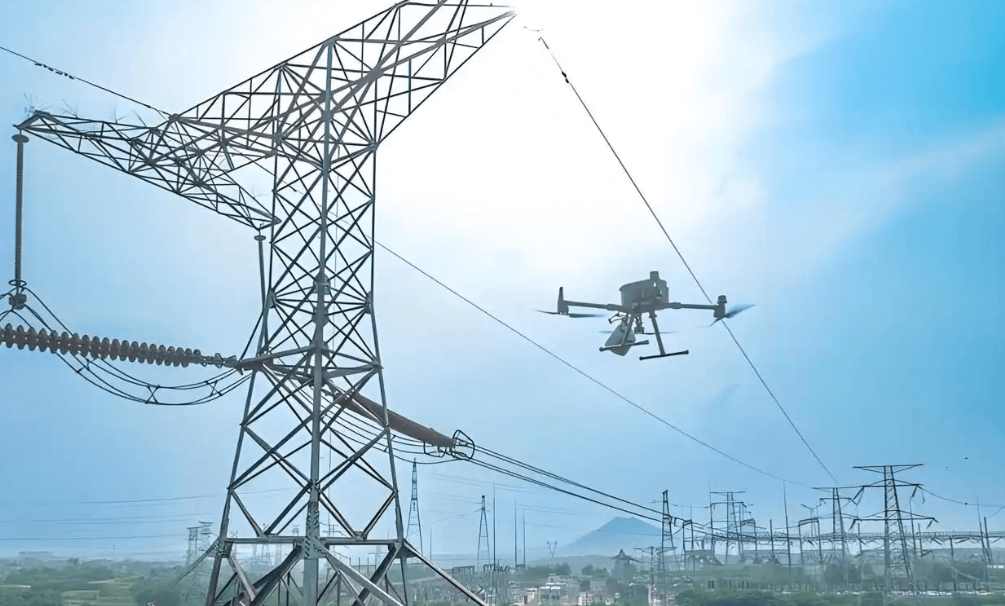
Representative products include DJI Enterprise Drones, Longying AR, etc.
- Suitable Scenarios: Suitable for high-risk environments (petrochemical, power, nuclear plants, etc.).
- Characteristics: Overlay real-time data, historical faults, repair guides via AR glasses; support remote expert collaboration and AI diagnostics. Equipped with multiple sensors, support 24/7 autonomous inspection and AI prediction.
- Limitations: Extremely high investment, suitable for specific high-risk, high-value scenarios.
4. Selection Recommendations
There's no "one-size-fits-all" for inspection digitalization. Decisions should be based on company size, budget, number of devices, and digital foundation.
| Company Size | Number of Devices | Current Digital Level | Recommended Tool | Estimated Cost |
|---|---|---|---|---|
| Micro/Small Business | < 100 | No system, relies on pen/paper | Start with CaoLiao QR Codes, quickly establish equipment logs and QR code inspection system | 0 ~ 2680 RMB/year |
| Medium Business | 100–1000 | Experimenting with Excel, forms, low-code, etc. | Transition to Professional QR Code Inspection (e.g., CaoLiao QR Codes), gradually integrate with internal systems | Thousands ~ Tens of thousands RMB/year |
| Large Enterprise | > 1000 | Has ERP/MES but inspection module implementation is difficult | Primarily large systems, supplemented with QR code tools to improve frontline execution and record authenticity | Hundreds of thousands ~ Millions (system), QR code part cost is low |
| High-Risk Industries/Special Scenarios | > 1000 or special equipment | Has some system foundation, focuses on safety | Introduce AR Inspection / Inspection Robots to ensure personnel safety and improve identification accuracy | Million RMB+ investment |
The core goal of inspection digitalization is not just paperlessness, but also ensuring record authenticity, responsibility traceability, and data usability.
- For small and medium enterprises, QR code inspection offers the best cost-performance entry point: low cost, fast deployment, quickly addressing compliance gaps.
- For large enterprises with existing digital capabilities, QR codes can serve as a lightweight supplement, enhancing frontline execution and complementing large systems.
- For special industries, high-end smart solutions, despite high investment, offer irreplaceable value in safety and efficiency.
In other words, inspection digitalization isn't an "either-or" choice. Companies can start with lightweight tools for quick implementation based on their development stage, then gradually upgrade to systematic and intelligent solutions. This progressive path better aligns with the realities of most businesses.