Inspections Don't Necessarily Require Large Systems: Lightweight Approaches Prove More Practical for These Enterprises
Original: https://cli.im/article/detail/2455
For most enterprises in equipment management, the key issue isn't "whether inspections are conducted," but rather managers' real concerns: Are inspections genuinely performed? Can records be accessed anytime? Can issues be quickly traced and responsibilities clarified when problems arise?
Many organizations have found that even with complete inspection records, issues persist—such as "signing off without being on-site," "illegible paper records," or even "inability to locate logs during critical moments." These specific problems are precisely the root causes of risks that become indefensible and unmanageable after incidents occur.
In recent years, many companies have opted for simpler, lighter QR code-based inspection methods to address these issues. By placing a code on each piece of equipment, scanning it allows form filling, photo uploads, and traceable records. This simple modification has led to tangible improvements across various enterprises.
We've compiled frontline practices from five companies. Instead of deploying massive information systems, they started with specific problems, using QR codes to establish an equipment inspection management process that is "verifiable, traceable, and actionable." We hope these cases provide you with some reference directions for digitalization.
Yuwu Coal Industry: Eliminating Fake and Missed Inspections
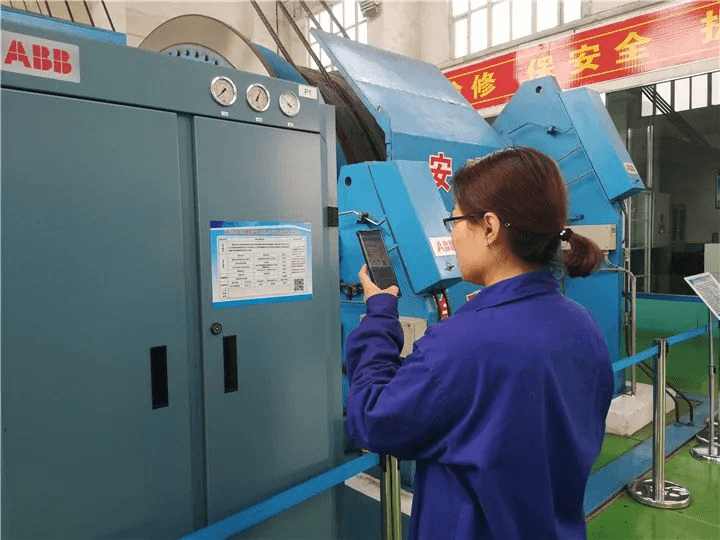
At Yuwu Coal Industry's auxiliary vertical shaft, the hoist is crucial for personnel and material transport. Previously, spot checks faced challenges like inconvenient supervision, inadequate inspections, and difficult data retrieval.
To improve the situation, the No. 2 Machinery Transport Team implemented an "intelligent QR code" inspection solution for auxiliary shaft equipment using CaoLiao QR codes. They uniformly adopted a "one machine, one code" system, setting up 9 key inspection points, each assigned to a designated responsible person. After scanning the code, inspectors must confirm each check item one by one. Basic equipment information, operating procedures, and maintenance documents are also displayed within the code, eliminating the need to consult paper manuals during inspections.
When equipment abnormalities or potential hazards are detected, personnel can provide feedback directly by scanning the code, supporting uploads in various formats like text, photos, audio recordings, and videos. The system automatically notifies maintenance personnel for handling, ensuring the hoist's safe and stable operation while significantly reducing paper waste from record books.
China Molybdenum Group: Real-time Monitoring of Equipment Operational Status
As China's largest molybdenum producer, equipment operating conditions directly impact output and safety. Previously, spot inspection processes relied mainly on paper records and manual reporting, which not only had time lags but also made authenticity verification difficult.
They adopted QR codes for online spot inspection management innovation: Each piece of equipment has a posted QR code. Scanning it opens an inspection form for real-time recording of parameters like motor temperature, voltage, and bearing temperature, along with uploading site photos. Company management and workshop supervisors can view equipment operational status in real-time through the system and track issue resolution progress.
Furthermore, inspection data is incorporated into the performance appraisal system, linked to equipment responsibility mechanisms. Whether inspections are performed and whether issues are closed-loop affect relevant position performance scores. This mechanism enhances execution and promotes inspection data truly becoming the basis for equipment management. The plant's equipment operation rate reached 98.7%, providing strong support for stable production task completion.

Beijing Jinyu Concrete: Electronic Equipment Records for More Efficient Inspections
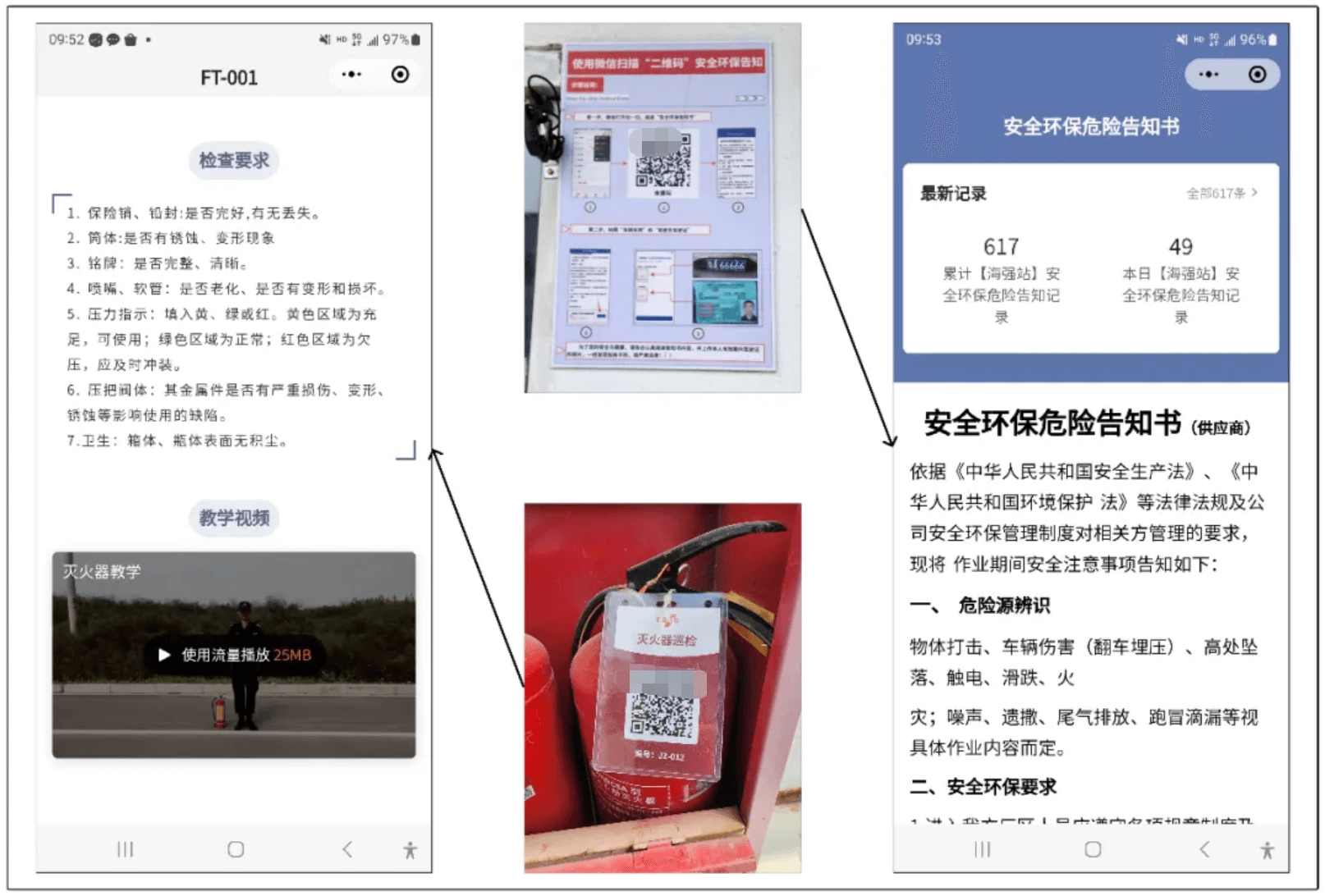
With widely distributed equipment at concrete production sites—including concrete mixer trucks, environmental protection equipment, and firefighting facilities—traditional inspection records were difficult to share and analyze, leading to delayed problem resolution and redundant work.
Jinyu created QR code signs for equipment using CaoLiao QR codes. Frontline employees don't need to download apps or receive special training; they can complete inspection, repair, and maintenance registrations by scanning the code with WeChat, and can also upload site photos. The system automatically records the inspector, time, and abnormalities, preventing after-the-fact entries.
Managers can uniformly establish inspection plans and manage inspection data records in the backend, gradually building clear electronic equipment records. This not only facilitates internal management but also allows frontline employees to access information anytime, reducing repetitive communication and improving collaboration efficiency.
Users reported: "Safety management process records collected via QR codes can be stored long-term in the management backend and directly made available to employees, making on-site access very convenient."
COFCO Property: Maintenance Supervision for 700+ Elevators
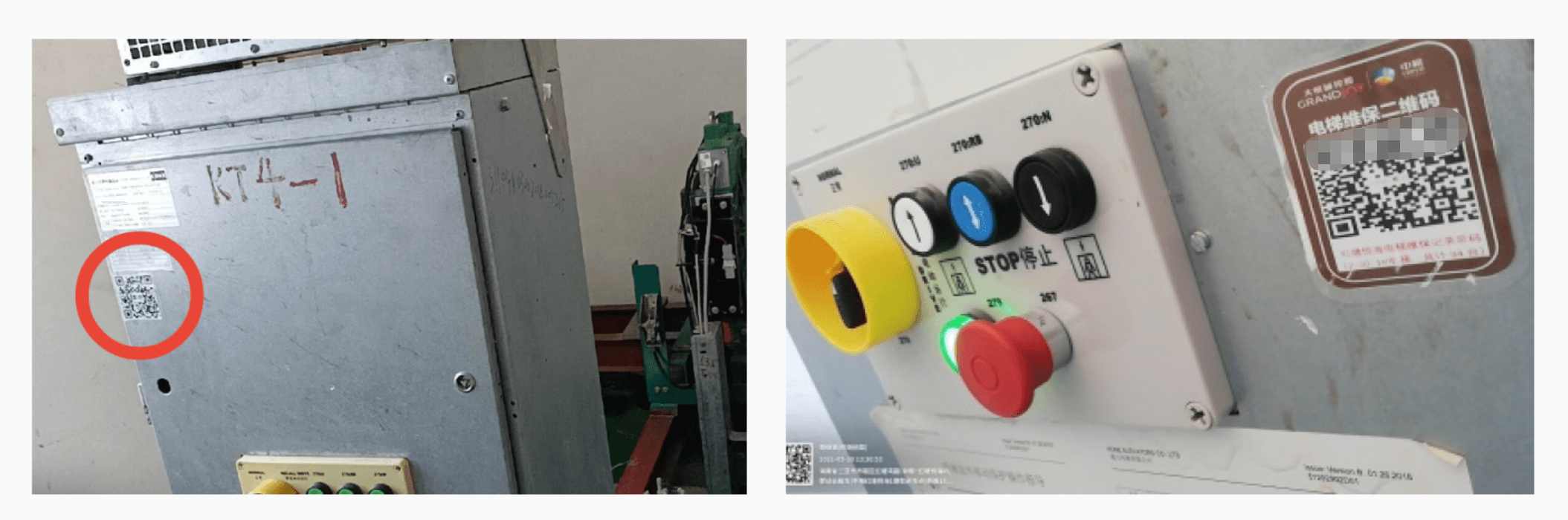
Managing 31 residential projects with over 700 elevators total, maintenance was outsourced to third-party companies. The large number of elevators made maintenance supervision challenging, previously suffering from perfunctory maintenance, non-standard records, difficult履约 monitoring, and uncontrolled risks.
To address this, they used CaoLiao QR codes to batch generate elevator maintenance QR codes. Each elevator received a numbered QR code. Maintenance personnel scan to check in, complete equipment inspections in the machine room, car top, and pit, and fill out record forms. Property follow-up personnel must sign for confirmation before submission. The system supports photo location watermarks, PDF record downloads, and data summary analysis.
Within one month of implementation, maintenance quality significantly improved, maintenance processes became more standardized, and elevator failure rates showed a clear downward trend.
Photovoltaic Power Station: From Equipment Inspections to Team Digitalization
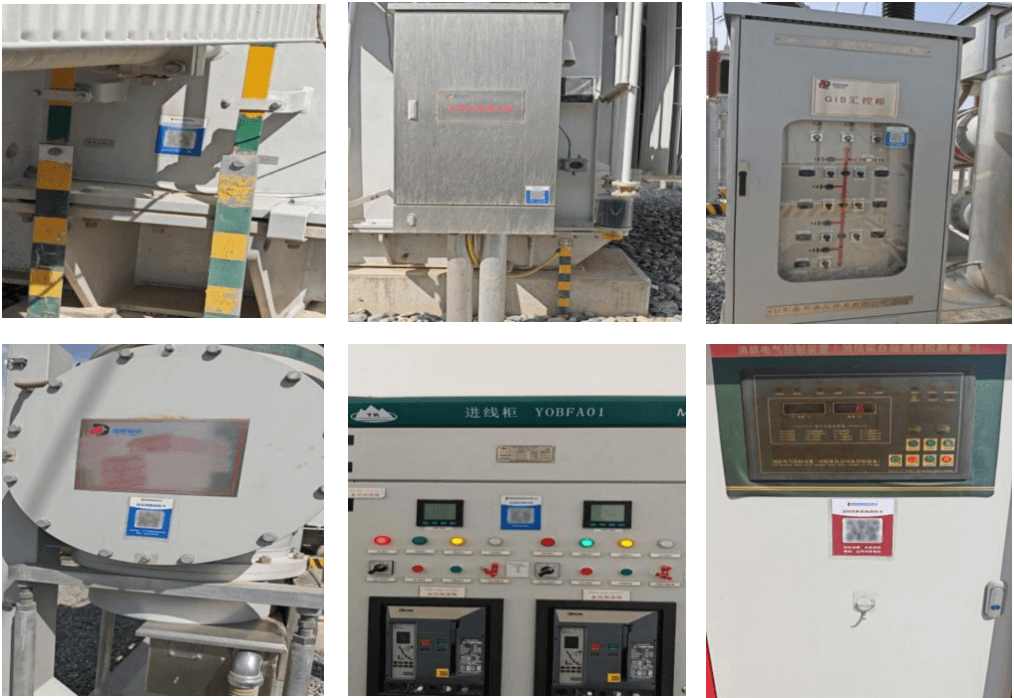
At State Power Investment's Jianye Photovoltaic Power Station, onsite workflows involved numerous records: equipment inspections, pre-shift meeting attendance, training records, vehicle management, etc. Long-term reliance on paper work cards and sign-in sheets was not only time-consuming but also made data retrieval particularly difficult.
After introducing CaoLiao QR codes, the station created 228 QR codes for various scenarios including equipment inspections, employee training attendance, "three meetings one activity" records, and vehicle usage registration. Each employee and piece of equipment has a unique identity QR code. Onsite scanning enables information registration and upload of text and image materials, while the backend allows unified management, data statistics, and automatic report generation.
Team management consequently gained new structure. Managers no longer need to wait until month-end for reconciliation—they can grasp frontline situations daily through the system: whether safety training is completed, who missed the morning meeting, which equipment has three unclosed maintenance cycles.
Starting Small: Lightweight Digitalization for Inspections
These cases come from different fields but share a commonality: They didn't start with "system implementation" but began from the fundamental problem of "needing digital records," using CaoLiao QR codes to build lightweight QR code equipment inspection systems.
They didn't invest massive manpower or introduce lengthy training programs. Instead, they made one small change to existing processes: transforming "pen-and-paper recording" into "scan-to-record."
For enterprises still using pen and paper for inspection records and relying on manual archiving, perhaps starting with MES or CMMS isn't necessary—just placing a QR code might be enough to initiate the preliminary digitalization of equipment inspections.