How to Fill Out a Fire Inspection Form Correctly for Compliance? I Switched to This GB-Compliant Template
Original: https://cli.im/article/detail/2380
I work for a property management company overseeing several older residential communities. To be honest, we've been conducting fire inspections for quite some time and have been filling out inspection forms for years. However, it was only after a surprise inspection that I truly realized "filling out the form incorrectly is also a problem."
That day, the district organized a joint inspection. The team moved quickly, checking fire extinguishers and asking to see inspection records immediately. We presented our paper logs, but some entries were scribbled, and several inspection items only had a checkmark "√", which looked very perfunctory. They pointed out directly: "This '√' doesn't show what was specifically checked. There's no record of pressure gauge readings, and no signature from the responsible person."
Standing there in the hallway was genuinely embarrassing. We had done the work, but due to non-standard record-keeping, it seemed like we hadn't.
The process of finding a new method wasn't exactly smooth
It's a bit embarrassing to admit, but initially, we tried to revise the forms ourselves. We consulted documents like the "Code for Acceptance and Inspection of Fire Extinguisher Installation in Buildings" GB 50444-2008 and "Portable Fire Extinguishers" GB4351-2023. The dense clauses were overwhelming. As we tried to modify the forms, we were still worried about missing something or misinterpreting the requirements.
Then a colleague suggested, "Why not switch to scan-to-fill forms? Many places are doing it now." We eventually chose the template from CaoLiao QR Codes – not just because it's widely used, but because we verified that its inspection items are based directly on national standards.
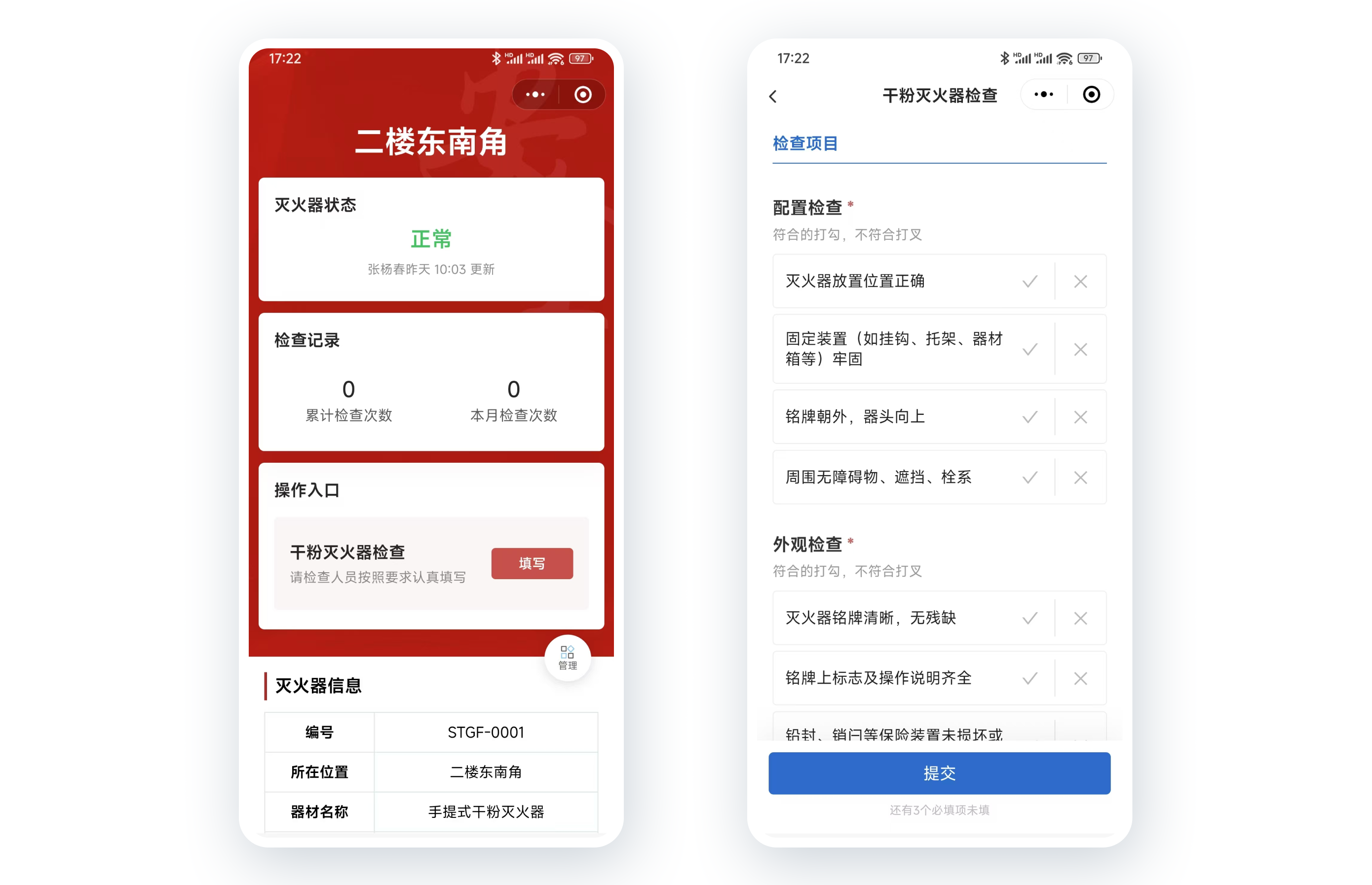
For example, after sticking a QR code on each fire extinguisher, scanning it prompts the system to show you exactly what needs to be checked: "Is the fire extinguisher placed correctly?", "Is the lead seal intact?", "Is there any external damage?", etc. It's all listed clearly. You can also upload on-site photos directly attached to that record, eliminating the need for separate folders.

The actual experience felt quite different
We started with a pilot building. A younger colleague used the scan-to-fill form for the first time and told me, "It feels like sending a WeChat message – not complicated at all." After filling it out, he could see the history and said, "This is much more reliable than flipping through paper logs."
A few weeks later, we rolled out this process to other communities. Inspectors scan the code to fill out the form, and we can see the inspection progress in real-time from the backend. Once, a security guard scanned a code, found the fire extinguisher pressure was low, took a photo on the spot and reported it. We dispatched someone to replace it immediately. The entire process took less than half a day, left a clear trail, and saved a lot of back-and-forth explanations.
Previously, handling such a situation required phone calls, reporting, filling out paper forms, and submitting them to the office. Now, just a WeChat scan lets you fill it out. Who did what, whether it was done – it's all clear.

Superficially, it's a change in recording method;实质上, it clears up the "gray areas"
For us, replacing paper forms with QR codes isn't about following trends – it's genuinely about reducing errors and improving management.
What struck me most was that in the past, during inspections, everyone thought "as long as the form is filled out, it's fine." But during real checks, we learned that content, format, signatures, and timestamps all must be correct. Over the years, we weren't inactive; we were just stuck in a cycle of "close enough is good enough." After switching to scan-to-fill forms, every inspection now has a timestamp, location, and photos. Issues are clearly documented, and responsibilities are better defined. There's no more shifting blame – "Did you check it or not?" – just scan the QR code and check the system.
A colleague joked, "Remember the days we filled out forms manually and hunted for paper logs everywhere?" Honestly, I do remember, and I really don't want to go back. It's not that electronic forms are perfect, but at least they ensure the necessary tasks are properly done and the required trails are firmly established.
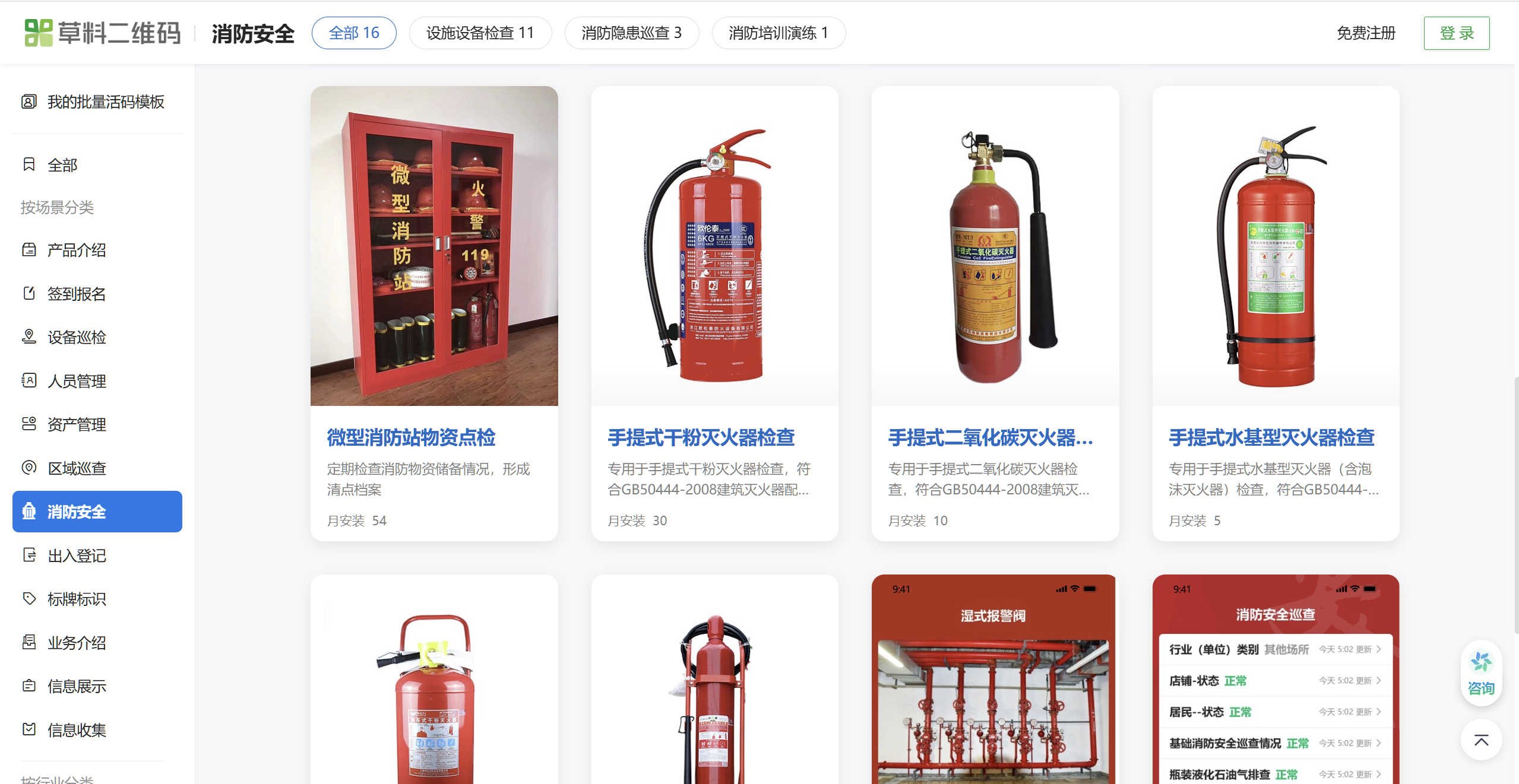
CaoLiao QR Codes' fire safety facility QR code template isn't complicated. It's based on national and local standards, so compliance worries are minimal – everything that needs checking is included. We even added custom fields later, like the associated community and fire extinguisher usage tutorials, which the system supports.
A bit of personal insight
Don't be afraid of the hassle of changing processes; be afraid of not being able to explain yourself when something goes wrong. The biggest fear in fire safety management isn't "not doing it" – it's "doing it but leaving no trace, making it unverifiable."
Switching to CaoLiao QR Codes' fire extinguisher QR code inspection method did require some initial adaptation time. But once implemented, you realize that many past troubles were actually caused by the management method itself. If you're also responsible for fire safety inspections in your organization, perhaps consider using a more reliable method – for your own sake and your team's accountability.